Classical music journalist and critic Charlotte Gardner shares highlights from this year's Verbier Festival - discussing a new partnership between dCS and the Verbier Festival Academy, as well as one-night music event featuring dCS Varèse...
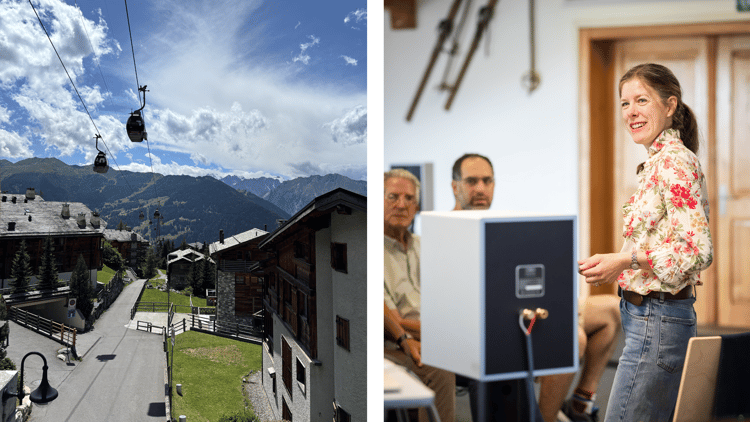
Verbier Festival is an international music festival held in the Swiss Alps.
This year, dCS partnered with the Festival to support their Academy programme, which provides music and professional skills training to emerging classical artists, including singers, soloists, ensembles and engineers. We also teamed up with our partners at Hi-Fi Lausanne to provide equipment for a new listening space open to Academy participants and the general public, and a one-night music event, Off the Record, held as part of the Festival's UNLTD programme.
Here, Charlotte Gardner – a journalist, broadcaster, critic and author of our Classical Choices Playlist – discusses the partnership and shares some of her highlights from Verbier 2025...
This month’s article for the dCS Edit has a slightly different focus: instead of my usual Classical Choices review and playlist, I’m sharing some musical highlights and insights from an exciting new partnership I was involved in at this year’s Verbier Festival…
Verbier Academy Listening Room
One of the crown jewels of Verbier Festival’s famed Academy is its Audio Recording Programme, headed up by internationally recognised audio producer and audio educator Theresa Leonard. This offers internships for a small number of students with a high level of audio and music training, who work alongside a professional recording team to capture audio and video productions throughout the Festival.
Leonard, together with Grammy-Award-winning producer, engineer, editor and senior guest faculty member Mark Willsher, and Senior Engineer Vincent Mons, had discussed creating a Listening Room to expand the Recording programme’s impact: a space where the Academy’s audio engineer interns, instrumentalists and singers, as well as wider faculty members and the general public, could come to a greater understanding of the importance of recordings in the larger picture of music education. This space would provide a chance to listen critically to recordings by the masters (which younger generations might not be aware of), and learn more about evolving recording and playback technologies, including new innovations in speakers, DACs, amplifiers and spatial/Atmos audio.
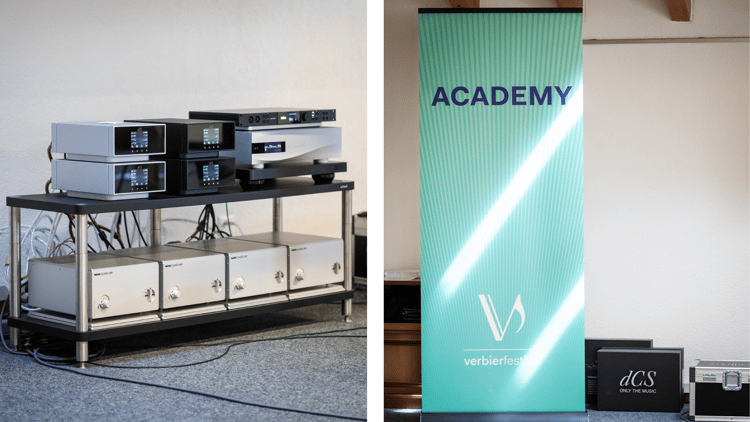
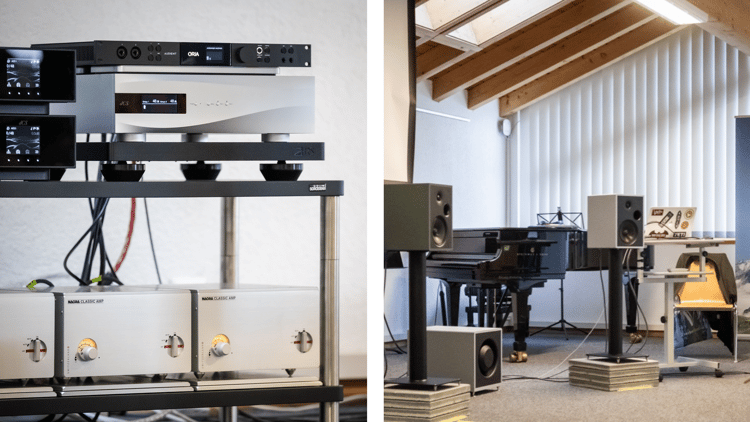
This idea finally took shape in 2025, when Verbier UNLTD director Stephen McHolm, together with Leonard, dreamt up a 7.4.1 listening space in a chalet room used mostly for Academy masterclasses and workshops. The expert team at Hi-Fi Lausanne – who have worked with the festival in previous years – curated a playback system in partnership with dCS, Stenheim and Nagra, providing four dCS Lina Network DACs, a Vivaldi Master Clock, seven Stenheim Alumine Two speakers, paired with 4 Nagra Classic amplifiers, and two Stenheim Alumine Subs with integrated amplifiers.
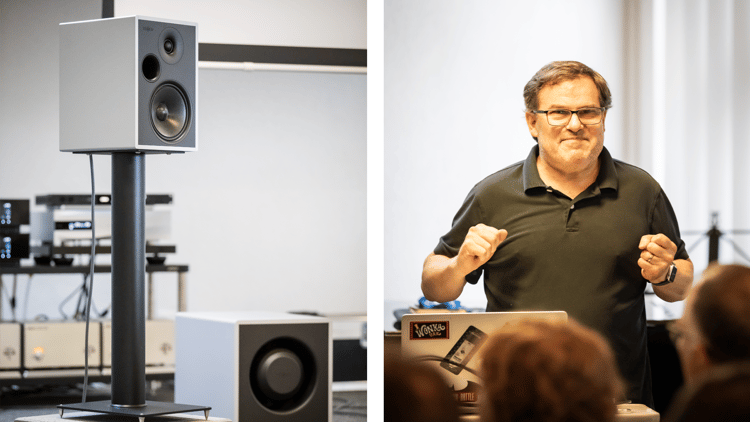
Willsher then put together a series of workshops – four student sessions, and three public events – where small groups of around 16 people could be enveloped in sound recorded in both Atmos and stereo. Willsher and Leonard presented two sessions for Academy participants to discuss the importance of recordings, and what to consider before making one, as well as a technical listening session which covered topics including the difference between Spatial audio and stereo.
I then teamed up with Willsher for two further student workshops and three public sessions, each with more of a musicological focus. Willsher provided a brief history of recording technologies, after which we guided the listeners through some personal playlists. We demonstrated the difference between stereo and spatial audio and gave an insight into the various sound aesthetic options that are available when recording in studios or on location.
We also demonstrated how rewarding it can be to listen to a superbly performed and engineered recording on a top-tier audio system, as evidenced when listening to the studio masters from San Francisco Symphony Orchestra’s recent recordings of Stravinsky’s The Firebird and Sibelius’s Finlandia, both mastered and mixed by Willsher. At the opposite end of the historical timeline, I also discussed how to listen through the hiss and crackle of a century-old recording, and why it’s often worth doing so.
I don’t think any of us foresaw what a profoundly moving, exciting and fascinating experience the Listening Room sessions would turn out to be. Equipment-wise, the combination of dCS and Stenheim was a golden one, the two being so clearly cut from the same quality and philosophical cloth, with Stenheim’s own pioneering design and development, and warm and precise sound, chiming wonderfully with dCS’s.
In the student sessions, it quickly transpired that most of our participants were already familiar with the truly ‘classic’ recordings. Increasingly, young artists who are really passionate about their instruments are using today’s digital streaming environment to delve deep into their recorded history, so in these sessions, we focused mostly on modern recordings.
This gave rise to some interesting debates, including a fascinating philosophical discussion on taste, prompted by listening to Hilary Hahn’s 2024 Gramophone Award-winning Ysaÿe Solo Violin Sonatas for Deutsche Grammophon first in spatial, and then in stereo. On the classic recordings end, I cherry-picked a few recordings that I felt were least likely to have been discovered by students. The response to violinist Maud Powell’s transcription of Handel’s “Ombra mai fu” – her violin emulating how a singer might travel between two notes, and its sheer expressiveness – was one special moment.
The public listening sessions focused more on delving into classic recordings – and this time, the specialness came from the audience’s sheer enthusiasm for being introduced to music they didn’t yet know, and their willingness to be taken out of their comfort zones. This was especially highlighted on two occasions when Mark and I offered a choice of recordings to end the session.
Going down the top modern recordings route one afternoon, we offered attendees a choice of Lucie Horsch’s recorder transcription of the Marcello/Bach Oboe Concerto performed on an original 18th century recorder with the Orchestra of the Eighteenth Century, or the opening Ground from John Eccles’s Mad Lover Suite from violinist Théotime Langlois de Swarte and lutenist Thomas Dunford. They insisted upon both, and the session ran on longer to accommodate.
Another day, having offered the audience a top modern recording, they instead asked for a classic that I’d spoken of with love but not yet played: Yehudi Menuhin’s Brahms Violin Concerto with the Lucerne Festival Orchestra under Furtwängler. The audience sat in rapt stillness, eyes closed, through all 22 minutes of its first movement, and again we overran. It was beautiful to feel how even this sonically imperfect recording had an extra magic when played through high-end equipment.
'Off the Record' at The Experimental Chalet
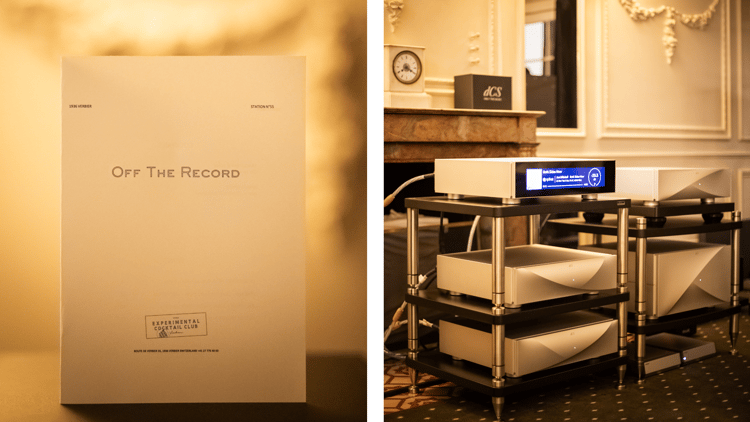
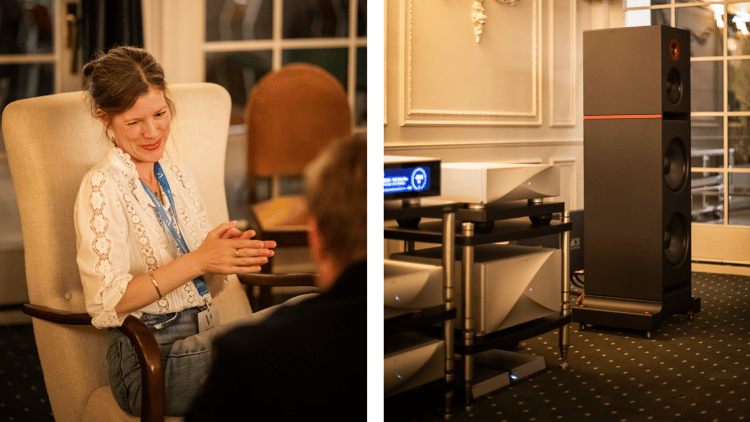
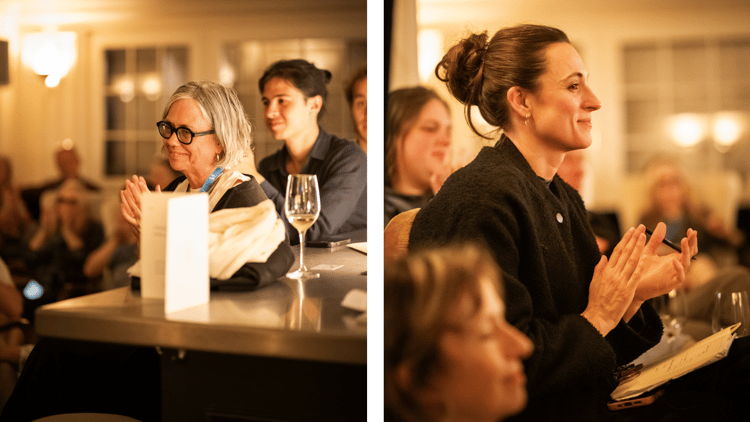
Away from the world of classical recordings, the dCS/Stenheim pairing was also singing proud at UNLTD’s late-night ‘Off the Record’ listening sessions at the Experimental Cocktail Club, a now-annual gathering where musicians and personalities from the world of classical music discuss and play their favourite non-classical albums.
Over two hours, I hosted conversations with Gary Leboff – a former rock journalist, and now the UK’s top performance psychologist – and baritone Benjamin Appl. Leboff chose to talk about Joni Mitchell, whilst Appl discussed the world of 1920s and 30s German dance hall music.
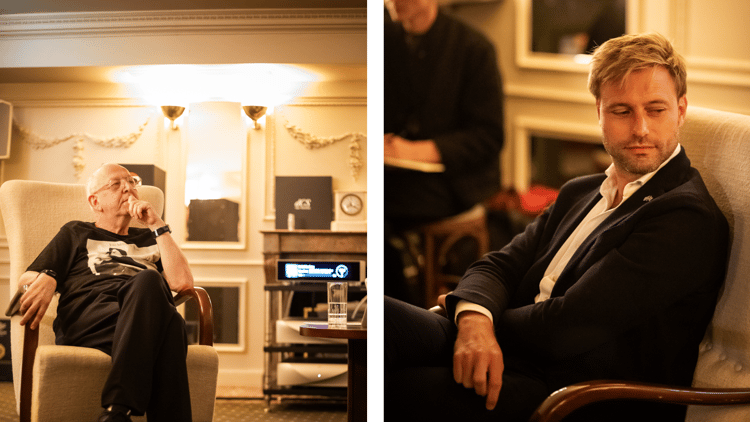
Hi-Fi Lausanne provided the playback equipment for the evening, with dCS Varèse paired with Stenheim Alumine Five SXs, powered by a Mark Levinson stereo amplifier. Leboff’s first chosen track was Mitchell’s ‘Both Sides Now’, and one of the most exciting moments of the night was when Mitchell’s voice first emerged from the speakers with such natural-sounding, roundly enveloping warm clarity and precision that Leboff’s eyes widened, and his head slowly turned in wonderment to study the equipment behind him. This sonic warmth and clarity coloured the whole convivial evening with its magic.
Back to the Listening Room, and the plan is to continue next year, with a programme of both public and closed sessions curated by members of the Academy faculty and festival guests. To mark this year’s event, and another year of Verbier, I’ve curated a playlist featuring music from our Listening Room sessions and Off the Record. You can listen to recordings in full via the links below. Enjoy!