Welcome to our latest Classical Choices. Summer has finally arrived here in the UK. We’ve had sunshine of course, but also festivals, and the biggest of them all — the BBC Proms — arrives on July 18th.
The First Night, led by Sakari Oramo conducting the BBC Symphony Orchestra, promises a new Proms commission from Errollyn Wallen, Sibelius’s Violin Concerto in D Minor and Vaughan Williams’ Sancta civitas, as well as two short works that hark back to the Proms’ earlier days: the Birthday Fanfare, which Arthur Bliss wrote for Proms founder Sir Henry Wood’s 75th birthday in 1944, and Mendelssohn’s overture The Hebrides, inspired by a summer holiday in Scotland in 1829, and first performed at the Proms in 1896 when Queen Victoria (a fan and friend of Mendelssohn’s) was reigning monarch. In honour of this upcoming event, we’re opening this month’s playlist with a magnificent 2014 recording of The Hebrides from Sir John Eliot and the London Symphony Orchestra.
From there, it’s on to smaller instrumental forces with our pick of new classical recordings. This month’s selection includes two highly contrasting keyboard recitals: an auspicious and personal debut from Julia Hamos, centred around Hungary and New York; and a solo album devoted to Chopin’s piano works from Justin Taylor. Between them, we have a multifaceted homage to French harpist composer Marcel Tournier from harp virtuoso Emmanuel Ceysson, soprano Véronique Gens and string quartet Quatuor Voce.
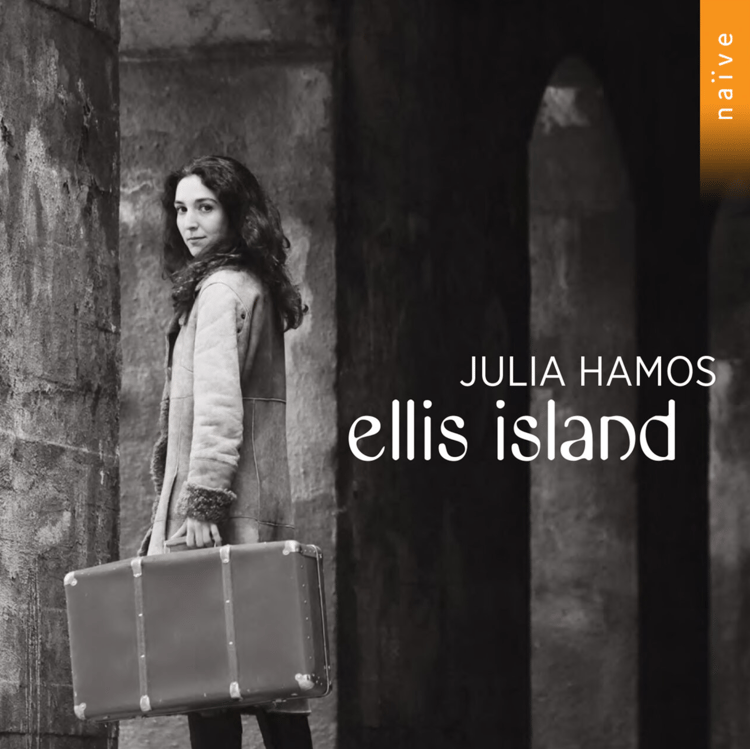
Ellis Island
Julia Hamos
Naïve
It’s not unusual for young classical artists to select pieces with a strong personal resonance for their debut album. Yet it’s rare to hear debuts that present such works with the kind of adventurousness, surprise-filled originality, architectural sophistication and narrative flair heard across Julias Hamos’s Ellis Island.
Hamos’s concept is one of personal musical odyssey, reflecting on her dual origins as a New York-raised pianist from a Hungarian family. Most of the programme is drawn from Hungary: the music of Bartók (the 15 Hungarian Peasant Songs and 6 Dances in Bulgarian Rhythm), Kurtág (8 Pieces op. 3 and selected Játékok pieces) and Ligeti (Fanfares, no. 4 from Études book 1). Hamos’s family has direct links to the latter two composers: her maternal grandfather hails from the same region and attended the same school as Ligeti.
Placed between these are two pieces from New York: first, the one-piano version of Meredith Monk’s restlessly rippling Ellis Island (1981, for two pianos), composed for a short film evoking the passage of early-20th-century immigrants to the United States; then jazz supremo Charles Mingus’s Myself When I Am Real.
The Mingus references a lesson that Hamos, who grew up speaking Hungarian as her first language, learned from her piano teacher in New York. In her extensive and very personal sleeve note, Hamos recalls: ‘She would ask me, “Why don’t you sound like yourself? Where’s the spark?” And I would be expected to figure it out musically and artistically on my own: in each case, who is “myself” and how does this self relate to the intention of the composer?’
The musical voice across this reflective and vibrantly charged album turns out to be silvery, vivacious and songful. Articulation comes with cut-glass clarity, rhythmic handling is defined and organic-feeling, and the programme’s many intricate musical textures are laid out with perfect lucidity, a wealth of colour, light and shade brought to their teeming multiple lines.
Under Hamos’s hands, the piano sings, chimes, dances, hammers, glints brightly and turns velvety. Her technical control is effortlessly fabulous; just listen, for instance, to the delicacy and nuance with which she handles the rapid-fire repeated notes in the last of Bartók’s 6 Bulgarian Dances. It’s also a striking, beautiful surprise just how seamlessly the Monk and Mingus pieces dovetail with the Hungarians’ rhythms and harmonies. As an inspired parting gift, Hamos follows this feast of 20th century repertoire with the delicate, fluidly restless rise and fall of Schubert’s Ungarische melodie from 1824; a 19th century German take on the land of her ancestors.
The album progresses with such a seamless, almost dreamlike flow that it feels an act of sabotage to cherry-pick individual pieces, so I’ve selected the Kurtág, Monk, Mingus and Ligeti for this month’s playlist.
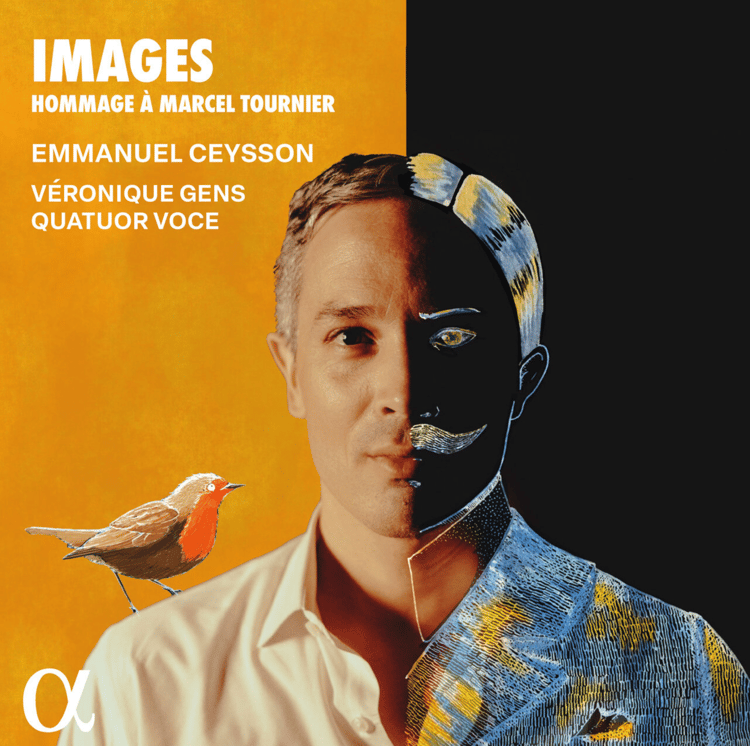
Images. Homages à Marcel Tournier
Emmanuel Ceysson, Véronique Gens, Quatuor Voce
Alpha Classics
Harpist-composer Marcel Tournier (1879-1951) is not a household name but for harpists, he is one of the repertoire’s most towering figures, with between 90 and 100 works to his name. Most of these were written for solo harp, but several were later revised by Tournier to add further instruments. Existing only in manuscript, these revised works appear to never have been published, but are brought together in a new recording from French harp virtuoso Emmanuel Ceysson, Quatuor Voce and soprano Véronique Gens.
The Sonatine op. 30, a substantial three-movement work dating to 1924, has been recorded with recently-found cello and violin parts added some 15 years later. Another new discovery is the song La lettre du jardinier (The Gardener’s Letter), a sort of love letter from a gardener to the young lady of the house whose garden he tends. The piece has been in print for voice and harp, but its subsequent string quartet parts were only recently uncovered.
The musical language is as wide-ranging as the scoring: the influence of Debussy, Satie and Ravel never feels far away in its rich, sensuous, ambiguous and capricious harmonies and melodies. The Images suites are awash with the influence of impressionism, their descriptive titles including Cloches sous la neige (Bells in the Snow). Exotic images also abound, such as Les ânesses grises sur la route d’El-Azib (The Grey Donkeys on the Road to El-Azib) with its pentatonic harmonies, and the flamenco-inspired Lolita la danseuse.
All this is performed with tremendous poetry and crisply articulated, kaleidoscopically coloured delicate freedom. I’ve chosen The Gardner’s Letter, Images Suite no. 3 op. 35 and Sonatine, for our playlist.
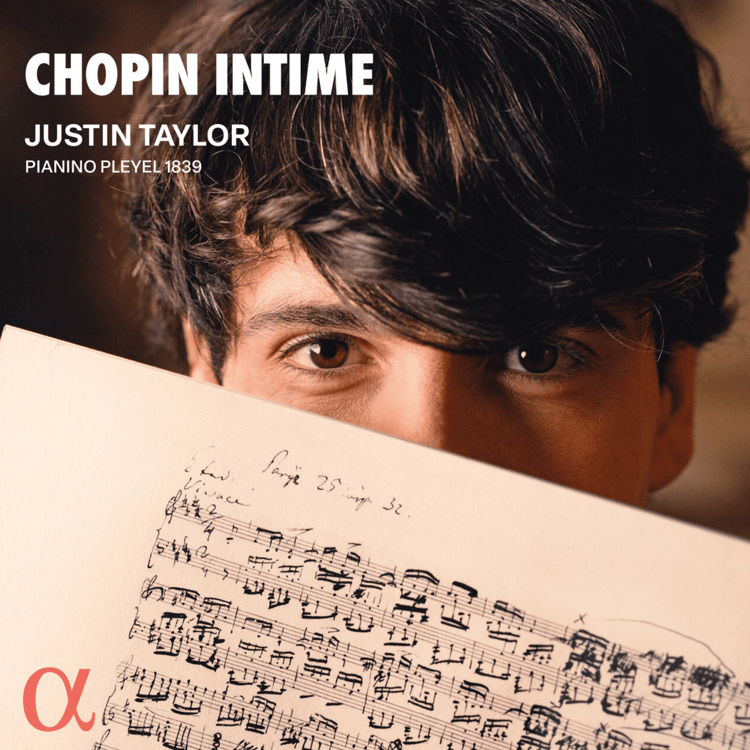
Chopin Intime
Justin Taylor
Alpha Classics
Justin Taylor is so associated with the harpsichord that few could have predicted he’d be recording a solo album devoted to Chopin’s piano works, making this mixed programme an unexpected treat.
Being Taylor, there is of course a period-instrument angle. Chopin is known to have composed some of his preludes while staying with George Sand in Mallorca in the winter of 1838, where he used a very special instrument called a pianino – a baby upright piano of six and a half octaves, made by Pleyel only between 1835 and 1842. Taylor’s instrument is a very similar model from 1839, and it’s a gorgeous-sounding thing.
Pleyel’s trademark softness is even more intimate and velvety, thanks to rabbit-fur felt hammers and two-stringed notes (Pleyel added a third string later, increasing the metallic brightness). It also has a notably warm and pronounced resonance, thanks to its wooden-only frame (free of iron). Perhaps unsurprisingly, it also has narrow keys, placing a harpsichordist at an advantage. While the ivories are narrow, its colour spectrum is not. Lower registers are surprisingly deep and rich, and there’s a silvery chime to its upper registers, even within the softness.
In the famous “Raindrop” Prelude no. 15 in D flat major op. 28, you can hear all these colours displayed simultaneously. The programme-opener, Nocturne no. 20 in C sharp minor, meanwhile, is a perfect showcase for the piano’s superpowers of intimacy and resonance. Taylor employs its fluid action towards softly-rubato’d, sepia-quality singing lines, the trills and runs softly bleeding into each other. His moving transcription of Bellini’s Casta diva, an aria that Chopin much admired, is another beautiful vehicle for his and the piano’s wistful, singing lyricism. Just to prove this instrument is also capable of dishing up more fiery, rapidly virtuosic drama, there’s Prelude op. 28 no. 16 in B flat minor. The final icing on this cake is the elegant, tactile capturing which has you feeling as if you could almost touch the sound.
I’ve given you a mixed plate for the playlist: the Nocturne no. 20 in C sharp minor, Preludes nos 15 and 16 of op. 28, Casta Diva, and the Contradanse in G flat major B.17.