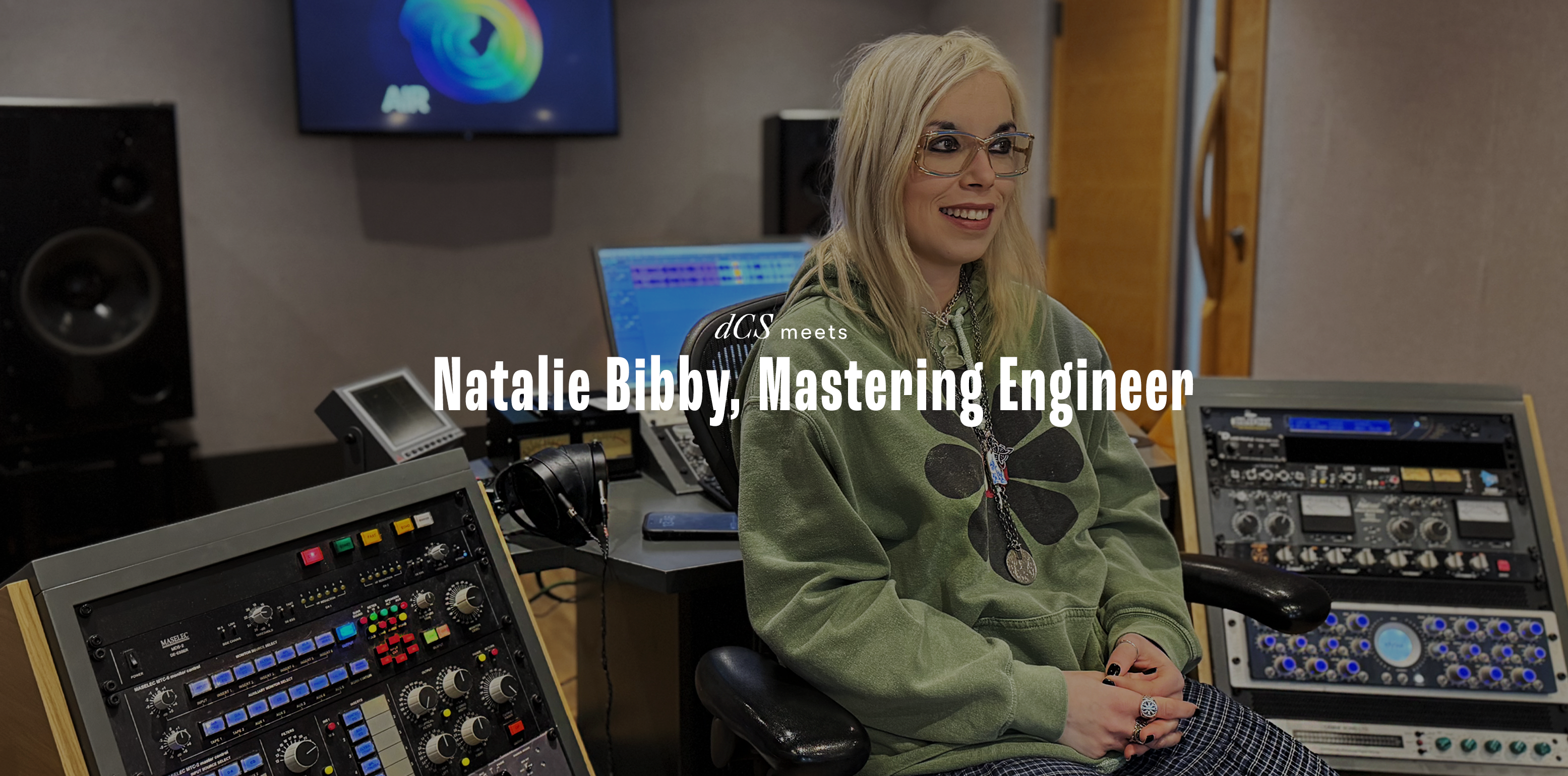
dCS sit down with Natalie Bibby at AIR Studios London for a conversation on her earliest steps into the industry, the artists & records that inspire her today, and a walkthrough of her studio...
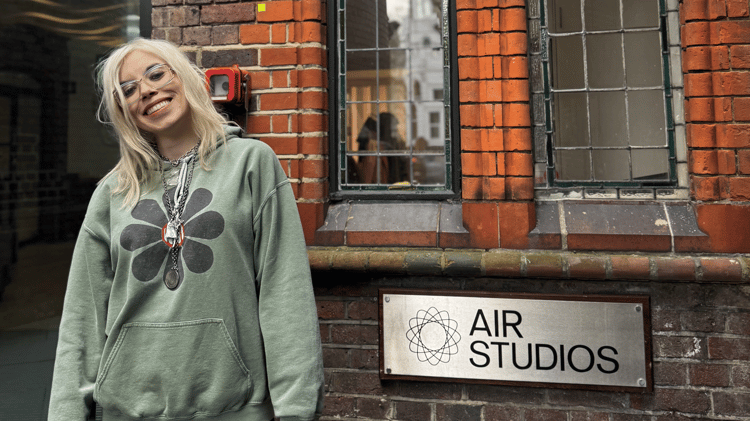
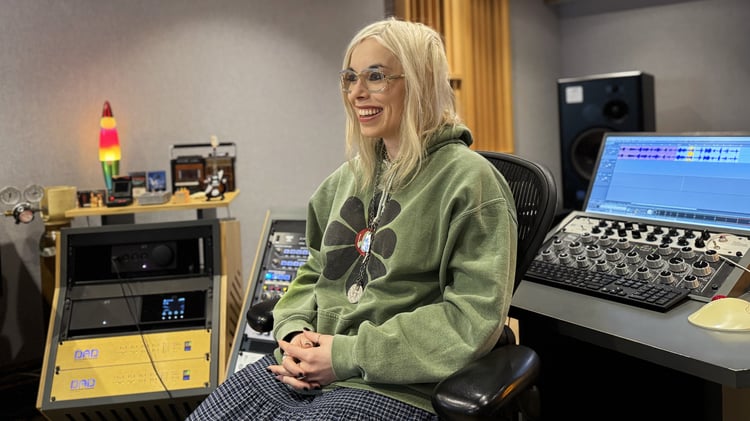
Earlier this year, dCS travelled to AIR Studios in Hampstead, North London to sit down with mastering engineer Natalie Bibby.
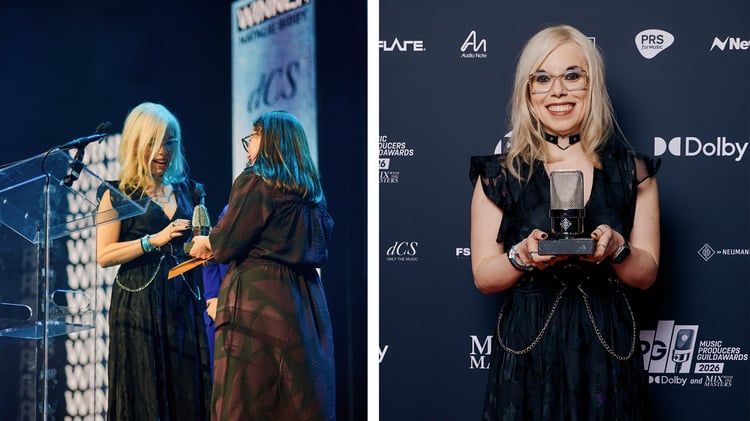
The visit came in a landmark year for Natalie. At the 2026 Music Producers Guild (MPG) Awards, she was named Mastering Engineer of the Year — a category dCS was proud to sponsor, and an honour we were delighted to present to her in person.
Natalie’s career began at Metropolis Studios, where she spent close to a decade developing an approach to mastering that draws equally on traditional technique and a more modern sensibility. Since joining AIR Studios, her work has expanded into film and television, with credits including the BBC, Sky and Netflix, alongside a client list spanning Wolf Alice, Faith No More, Kraftwerk, Lola Young and many more. She’s also one of only a handful of engineers worldwide working with a Neumann VMS-80 lathe.
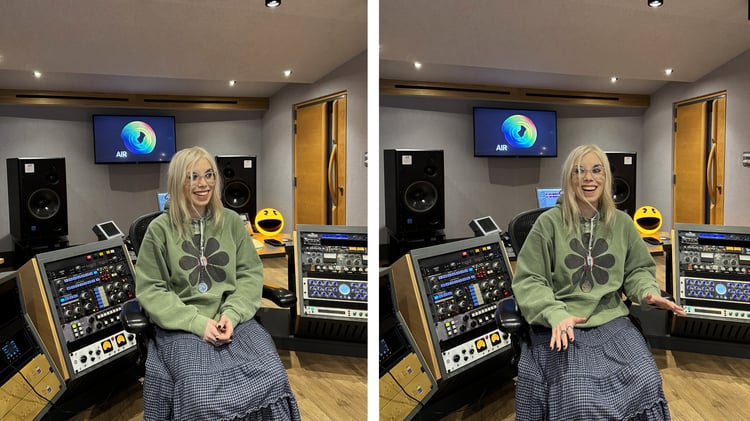
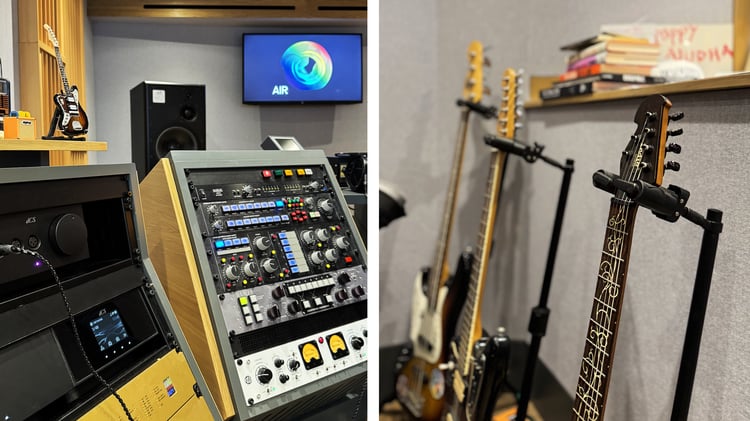
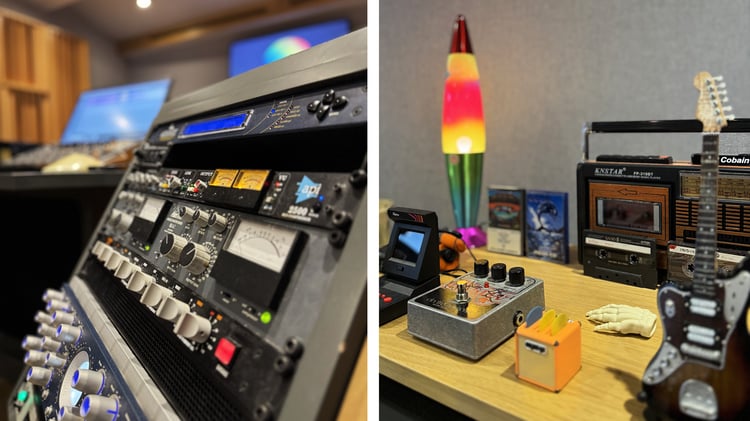
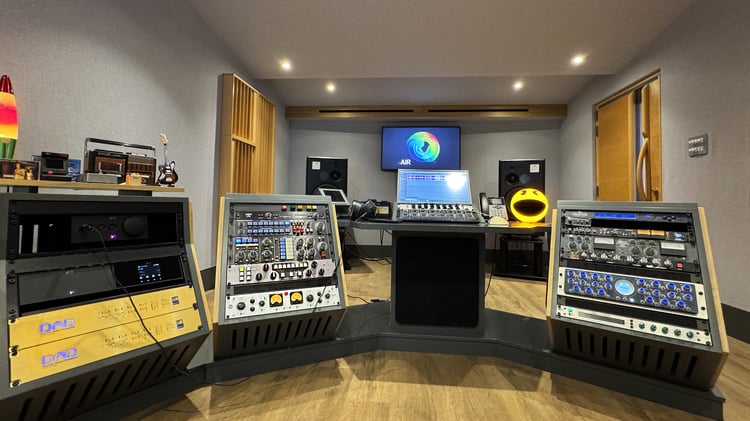
Her studio setup is similarly distinctive — uniquely, it includes our original dCS 904, alongside the dCS Lina DAC, Lina Headphone Amplifier and Lina Clock.
In the conversation below, Natalie talks about how she first found her way into mastering, what she listens for in a great piece of music, the moments at AIR Studios that stay with her, and why visibility for women in the industry matters.
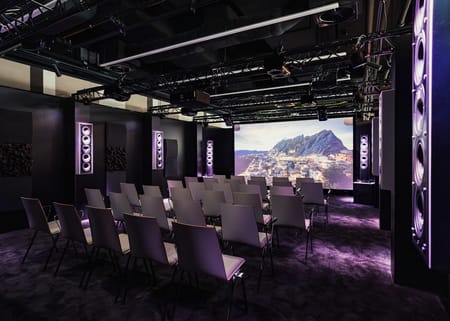
Natalie at AIR Studios, Lyndhurst Hall, Hampstead, North London
What first drew you to Mastering as a career?
I was always making my own music, and I kind of fell into mixing it when I was a teenager. I came out of university and started interning as a Tea girl at a studio! I thought I wanted to be a Mix Engineer at that point because I just loved the detail and loved that feeling of being immersed other people's emotions through their music.
At that studio they had a Mastering room.
I'd never seen a Mastering room, never had any kind of exposure to it before. I got to see one of the rooms and one of the engineers kindly let me sit in on the process. And it just clicked. Yes, it's very technical what they do, but it was more about how the engineer was thinking about empathy and thinking about connecting with people.
Understanding people, what they wanted to do. That's probably the bit that got me into it first, because I think I’m quite a people person.
How do you build trust and connection with the artists you work with?
I think it's really important to connect with people and to work out the intention behind why they've written a song.
And I think it's good to have people in the room with you, if you can, when Mastering, because they're just more open. You can kind of read their energy and understand what they want…it does take a lot of trust for people.
I always encourage people to just be open, like, tell me why you wrote the song. Don’t tell me about the sound. Just tell me about how does it sound to you? What colours do you think of? What colours do you feel when you hear your music?
I always just let people talk and that usually leads me in the direction first before music.
How does your approach change depending on who you’re working with?
Well some people just want to talk about the song and talk about the music. Other people don't even want to really talk about it! They’re sometimes a little bit stressed…because you know, release dates can be stressful.
You just listen to them. And that's as much as an important thing is listening to their music. Just kind of being an ear for them, being an ear for an artist in this day and age.
You work across a lot of different genres — do some resonate with you more than others?
I do particularly like rock music and metal, because I used to play in bands as well.
But yeah, there is hopping between genres, and I think as long as you are intuitive and just really listen…. everyone’s reason for writing a song could be different.
Somebody might be writing to have a club hit, that’s as completely valid and important as someone writing to express themselves.
And you’ve just got to make sure you get that. And then you can work in any genre.
What do you think makes a really great piece of music?
I think…something that has some kind of depth. That comes from different places.
Sometimes you just hear lyrics, and it’s like you almost feel a tingle down the back of your neck
Sometimes it's the chord progressions… sometimes it's the way they express their voice…and I try to analyse altogether, what is it about those things? I think it’s just authenticity.
I find that I’m getting more and more bands and it's clear that they’re up and coming, they've just been in their garage and written these songs as teenagers.
They were just expressing themselves and just being raw and not thinking about writing a good song….and ironically, they've written some of the best songs by not trying to do that!
What’s it like having artists in the room with you while you work, rather than communicating remotely?
I think a lot of the time sometimes there can be like a little bit of a language barrier…somebody might say, “oh, I just want a bit warmer.” When they’re in the room, you can just go, “oh, do you mean this?” And they go, “oh yeah, it's that!”
And it's just it's just so much quicker. But it's also nice because people get to feel like they're actually a part of the last stage of their music. I think that's like quite a valuable experience.
People like to take social media clips as well, and keep it as a little bit of a memento, a memento of the whole thing they've done.
Can you share an example of a project that’s felt especially meaningful to you?
Yeah, I had a band in recently and they took ten years to do the album.so they've gone through different life stages where they're making this, ups and downs…and it come together finally. So it was such a special day for them to be here.
They were like, “This is it! This is ten years of stuff that we've gone through in our lives and our music. Here it is….” That's kind of special.
They took Polaroids and left me some…there's nothing better than that.
With composers and an orchestra space right there at AIR Studios, what’s it like collaborating with your peers across a project?
It's kind of cool because it's a bit like having a family for a day, and it's very collaborative, very supportive. It’s funny how people in different roles communicate in different ways about the same thing as well.
I like it a lot, I like just having coffee with them and having lunch with them. And it's also a lot quicker when they're all together as well…no like emails back and forth!
Are there any projects you’ve worked on that you’re especially proud to have been part of?
There’s two that come to mind…
I’ve recently been working on a new album for deary, (Birding), I'd call them Shoegaze, but they’re so much more than that… They're on Bella Union label and the album is incredible.
I wrote to them and I said, it sounds like you've written a healing spell…that's how your music sounds. I told them, it sounds like the colours cyan with dashes of yellow, because it does. It’s just amazing.
The other thing that I'm really proud of is I cut to vinyl Faith No More’s album The Real Thing, and cutting such a big album like that as a rock fan was like, so cool. So exciting!
Is there an upcoming project you’re especially excited about?
I cut a Wolf Alice record to vinyl, which is really cool. I wanted to work with Wolf Alice for years...
Who would you say are your biggest inspirations, both musically and as an engineer?
Musically it's always been Kurt Cobain.
I heard Smells Like Teen Spirit for the first time, and it just blew my mind, and I just I wanted a guitar straight away! That led to me writing songs, which then eventually led me to mixing…I think he's probably the biggest inspiration for my whole journey.
Engineering-wise, I'd say Tony Cousins…because he first let me sit in in a Mastering session. He's a legend.
I’d say Emily Lazar as well, seeing her, how amazing she is. It’s good to have someone like her out there. It validates you and makes you feel like you can be that.
It's made me think maybe I could do this.” Women that have already been mixing at home and didn't realize they could have a career in a studio.
I think that's really important because unless you can see it, I don't think you can be it.
If there was any artist or band you could work with, who would you choose?
Probably My Bloody Valentine! But they never really record.
Either My Bloody Valentine or Deftones just because some of those albums are my favourite ones. I've seen them both live as well. The songwriting is something special,
but also, what they communicate via atmosphere — not just music. I know it sounds like a strange thing…It's just it's a little bit otherworldly. Which I love.
In the mixing and mastering industry, is there anyone you think is doing really exceptional work right now?
My favourite is actually Chris Marshall, and he does a lot rock stuff…or mostly just rock stuff.
Every time I get his mixes, I'm just like, this is amazing! I don't know what you've done on the low end, but it just sounds amazing…Like having a rock mix basically perfect.
The body, the weight, the clarity. It's a special thing. And yeah, I think he's awesome.
You’ve spoken on panels about women in Mastering — how important is that work to you, and why do you take part in it?
It’s something I'm very passionate about because when I think back to my journey, when I first started I didn't know anything about it. It wasn't accessible.
I feel like if I go out there and show people and just…demystify it, more people will know what mastering is and know that they can pursue it.
I think it's particularly important for women, there’s not many of us this in the industry, and I've had people come up to me after panels before and say, “oh I didn't know, women worked in this industry, and now I've seen you…
And Finally…a few words from Natalie on what it meant to win the Mastering Engineer of The Year Award 2026
“
Winning Mastering Engineer of the Year was one of the most meaningful moments of my career.
What made it particularly special was what it represented - the trust artists place in me, and the connections I’ve built through the work...
”
- Natalie Bibby
A note from dCS...
Talking to Natalie, what comes through most is how much care sits behind the technical skill — the listening, the patience, the instinct to read a room and the people in it. It’s a reminder that mastering, for all its precision, is ultimately a deeply human craft.
dCS Audio is proud to have sponsored the Music Producers Guild Mastering Engineer of the Year Award for the past two years, first to Cicely Balston in 2025, and now to Natalie. Recognising the engineers shaping the sound of UK music matters to us, not just for the award itself, but for the visibility and validation it brings to a profession that so often happens behind the scenes. It’s one small part of how we try to support the wider audio and music production community, and we’re looking forward to continuing that work in the years ahead.
Congratulations again to Natalie on a richly deserved win. Thank you for welcoming us into your world at AIR Studios.
We use cookies to enhance your browsing experience, serve
personalised ads or content, and analyze our traffic. By
clicking "Accept All", you consent to our use of cookies.
Cookie Policy
Customise Consent Preferences
We use cookies to help you navigate efficiently and perform
certain functions. You will find detailed information about all
cookies under each consent category below.
Always Active
Necessary cookies are required to enable the basic features
of this site, such as providing secure log-in or adjusting
your consent preferences.
Cookiedcs_consent
Duration1 year
DescriptionStores your cookie consent choices for this site.
Analytical cookies are used to understand how visitors
interact with the website. These cookies help provide
information on metrics such as the number of visitors,
bounce rate, and traffic source.
Cookies_ga, _ga_*
Duration2 years
DescriptionSet by Google Analytics to distinguish visitors and record how the site is used.