Welcome to this month’s Classical Choices! With summer holidays on many listener’s minds, it feels fitting that the first of this month’s new releases is a Rachmaninov programme from pianist Alexander Melnikov and soprano Julia Lezhneva, recorded at Rachmaninov’s Lake Lucerne getaway, Villa Senar. From there, it’s on to mid-20th-century Polish symphonic music by Grażyna Bacewicz, via the second volume of Sakari Oramo and the BBC Symphony Orchestra’s Bacewicz orchestral series, and then a Ravel 150th anniversary-themed recording from Quatuor Debussy, which features a new string quartet transcription of Ravel’s Mother Goose Suite. First up though, is our archive track - a transcription from Mother Goose Suite’s ‘Laideronnette, Impératrice des Pagodes’ movement – the two-piano one, recorded live on 27 July 2000 at the Verbier Festival by Martha Argerich and Evgeny Kissin.
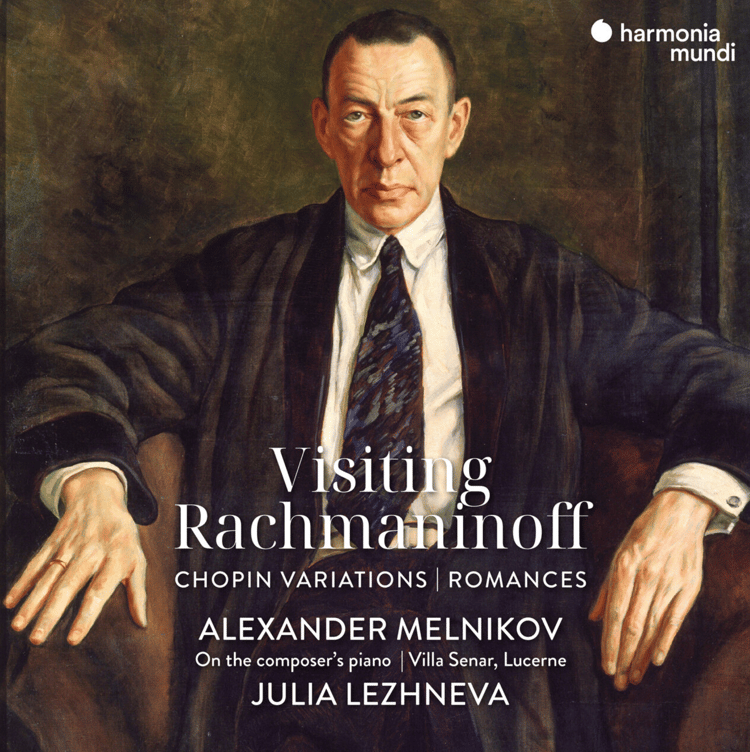
Visiting Rachmaninoff
Alexander Melnikov and Julia Lezhneva
Harmonia Mundi
In Visiting Rachmaninoff, period piano specialist Alexander Melnikov explores the poetic world of the composer’s Variations on a Theme by Chopin at a historically resonant recording venue: Villa Senar, the huge-roomed, high-ceilinged, wooden-floored Lake Lucerne house which Rachmaninov had built in 1930 by architects Alfred Möri and Karl Friedrich Krebs in the New Objectivity style (a fascinatingly functional, no-frills aesthetic for a composer so committed in his musical life to old-world Romanticism). The piano Melnikov plays is the Steinway gifted to Rachmaninov on his 60th birthday by Frederick Steinway.
The programme is one which Rachmaninoff might have turned to when feeling wistful both for his homeland – he and his family fled Russia into permanent exile in 1918, due to the Russian Revolution – and for his youth, because its works date from the period of intense creativity following his 1902 marriage. Heading the works is the symphonic-feeling Variations on a Theme by Chopin (1902-1903), Chopin having been a hero of Rachmaninov’s – and the latter audibly drawing, career-long, on the former’s combination of melodicism and densely woven, independently moving lines. Soprano Julia Lezhneva then joins Melnikov for selected songs from his 12 Romances Op. 21 (1902, with the publisher’s payment funding Rachmaninov’s three-month honeymoon to Austria, Germany, Italy and Switzerland), 15 Romances Op. 26 (1906) and 14 Romances Op. 34 (1912).
What with the natural, immediate but not overly close capturing, and the airy but intimate acoustic, there’s a strong and hugely pleasing feel of ‘house concert’ to the resultant recording. Melnikov has a lovely balance of rhythmic smartness and rubato, and brings high clarity to even the note-iest, fortissimo climaxes, pedal used only sparingly. Romance and clarity are again the watch-words over the songs, Lezhneva bringing their texts to life with lovely wide, Russian, lower-register warmth and upper-register purity. Inevitably, I’ve given you the piano variations, then also the songs ‘Before my window’, ‘Lilacs’ and ‘Here it’s so fine’.
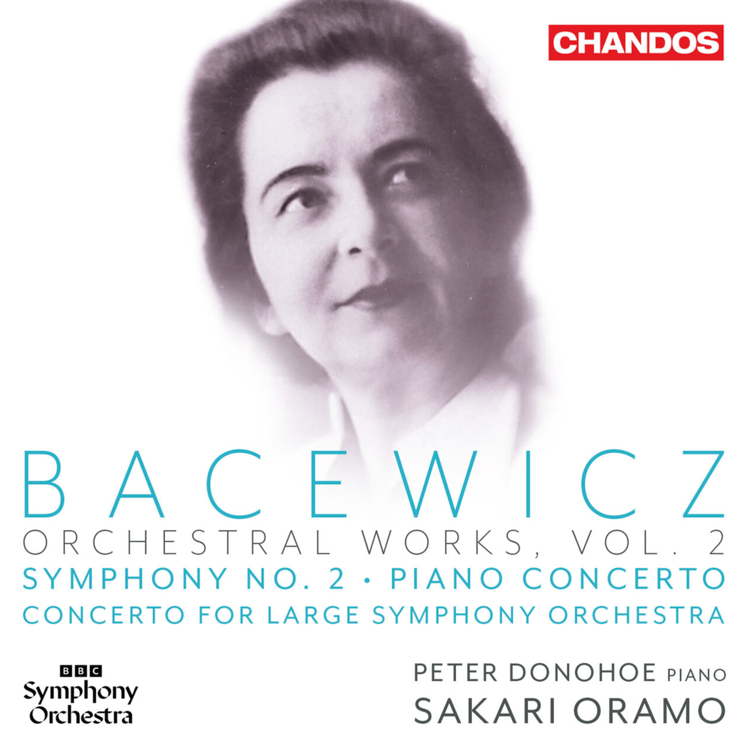
Bacewicz: Orchestral Works Vol. 2
Peter Donohoe, BBC Symphony Orchestra/Oramo
Chandos
It wasn’t so long ago that Polish composer Grażyna Bacewicz (1909-1969) was a name unknown to all but the initiated. Now, her discography is steadily growing, and we’re arguably reaching the point at which it’s possible to recognise her musical voice even when heard cold. It is stylistically wide-ranging, yet has an entirely distinctive rhythmic, muscular, tangy agility, sitting linguistically between older and newer styles, often possessing a tone with the same Soviet-era undercurrent of oppression and impending danger as heard in Shostakovich.
A tremendous amount of the recent Bacewicz recorded gold has come via Chandos, and it’s once again Chandos that we have to thank for the orchestral works series currently being recorded by Sakari Oramo and the BBC Symphony Orchestra. This second volume features Symphony No. 2 – finished in January 1951 and premiered later that year at the opening of the First Festival of Polish Music; the Piano Concerto written in 1949 as her entry in the Frederic Chopin Composers’ Competition (it came second, with no first prize awarded, so make of that what you will); and the Concerto for Large Symphony Orchestra of 1962.
Oramo and the orchestra have thrown themselves into these readings. Fervour and polish, swagger and delicacy is all here, and with excitingly sharp delineations at the music’s many emotional and stylistic crossroads. As for highlights, there’s Symphony No. 2’s Lento tranquillo, with its momentum-rich pacing and architecture, brilliantly handled wax and wane, and silkily long-lined, luminous violins; then the Piano Concerto’s combination of belly rumble and glitter, and its nice balance between soloist Peter Donohoe and the orchestra (woodwind showcased especially well), plus the many shades of eerie and menace brought out across the Concerto for Large Symphony Orchestra (also featuring piano), itself a story of sleek precision in its dynamics and articulation, representing a kaleidoscopic feast of colours and textures from cluster-chord passagework and sliding glissandi to col legno strings (playing with the wood of the bow).
You’ll find Symphony No. 2 on this month’s playlist.
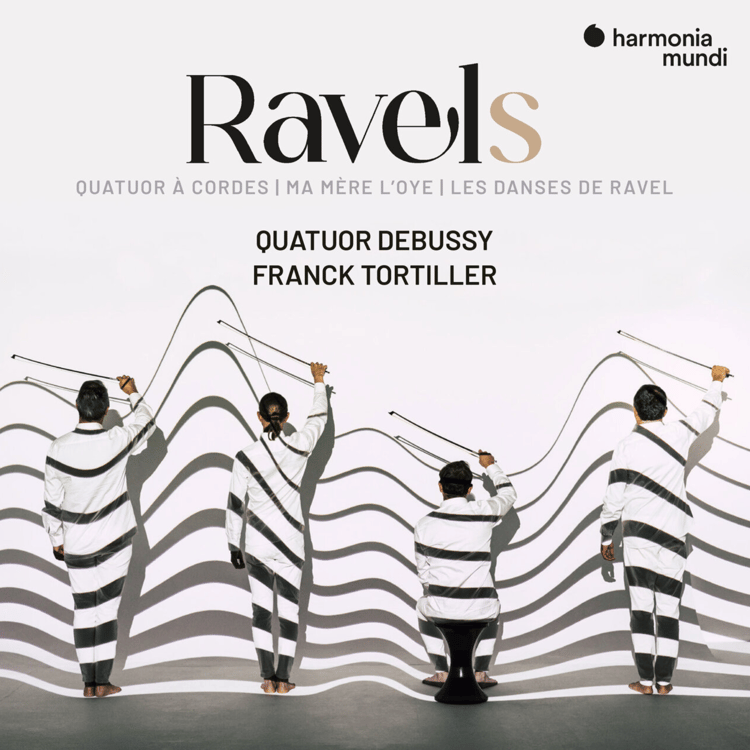
Ravels
Quatuor Debussy
Harmonia Mundi
This new recording from Quatuor Debussy must be one of the most enterprising contributions to the 150th anniversary celebrations of Ravel’s birth. First we’re offered ‘undiluted’ Ravel in the form of his String Quartet. Next comes Alain Brunier’s brand new string quartet transcription of the Mother Goose Suite (originally for piano four hands), preserving the spirit and aesthetic of the original, but with judicious key changes exploiting the string instruments’ strengths. Then vibraphone virtuoso Franck Tortiller comes on board to inject another suite originally for keyboard, Le Tombeau de Couperin, with jazz improvisations – something which jazz-loving Ravel would surely have been fascinated to hear.
The choice of recording location is a fascinating one: La Crypte, an underground theatre all in stone in the small Southern French town of Lagorce in the Ardèche. Dark, close, with both tremendous clarity and a gentle bloom, it’s a distinctive and intimate sounding space that takes a few moments to adapt to. It could probably be classed as divisive, given how the loudest dynamics really do punch its walls, yet once you’ve acclimatised, it’s a very atmospheric venue, and it certainly suits these strong, rich-toned performances, with the String Quartet’s pizzicato second movement coming off especially well.
The acoustic really comes into its own for the pared-down textures of Mother Goose, and this reimagined string quartet version has you hearing it in an entirely new way. ‘Laideronnette, Impératrice des Pagodes’ is notably striking, transposed lower and thus darker. There’s also a notable accentuation of the antique-y nobility of ‘Le jardin féérique’ – you find yourself thinking as much of the viol consorts of old as early 20th century Romanticism. Then to add a jazzy vibraphone part to ‘Tombeau’ feels like something of a pushing-the-envelope masterstroke, even if sometimes it feels as though the vibraphone is tad overpowering in the balance. It’s a clever, interesting recording, with a delicate quirkiness which feels thoroughly ‘Ravel’. You’ll find Mother Goose on our playlist.