This year, we teamed up with Cambridgeshire musician Andrea Cockerton to support the launch of a new music event series that aims to put listening front and centre. Here, we talk to Andrea about her latest venture, and the response she’s had from those who’ve attended
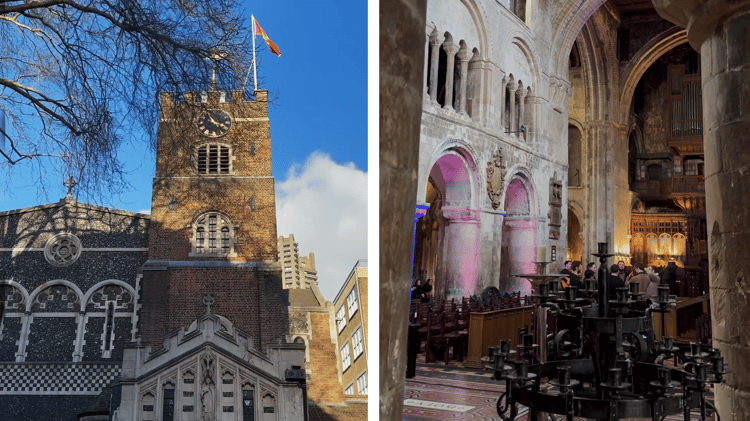
On a brisk March evening in London, light is fading as crowds gather outside St Bartholomew the Great: London’s oldest surviving parish church. Founded in 1123, it has welcomed worshippers for over 900 years, through generations of monarchs, a Great Fire, a Plague, two World Wars and various periods of civil unrest.
In more recent times, the church has hosted private events as well as the occasional film crew, appearing as a backdrop in rom coms, historical dramas and Oscar-winning period films, including Elizabeth: The Golden Age, Shakespeare in Love, Four Weddings and a Funeral and Avengers: Age of Ultron.
St Bartholomew the Great: London’s oldest surviving parish church
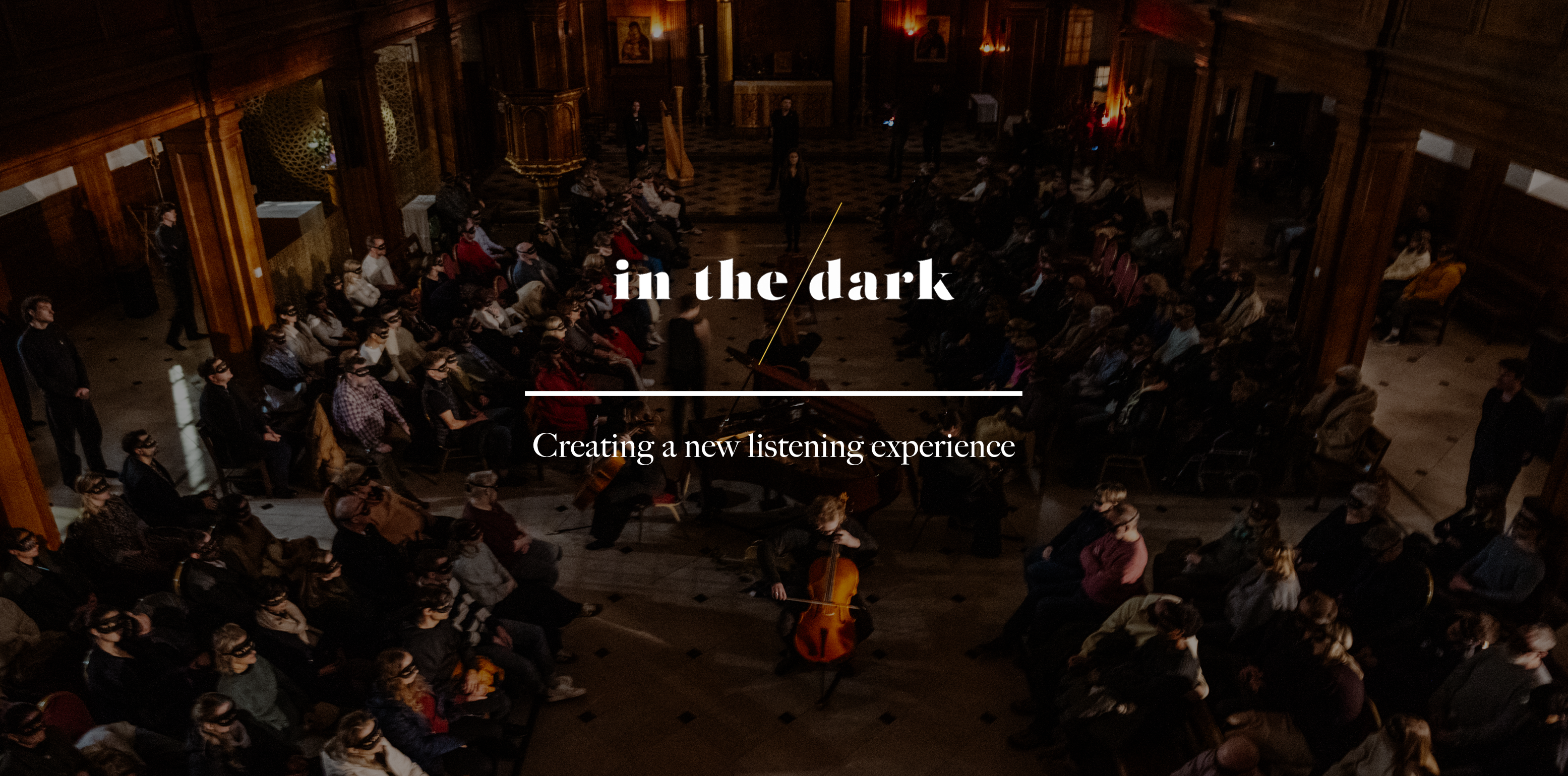
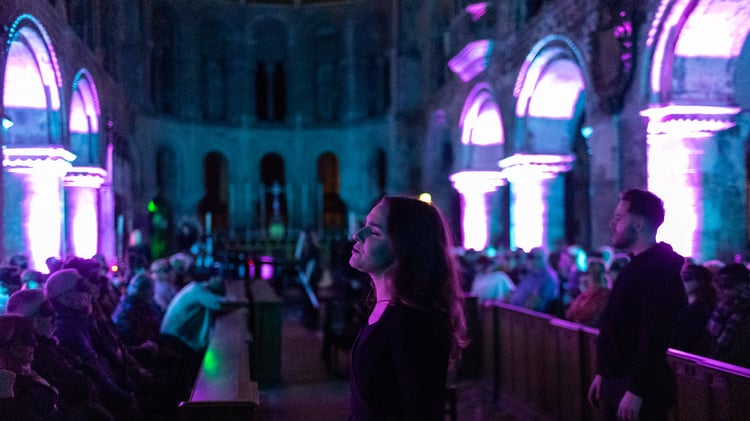
For several nights in January and March this year, hundreds of visitors gathered in its impressive main hall to witness in the dark: a live music event, where a team of 30 multi-instrumentalists delivered original arrangements of popular songs.
in the dark was conceived by Andrea Cockerton, the founder of music collective We Are Sound and charitable organisation DOSOCO. Andrea has been composing, arranging and running events in her local Cambridgeshire area for several years, but this is her most ambitious project yet.
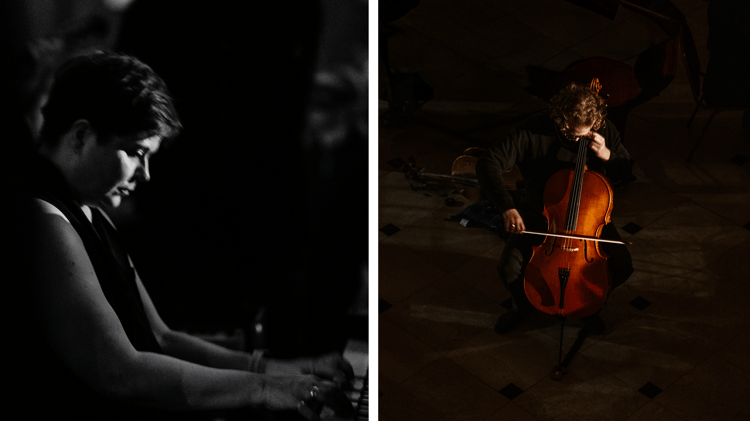
Left: Andrea Cockerton, Cambridgeshire musician and founder of in the dark. Right: Cellist • Credit: in the dark / Alice the Camera
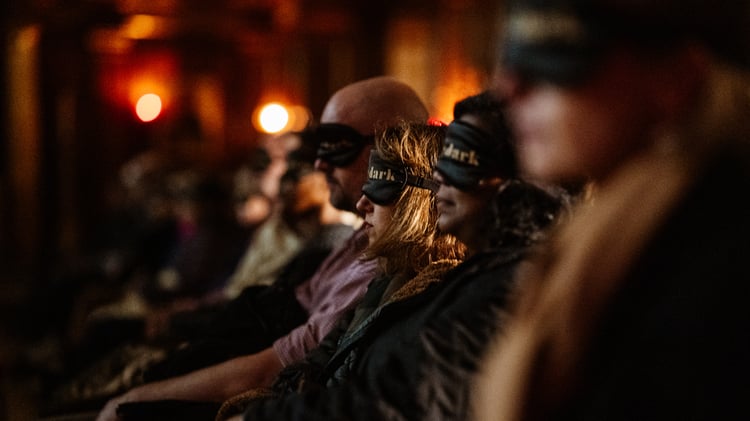
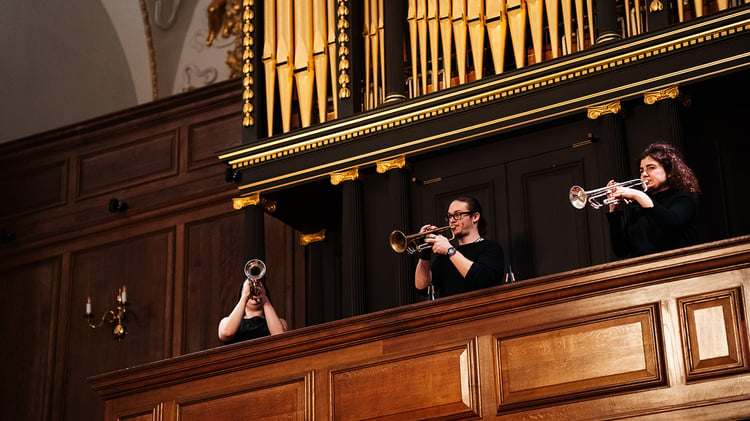
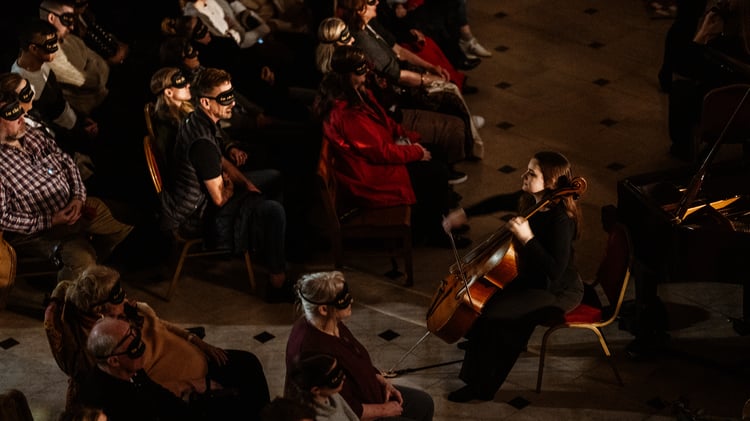
The premise is simple: musical experiences delivered in unusual and historic buildings. But there are some surprising twists. Guests are asked to wear blindfolds for the duration of each event, leaving them unable to see musicians and singers. Instead of standing in a fixed place, musicians move through the space whilst singing and playing instruments, from trombones to harmonium, clarinet and flute, creating a dynamic performance where sounds shift and fade and arise from unexpected places.
With no visual distractions, audiences are invited to just listen, giving their entire focus to the music. This is a rare occurrence: most of us are used to concerts or live music events being as much about watching as listening, whether it’s looking at performers on stage, taking in set designs and on-screen animations, or viewing through the lens of a smartphone as we film and capture content.
It’s a concept that has provoked a strong emotional response. Audience members are often moved to tears, and performances are often followed with long standing ovations from the crowd. In testimonials shared on In the Dark’s website, there is a recurring sense of wonder at the depth of feeling people have experienced whilst listening.
Audience • Credit: in the dark / Alice the Camera
“At its core, it’s about getting people as close to the sound as possible,” says Andrea. This closeness comes from removing both the physical barriers between audience and performers and eliminating distractions, something that Andrea believes can have a huge impact on how we listen. “It’s the combination of true surround sound and the heightened sense of hearing that seems to get people,” she adds.
in the dark began with a series of small-scale performances held in Cambridgeshire in 2017. Andrea had been running various concerts with We Are Sound, a choir made up of amateur local performers and singers, and was keen to trial a new kind of event format.
“We’d been doing lots of really noisy exciting gigs which we performed with a band and those were fantastic but I just wanted to do something different. I wanted to do something with the senses, and I remember thinking about the restaurant Dans le Noir in London, and how the sense of taste changes when we can’t see, and I thought, ‘I wonder if it’s the same with music?’” she explains.
She decided to put on some intimate small-scale events where a choir performed in the dark, testing the idea of what happens when the visual element of a live concert is removed. She didn’t expect this would generate huge demand, yet tickets sold out within a couple of hours. The following year, she organised more dates, found bigger venues, and still tickets sold out. The feedback was impressive, and often effusive: “One person told us it was the panacea the world needs, and the best musical experience of their life. When do you ever get feedback like that?!” she adds.
Performance at St Barts • Credit: in the dark / Ian Olsson
After three seasons of sell-out events, Andrea was keen to develop the concept, but her plans were put on hold due to the Covid-19 pandemic, and a period of personal illness.
In 2024, however, she was able to focus once again on evolving the idea. She decided to take in the dark on the road, heading to London in search of larger venues and professional musicians who could dedicate several weeks to performing.
“I wanted to give in the dark the kind of showing it deserved,” she says. “The first events had generated such an emotional response and it felt like we needed to go further.”
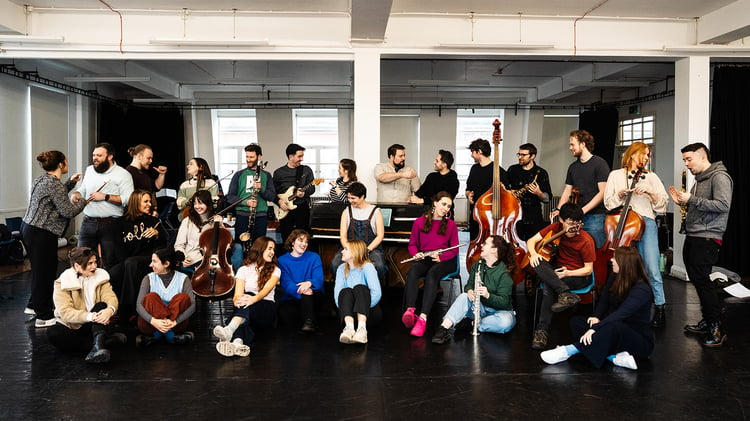
She set about finding musicians, holding auditions and recruiting a team of 30 singers and instrumentalists. The current line-up includes various vocalists as well as woodwind, brass, strings and percussion players. “Everyone sings, but we’ve also got [performers on] timpani, cellos, trumpets, trombones, clarinets, flutes, sax, piano, harmonium and harp… so it’s incredibly instrumental,” adds Andrea.
Musicians rehearsing at St Andrew Holborn • Credit: in the dark / Alice the Camera
Once she had found her musicians, she set about composing a set, reworking previous arrangements from the original Cambridgeshire events to suit the new line-up and choice of venues. She also decided to incorporate movement into shows, having musicians move through the space whilst performing, rather than standing in one place throughout. The first run of events in this format took place at St Bartholomew, and in the dark has since travelled to the famous Cutty Sark ship in Greenwich, as well as the Grade II* listed Chainstore in London’s Docklands area, and St Andrews church in Holborn, a Christopher Wren-designed building with ornate gilded ceilings and wood-panelled walls.
Performances last around 60 minutes, with each piece running into the next. The setlist is not revealed until the end of each show, but includes both obscure tracks from popular artists, and tracks from less well-known artists, spanning genres from indie and ambient to new folk and pop. The overall tone is, on the whole, quite gentle, but there are moments of drama, suspense and intrigue to keep listeners engaged.
Reflecting on the choice of tracks, and the arrangements composed for the series, Andrea says: “I wanted to curate a set that could take people on a journey. One thing it’s definitely not is a soundbath: I didn’t want it to be just a sit and meditate experience, so there’s more rise and fall, [moments] of chaos and simplicity… it’s very varied, and I wanted the audience to leave having experienced that,” she adds. In future seasons, she plans to experiment with creating a different feel or mood, whilst ensuring the resulting setlist retains a broad appeal, and complements both the performers and acoustics of each venue.
Cellist in audience • Credit: in the dark / Alice the Camera
“I think there’s lots of scope for further iteration,” she says. “We could look at other genres – I think jazz would work, pure folk would probably work and I think opera could potentially work with a few singers, but people are almost responding more to how it’s delivered than the genre of music, and I think that’s almost more important.”
Performing in darkness presents several challenges. Musicians have to navigate past seats, benches and other performers, whilst being unable to see audiences’ faces and reactions. There is no conductor to help guide proceedings, and with no visual distractions, audible mistakes can become even more noticeable. Rehearsals are held in each space to help to put performers at ease ahead of events, and there are various cues built into compositions to help keep things on track. All this has helped the team to avoid sound issues or disasters that can often arise with experimental or challenging formats.
Movement has become an integral part of the events, adding tension and excitement for listeners. Each performance plays with the sense of space, and the feeling of mystery is furthered by not being able to see the location or sources of sounds. The choice of venues has also helped to heighten the experience: there is something far more exciting about entering a grand historic building, and marveling at ambitious architecture whilst waiting for music to begin, than there is taking a seat in an otherwise unremarkable space. The chance to experience a performance in a beautiful or historic setting is for some listeners, a large part of the event’s appeal, and something that will continue to form a core part of the in the dark experience, along with the all-important blindfolds.
At its heart, however, in the dark is about music – a celebration of listening, and a reminder of how moving it is to immerse ourselves in sound, without distractions. As a sponsor for this year’s events, we were delighted to support a project that resonates with our ‘Only the Music’ ethos, and we look forward to seeing in the dark grow and evolve throughout next year and beyond.
An in the dark rehearsal • Credit: in the dark / Alice the Camera
For performers, Andrea says the event series has proved “freeing”, giving them a rare chance to focus on the act of singing and performing, whilst at the same time getting closer to listeners. For listeners, it has provided a rare chance to stop, unwind, and focus on the unique pleasure of hearing talented musicians perform live.
in the dark’s 2025 event series has now concluded, but more performances are scheduled for January - March 2026. Andrea is now hoping to further expand the concept in the year ahead, bringing in new partners, and even taking in the dark to new cities in the UK and abroad, including Berlin. “We want to go further than London in the UK. It would be really nice to go north and south, so we will be applying for Arts Council funding to do that … and if things go to plan, we want to start in other cities as well. It would be amazing if we could pull that off, as we want to give as many people as possible the chance to hear the show.”
She is also hoping to embark on research projects exploring the effects of listening without visual distractions, and the impact this can have on our sense of wellbeing. Alongside this, she hopes to raise funds for DOSOCO – the charitable initiative she founded in Cambridgeshire. Once in the dark becomes profitable, she plans to put 5% of profits into DOSOCO projects, funding more music initiatives for children, older people and musicians. This is an important part of the project’s future plans, and something Andrea is keen to build out as In the Dark scales up. “If we can put on brilliant music whilst also giving back, that would be amazing,” she adds.
We use cookies to enhance your browsing experience, serve
personalised ads or content, and analyze our traffic. By
clicking "Accept All", you consent to our use of cookies.
Cookie Policy
Customise Consent Preferences
We use cookies to help you navigate efficiently and perform
certain functions. You will find detailed information about all
cookies under each consent category below.
Always Active
Necessary cookies are required to enable the basic features
of this site, such as providing secure log-in or adjusting
your consent preferences.
Cookiedcs_consent
Duration1 year
DescriptionStores your cookie consent choices for this site.
Analytical cookies are used to understand how visitors
interact with the website. These cookies help provide
information on metrics such as the number of visitors,
bounce rate, and traffic source.
Cookies_ga, _ga_*
Duration2 years
DescriptionSet by Google Analytics to distinguish visitors and record how the site is used.