Our latest Classical Choices playlist opens with a newly released modern classic: a live recording of Yunchan Lim performing Rachmaninov’s Piano Concerto No 3 at the Van Cliburn International Piano Competition in 2022, with the Fort Worth Symphony Orchestra under Marin Alsop. The performance catapulted Lim to stardom and it has since become the most-watched version of the concerto on YouTube, with over 17 million views.
In Decca’s live recording, released to mark the Van Cliburn’s latest edition, sound has been cleaned up and recut, making Lim's extraordinary combination of poetic old soul and virtuosity even more crystalline. Whether it will earn as many awards as Lim’s other live recording from the Van Cliburn – Liszt’s Transcendental Etudes – remains to be seen, but this hardly matters given its already legendary status.
To follow, we have a trio of new releases: Baroque lute concertos from Miguel Rincón with crack Baroque ensemble Il Pomo d’Oro, followed by the second volume of Merton College Choir’s Orchestral Anthems series and to finish, Ravel’s two piano concertos from another major competition winner, Yeol Eum Son, whose 2011 performance of Mozart’s Piano Concerto No 21 at the 2011 Tchaikovsky Competition has also set streaming records with 25 million views to date…
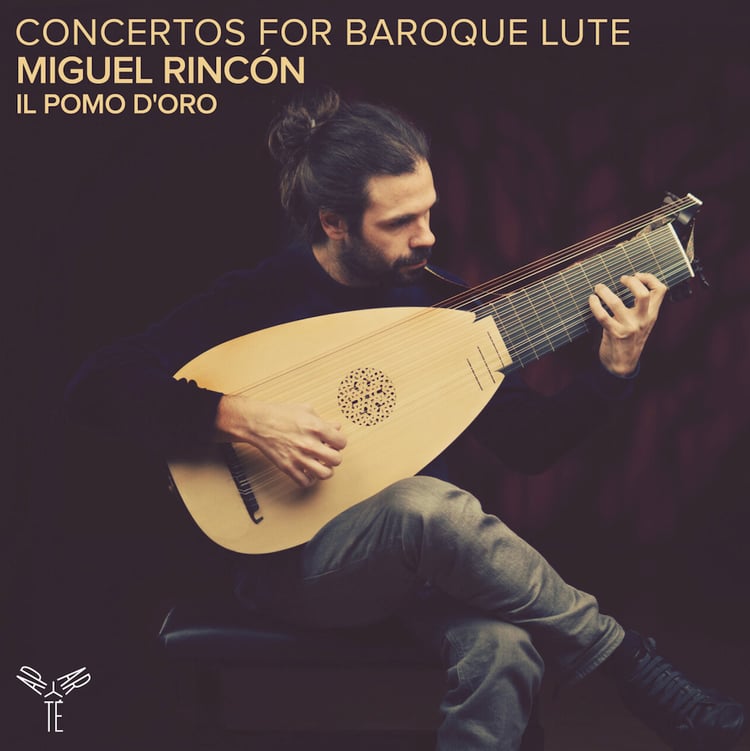
Concertos for Baroque Lute – Miguel Rincón, Il Pomo d’Oro on Aparté
In the 1700s, the lute was king of court instruments. It was later relegated to accompanying textures, and eventually abandoned, but in recent years, lutenist Miguel Rincón has set out to put the spotlight back on the lute. The Basel-based musician has embarked on a project to revive the lute concertos of a small group of late-Baroque virtuosos and composers working at the courts of Vienna, Bayreuth and Dresden, who refused to accept the instrument’s decline, choosing instead to explore its expressive potential as a soloist in the emerging galant style.
His efforts led to a recording with period ensemble Il Pomo d’Oro – a small-forces constellation comprised of one-to-a-part strings and harpsichord – which presents four contrasting works from this musical Indian Summer of virtuoso lute repertoire.
First up is the lively Lute Concerto in F by Karl Kohaut (1726-1784), a key figure in Viennese musical life, who was familiar with the works of Bach and Handel. The piece demonstrates what an equal partner the lute is with the orchestra, and the performers’ sparky interplay is nicely aided and honoured here by the engineering.
From Bayreuth court orchestra lutenist Johann Bernhard Hagen (c.1720-1787), Rincón has chosen the Trio in E-flat major, a highly expressive work which appears here in its world premiere recording. Also recorded for the very first time is the Lute Concerto in C by Hagen’s Bayreuth colleague, Jakob Friedrich Kleinknecht (1722-1794), who only wrote this one work for lute. It’s a radiant piece, or at least that’s how it’s played here, with graceful panache and a lovely chamber dynamic.
The programme rounds off with a stormier flourish by way of Johann Friedrich Fasch’s (1688-1758) Concerto in D minor, preserved in the music collection of the Dresden court. All in all, it’s an exceptionally attractive programme, performed with a crisp lucidity, lightly-worn virtuosity and close conversation that has kept me returning for repeat listens. I’ve given you the Kleinknecht for the playlist.
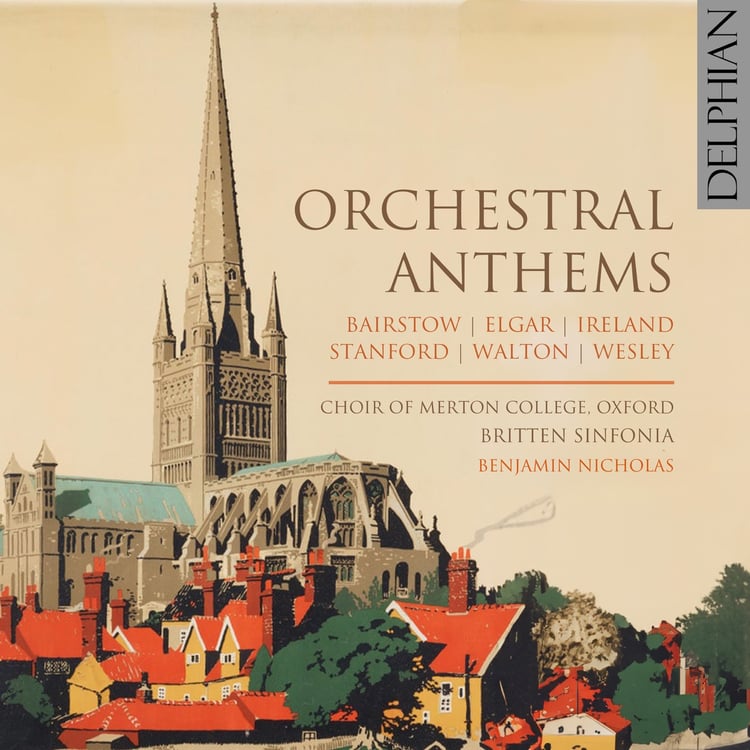
Orchestral Anthems Vol 2 – The Choir of Merton College, Oxford, Britten Sinfonia/Benjamin Nicholas on Delphian
After a knock-out first volume, the Choir of Merton College, Oxford and its director Benjamin Nicholas has reunited with Britten Sinfonia to explore some more much-loved Anglican repertoire in its full orchestral splendour. It’s glorious work: Charles Villiers Stanford’s Evening Service in A (affectionately known by generations of singers simply as ‘Stanford in A’) is mostly performed with organ nowadays, so to hear its original 1880 orchestral version will be a magnificent discovery to many. It’s also performed magnificently: the choir and orchestra deliver its Magnificat with a fabulous combination of zinging punch and tautly buoyant serenity, whilst the opening a cappella statements of its two Glorias provide a fabulous vehicle for the bright clarity of the Merton choral sound. It’s these pieces that you’ll find on this month's playlist.
Elsewhere, the album opens with Light out of the darkness, a dramatic chorus from Elgar’s first oratorio, The Light of Life (first heard in September 1896 at the Worcester Three Choirs Festival) which occurs just before the scene in which Jesus anoints the eyes of the blind man with clay. Its transitions between Thrilling Choral Banger and writing of more tender, radiant mystery are brilliantly coloured, characterised and paced here by Nicholas and his musicians.
The programme also features the premiere recordings of the orchestral versions of Edward Bairstow’s Lord, thou hast been our refuge and Samuel Welsey’s Ascribe unto the Lord. A nice orchestra-only interlude comes via Arnold Foster’s orchestration of Vaughan William’s originally-organ Prelude on ‘Rhosymedre’, the Welsh hymn tune which appeared in the 1906 English Hymnal with Charles Wesley’s words ‘Author of Life Divine’.
Working the album up to a fitting final climax is a stylistically nimble, crisply articulated reading of Walton's The Twelve, a setting of a tripartite poem by W.H. Auden commissioned in 1964 by Christ Church, Oxford, of which Walton and Auden were both alumnae.
Ravel Concertos, Bach/Wittgenstein – Yeol Eum Son, The Hague Philharmonic/Anja Bihlmaier on Naïve
Two years after her acclaimed complete Mozart sonatas, Yeol Eum Son has teamed up with The Hague Philharmonic and Anja Bihlmaier for fizzingly captured readings of Ravel’s two piano concertos. It’s a resonant choice, given that the G major concerto, composed between 1929 and 1931, is as indebted to Mozart as it is to the jazz age; and its melting central Adagio assai is a perfect vehicle for Son’s tonal purity. The Left-hand Concerto, meanwhile, composed concurrently with the G major for Paul Wittgenstein (who had lost his right hand during the First World War), is compellingly brought out in an interpretation that takes listeners on such a journey, it feels almost programmatic.
Perhaps best of all, Son has chosen to fill the rest of the album not with Ravel’s solo piano works but instead, four rarely performed and recorded left-hand arrangements of JS Bach by Wittgenstein himself: the famous Prelude in C major from Book 1 of Das wohltemperierte Klavier BWV 846, the Prelude in C minor BWV 999, the Gigue of Partita No 1 in B flat BWV 825, and the Siciliano from the Sonata for Flute and Harpsichord in E flat major BWV 1031. All are phrased and shaped with such exquisite clarity and poetry, almost as if such multi-voicing from a single left hand were as effortless as falling off a log. It’s the Bach transcriptions that I’ve selected for the playlist....






.png)