Welcome to Classical Choices! This month’s playlist opens with a nod to Maurice Ravel, one of the greatest ever masters of orchestral colour, who was born 150 years ago on March 7, 1875.
To mark the occasion, I’ve selected an archive recording from 1984, with Pierre Boulez conducting the New York Philharmonic in a performance of Ravel’s Bolero. The instrumental timbres seem to pop with such three-dimensionality, it feels as if you could reach out and touch them.
From there, it’s on to our new releases, which begin with quiet intimacy in the form of pianist Alice Sara Ott’s Complete John Field Nocturnes.
Next comes a stunning and unusual vocal recital from young German soprano Eva Zalenga and finally, the first instalment of John Wilson and the Sinfonia of London’s new series devoted to William Walton, with the Violin Concerto’s soloist role performed by the orchestra’s young concertmaster Charlie Lovell-Jones.
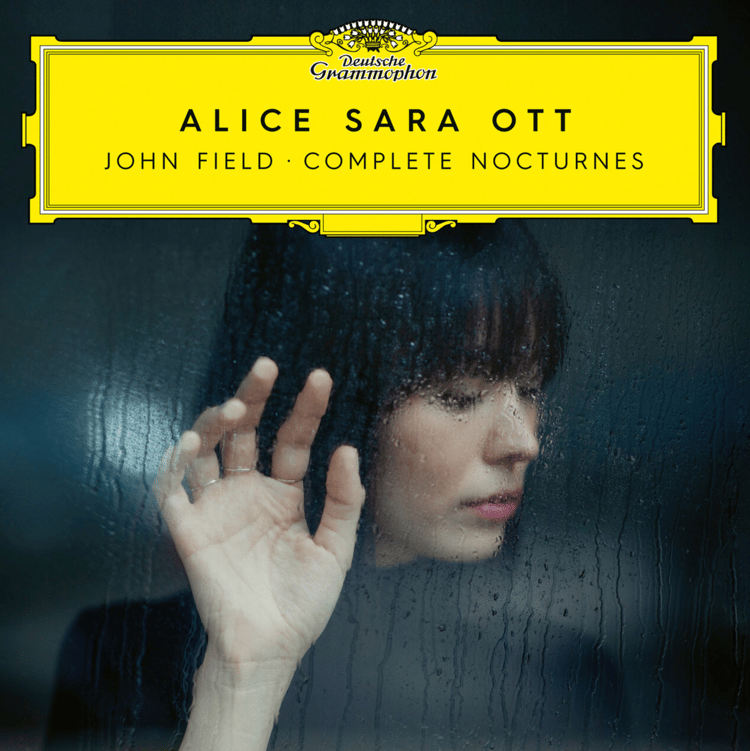
John Field: Complete Nocturnes
Alice Sara Ott
DG
Think of composers associated with the Nocturne, and the name bringing most readily to mind is Frédéric Chopin (1810-1849). Yet the first examples of this popular musical form were in fact written by the Irish composer John Field (1782-1837), who published the first three of his own 18 Nocturnes when Chopin was just four.
Field’s name seems to languish semi-forgotten, yet in his day he was an internationally feted keyboard virtuoso. He worked up the ladder from penniless apprentice and pupil to Muzio Clementi in London, to musical celebrity living a champagne lifestyle in Moscow, before falling out of fashion and dying of ill health exacerbated by his heyday excesses in 1837.
Pianist Alice Sara Ott was introduced to his work through streaming platforms, after searching for music that could provide comfort during Covid-19 lockdowns.
You can understand why his gently wistful, melodic pieces hit the spot: sometimes quite Classical in style, reminiscent of Mozart; other times sounding Romantic in the line of Chopin, or perhaps Schumann in his gentler moments. It is often multi-layered in its textures and for all its gentleness, it contains moments that hint at a personality not averse to a bit of theatrical panache in the name of whipping up an audience (try the central climax of No 4 in A major, for instance).
Ott’s readings are whimsically, poetically and fluidly spun out, and this exceptionally attractive recording leans subtly into the soft-focus dreaminess of both the music and Ott’s interpretations. It’s an album-long experience with a pleasing duality, working on the one hand as elegant mood music, whilst also offering up a feast of musicological and interpretational detail that rewards closer listening.
Ott’s sleeve-note mentions the existence of seven keyboard concertos among Field’s various other works, which has sent me hunting down the few recordings of them that exist. Based on the strength of her Nocturne readings, I can’t help but hope that Ott will one day record a few of these herself.
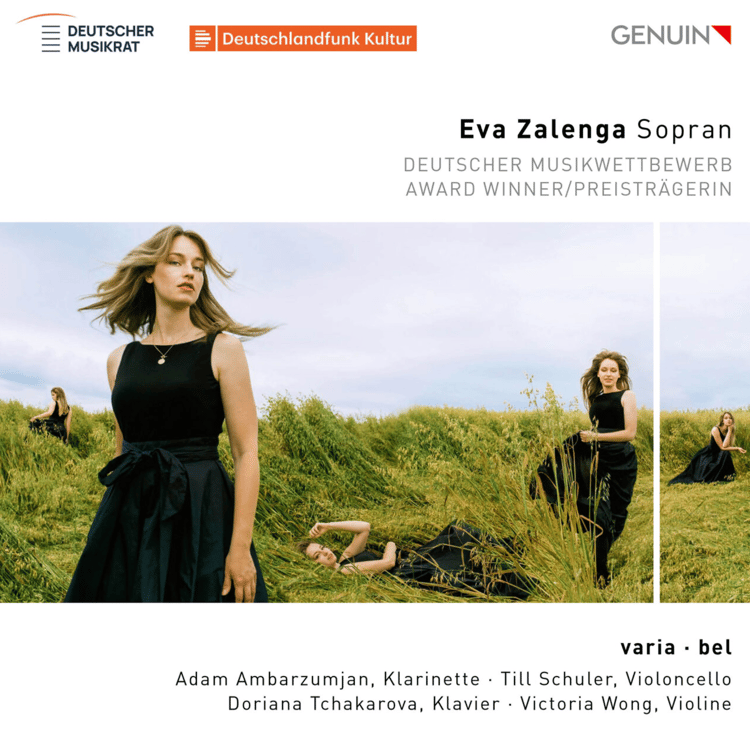
Varia bel
Eva Zalenga etc
Genuin
I’m not sure when I last enjoyed a debut vocal recital album as much as this one from young German soprano Eva Zalenga, recorded after she won the German Music Competition.
Zalenga’s voice is exquisite: clear, light and silvery-pure. The album stands out further due to the variety and originality of programming: not simply piano-accompanied, but also featuring clarinettist Adam Ambarzumjan, cellist Till Schuler and violinist Victoria Wong in various constellations. Works themselves represent a complete cornucopia of languages, centuries and styles, from the world premiere recording of Ignaz Lachner’s (1807-1895) ‘An die Entfernte’ for cello, voice and piano, through to a brand new version (accompanied by all the album’s instrumentalists) of contemporary composer Isabelle Aboulker’s Meyerbeer-esque vocal fireworks show, Je t’aime.
It’s impossible to pick favourites from such end-to-end perfection. That said,Pauline Viardot’s ‘Die Sterne’ – over which Schuler’s cello engages in amorous duet with Zalenga – is fabulous. Another highlight is the seductive simplicity of Rebecca Clarke’s 3 Irish Country Songs for voice and violin, Zalenga’s fresh-sounding vocal lines supported by alternations between plucked chords and closely intertwining bowed countermelodies.
Another rarity worth mentioning equally for voice and solo violin is Darius Milhaud’s haiku-sized 4 Poèmes. For the playlist I’ve given you Lachner, Viardot and Clarke but don’t stop there: this is an album that deserves to be heard from end to end.
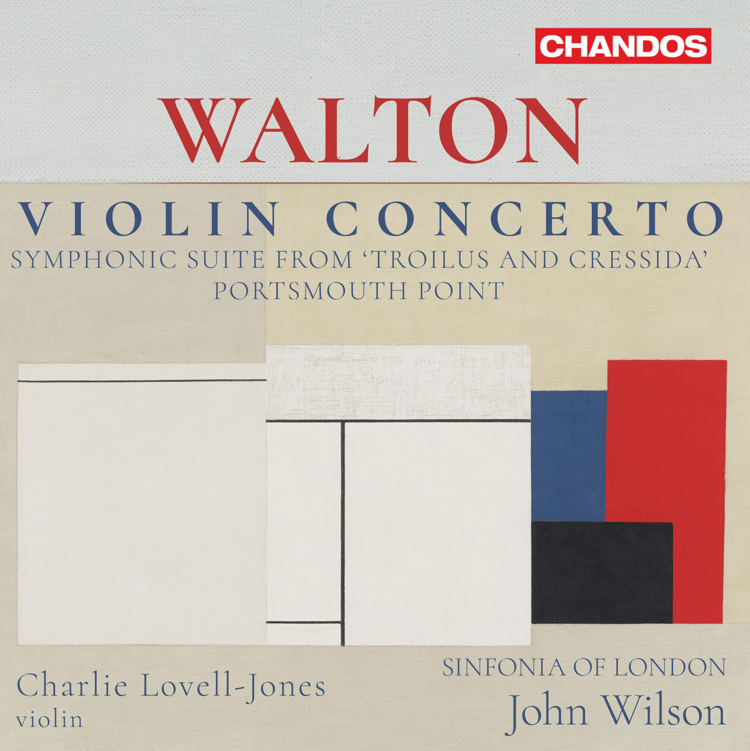
Walton Violin Concerto
Charlie Lovell-Jones, Sinfonia of London, John Wilson
Chandos
It’s always an event when John Wilson and his Sinfonia of London drop a new album, and this first instalment of a new series devoted to the works of Sir William Walton is every bit as stupendous as one would hope and expect.
First up is the Symphonic Suite to Walton’s opera Troilus and Cressida. The opera itself, which premiered in 1954, wasn’t a critical success. However in 1987, four years after Walton’s death, his widow commissioned arranger Christopher Palmer to create an orchestral suite from it, and the resultant tighter selection of the score’s best moments, from glittering to sensual, sounds kaleidoscopically fabulous under the Sinfonia of London’s collective digits. It is bright, clean-contoured, rhythmically bristling and dramatically fevered, with a wonderful Hollywood-esque sheen and swoon to the strings and a silky purr to the woodwind.
Given that one of the delights of Troilus and Cressida lies in the elegance and silvery luminosity of the solo strings work, it feels thoroughly right that the orchestra’s concertmaster, Charlie Lovell-Jones, takes the soloist role for the Italian-inspired Violin Concerto of 1939. It’s a comparatively fast-tempo reading, which feels entirely apt given the piece was written for the famously speed-loving Jascha Heifetz, and the effortless-sounding flight and brilliant virtuosity brought to it by Lovell-Jones and the orchestra in this recording feels hugely satisfying. It’s this particular piece you’ll find on this month’s playlist.
The album’s climax is the ebullient, syncopations-charged overture Portsmouth Point, inspired by the Thomas Rowlandson etching of a rowdy 1814 century harbour scene, which serves as a glorious showcase for the nimbleness of the orchestra’s brass and percussion sections.