Happy new year, and welcome to our first Classical Choices review and playlist of 2025! As much as Christmas isn’t supposed to be about presents, a highlight of mine was my husband surprising me with a record player to complement my digital setup.
My new favourite pastime is now rummaging through charity shop vinyl boxes to see what classical treasures lurk therein, and comparing the sound on these records to the digitally streamed version (so many classic recordings having been cleaned up and better balanced for the digital age).
It’s a pot-luck business – first you have to alight upon a recording you genuinely want to own, and then it’s only really once you bring it home that you discover what condition it’s in – my hit rate thus far has been encouragingly high, its unqualified successes including a mint-condition copy of Arturo Toscanini and the NBC Symphony Orchestra’s superb 1953 recording for RCA Red Seal of Dvořák’s Symphony No 9 ‘From the New World’. It’s the first movement of this which kicks off this month’s playlist – followed, for comedic value, by Flanders and Swann’s take on ‘high fidelity’…
From there, it’s on to our new releases: a stunning new Vivaldi Four Seasons (and more) from Le Consort under violinist-director Théotime Langlois de Swarte; a highlands-themed debut vocal disc from young tenor Glen Cunningham partnered by pianist Anna Tilbrook, and finally a brilliantly conceived collaboration between the Kaleidoscope Chamber Collective and tenor Karim Sulayman which puts a much-deserved spotlight on the chamber music and songs of one of the stars of Belle époque Paris, Reynaldo Hahn.
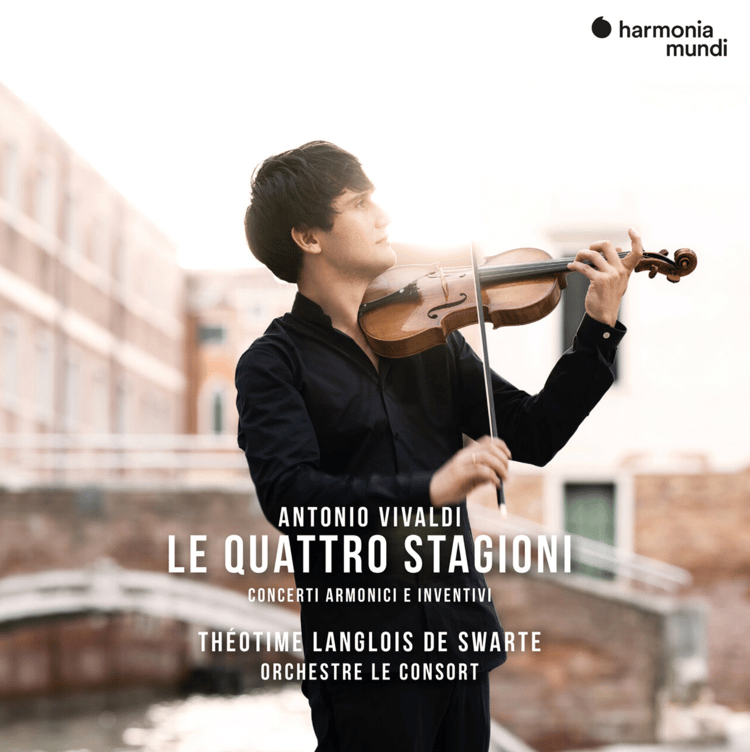
Vivaldi Four Seasons
Le Consort/Langlois de Swarte
Harmonia Mundi
‘I am well aware that a great deal has already been said about one of the most frequently performed and most recognisable compositions in western music; to tackle it in the tercentenary year of its publication invites us to re-examine our relationship with the work, to explore its many facets’. So says Théotime Langlois de Swarte, violinist-director of the young French period-instrument band, Le Consort, in the accompanying sleeve note to this ravishing new take on Vivaldi’s famed masterpiece.
Conceptually, Langlois de Swarte has honed in first on the symbolism of Vivaldi’s key choices: bright E major for ‘Spring’, symbolising birth; F minor for ‘Winter’, symbolising death, but with its central fireside idyll cast in soft E flat, associated with prayer and devotion. He has then also picked up on the cyclical, Proustian way in which we as human beings perceive the seasons – the potency of the memories they spark in us, ‘creating bridges to our own past and forming a kind of temporal continuum.’
The Four Seasons concertos themselves are then followed by generous programme of further works that continue exploring these ideas: from Vivaldi himself, more violin concertos, plus the aria ‘Nulla in mundo pax sincera’ (‘There is no genuine peace in the world’); the world premiere recording of Gregorio Lambranzi’s Nuova e curiosa scuola de’ balli teatrali (1716) – Venetian theatrical dances of the sort Vivaldi would have known well, among which the lilting Micarena’s rhythms sound like distant relations to Spring’s third movement; then sitting as the album’s climax – intended both as an ‘Et resurrexit’ moment and an invitation to circle back to Spring – the prayerful Adagio from Giorgio Gentili’s Trio sonata in A major op 1 no 1, which Vivaldi may well have heard in his youth.
The Le Consort Orchestra is larger than we’re used to hearing these days with period-instrument Vivaldi recordings (the strings, for instance, include seven violins to a part, three violas and four cellos), which has afforded him a particularly wide spectrum of sound and dynamic to play with. The playing itself is period-informed, but romantically so: not too clipped, and with an emphasis on beauty and spirit, heart and lyricism, rather than on absolute ‘authenticity’.
Heart and lyricism colour every note, on top of which Langlois de Swarte’s solo violin lines – colourful, effortless, storytelling virtuosity – are the proverbial icing on the cake. It was also a scene-setting masterstroke to preface the four Seasons concertos with the solo cadenza of Vivaldi’s similarly E major Violin Concerto RV 268.
Further striking moments include Summer’s final storm – a tour de force of rhythmically punching energy, phrasing and tempo harnessed into angry gales; soprano Julie Roset’s transcendental purity over ‘Nulla in mundo pax sincera’; the smiling rhythmic vim, swing and nimbleness of the Lambranzi dances, and the sparklingly jewel-like, pointillist accompanying textures to Langlois de Swarte’s silvery melody in the Adagio of the Violin Concerto in E major RV 264.
I don’t think I’ve ever enjoyed a Four Seasons this much. On this month’s playlist you’ll find the aforementioned cadenza-shaped prelude, then Spring in its entirety, followed by the Lambranzi dances and ‘Nulla in mundo pax sincera’.
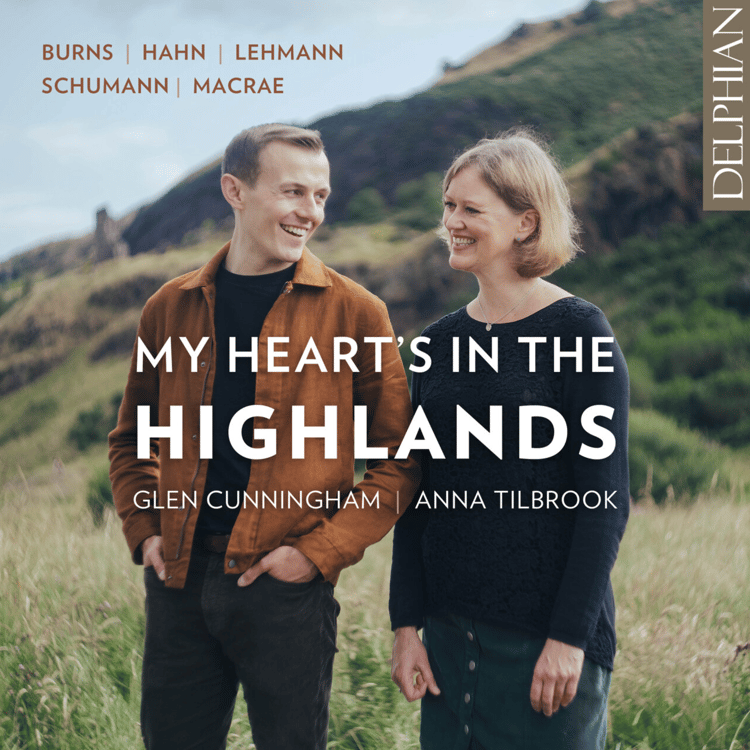
My Heart’s in the Highlands
Glen Cunningham, Anna Tilbrook
Delphian
Young tenor Glen Cunningham’s recent successes include being a 2022/24 member of Opera Studio at Opéra national du Rhin (where he jumped into the title role of Candide for two performances and was hailed as ‘revelation of the night without contest’ by Forum Opera), and being named a 2021/22 Emerging Artist at Scottish Opera (where he recently performed the title role in Daisy Evan’s adaptation of Albert Herring).
Now, Cunningham has paired up with his friend and regular duo collaborator, pianist Anna Tilbrook, for this debut album for Delphian, which celebrates his Highland heritage through Scottish-inspired music composed both in and beyond its borders.
The album includes a new commission by Cunningham’s fellow highlander Stuart MacRae – settings of five poems by Robert Louis Stevenson. Also in the mix are three traditional songs skilfully arranged for piano accompaniment by Glasgow-born Claire Liddell (b.1937), and a selection of Schumann’s (1810-1856) settings of Burns poems – German-language Lieder whose Scottish DNA is low-level but audible. Another programming highlight is the Five Little Songs for children written by Reynaldo Hahn (1874-1947) during World War One as a means of mental escape from the surrounding horrors.
It all sounds wonderful via Cunningham’s crisply delivered bright tones. The MacRae set – their sound world often an intense, faintly mystical and otherworldly one – sit especially beautifully in his voice, reminding one of his affinity for Britten. To Hahn’s songs, he brings an emotive feel of purity, playfulness and innocence. Tilbrook makes for a compelling second, wordless voice in moments such as her duetting over ‘Ye banks and braes o’Bonnie Doon’, while pianistic moments to savour include her suddenly jauntily jazzy rhythmic handling of the final bars of Schumann’s ‘Jemand’.
Their combined radiant, proudly lilting reading of ‘My heart’s in the Highlands’ makes for a cracking programme closer. I’ve given you that closing song, preceded by the traditional ‘Ae fond kiss’ (arr. Alfred Moffat 1863-1950) and MacRae’s Five Stevenson Songs.
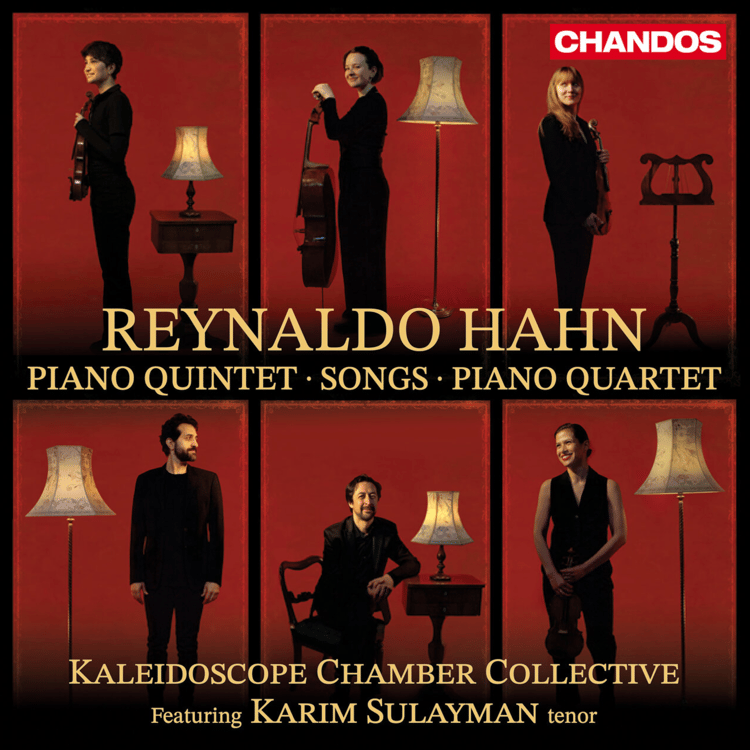
Raynaldo Hahn: Piano Quintet, Songs, Piano Quartet
Kaleidoscope Chamber Collective, Karim Sulayman
Chandos
Founded by pianist Tom Poster and violinist Elena Urioste, the Kaleidoscope Chamber Collective has made it a mission to champion wrongfully-neglected composers, and this latest project devoted to Raynaldo Hahn (1874-1947) is particularly magical.
Born in Caracas to a Jewish-German father and a Catholic-Venezuelan mother, Hahn spent his musical career in Paris, where he had significant Belle époque-era success as a composer, conductor, singer, writer-lecturer and music critic. He was especially prolific and lauded as a writer of Romantic songs.
His Piano Quintet – two intense, powerful movements followed by a suddenly cloudlessly, gossamer-weighted concluding Allegretto grazioso – was hailed as his greatest work at its 1922 premiere. His 1946 Piano Quartet still cleaves to that earlier musical world, but does so with beauty and superb crafting.
The readings here from the Kaleidoscope players – Poster and Urioste with violinist Savitri Grier, viola player Rosalind Ventris and cellist Laura van der Heijden – are perfectly pitched. The intensity of the Quintet’s first two movements is beautifully plumbed, followed by an Allegretto grazioso whose intricate textures are gracefully, lucidly spun – as are those of the Quartet’s Allegro assai. Equally atmospherically realised is the cloaked, dreamlike mystery of the Quartet’s Andante third movement, gentle momentum fluidly balanced with sensuously floating repose, and its quietest moments voiced with spellbinding hush.
The real programming masterstroke, though, is the decision to bring in Lebanese-American tenor Karim Sulayman for brand new strings-and piano-accompanied arrangements of six Hahn songs. The combination of Sulayman’s velvety, expressive voice and the accompanying instrumental voices sound so natural and attuned to the music, it’s as if the instruments are playing themselves – leaving you wishing for more. I’ve given you the opening two songs followed by the Piano Quartet to conclude this month’s music selection…