Our latest pick of classical music – curated by journalist Charlotte Gardner – includes period-performance treasures and new releases from Sinfonia of London, Manon Galy & Jorge Gonzalez Buajasan
Welcome to April’s Only the Music, which opens on a period-performance treasure, Gluck’s ‘Danse des Ombres heureuses’ from Orphée et Euridice, as recorded in 1982 by Christopher Hogwood and his Academy of Ancient Music. Back then, to hear this famed baroque repertoire in the light, clean-lined, lucid-textured freshness of a period-instrument ensemble was entirely new, and it was greeted with unequivocal delight by Gramophone’s critic. What struck me when I fell across it recently was how strikingly fresh and lovely it still sounds. Hogwood really was a musical giant.
From there we move from John Wilson’s championing of Puccini’s early-career orchestral music, through a recital of Romantic violin sonatas from violinist Manon Galy and pianist Jorge Gonzalez Buajasan, to a new Bach St John Passion fromRaphaël Pichon and Pygmalion. Enjoy.
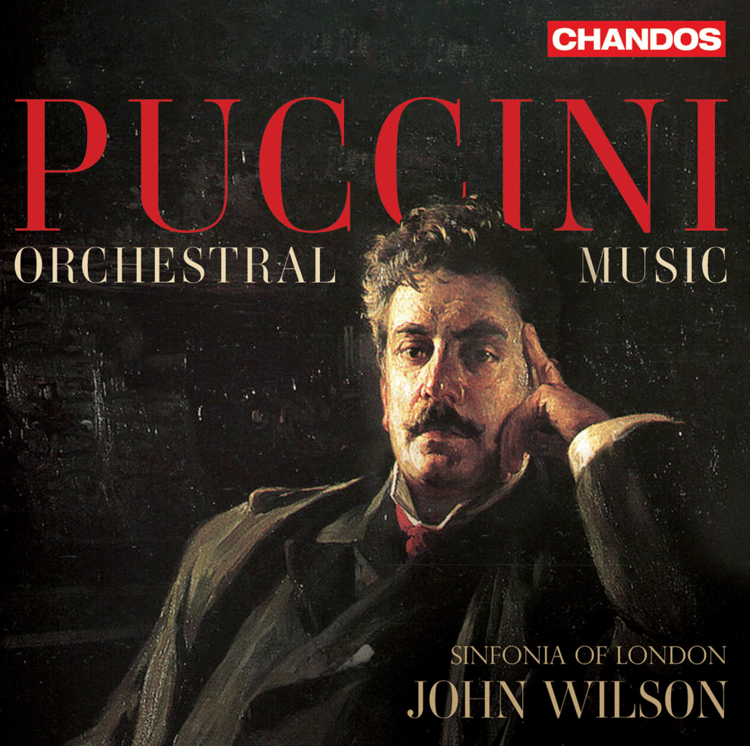
Puccini: Orchestral Music
Sinfonia of London/John Wilson
Chandos
One of the most renowned opera composers of all time, Giacomo Puccini’s breakthrough came in 1893 with his third opera, Manon Lescaut. He was 35 at the time, meaning that a substantial body of works preceded it, as he honed his distinctive voice. It’s this underperformed tranche of his repertoire that John Wilson and his Sinfonia of London have turned to for their latest album, charting Puccini’s compositional development from student orchestral compositions to orchestral extracts from his earliest operas.
I should emphasise up top that, while you get the sense with some of the earlier stuff of a composer workshopping styles and ideas, there’s nothing second-rate feeling about the music – and all the more so when you factor in the polished, ebullient vim with which Wilson and his band serve it up. Take thePreludio sinfonico, first performed in 1882 at the Milan Conservatory where Puccini was studying, at an end-of-term concert; because yes, sure, this was in essence a composition exercise, and one audibly modelled on Wagner’s Prelude to Lohengrin, but it also has a thoroughly Puccini-flavoured, free-flowing Italian lyricism to which Wilson and his gang have in turn brought a sublime sheen and luminosity (listen to their vibrato and slides between notes), and sensuously teasing rubato pulls. Or there’s theCapriccio sinfonico, Puccini’s 1883 graduation piece, which pre-echoes the opening ofLa bohèmeby a decade and is performed here with edge-of-the-seat dramatic panache.
With ‘La tregenda’ (The Witches’ Sabbath’) from his one-act opera of the same year, Le villi (The Willis), comes tautly crackling drama. Orchestral interludes from Manon Lescautitself also feature, with its Intermezzo featuring some thrillingly ardent playing. Add the 3D-feeling capturing of the orchestral timbres in Kilburn’s Church of St Augustine (24-bit / 96 kHz quality) and this is an end-to-end treat
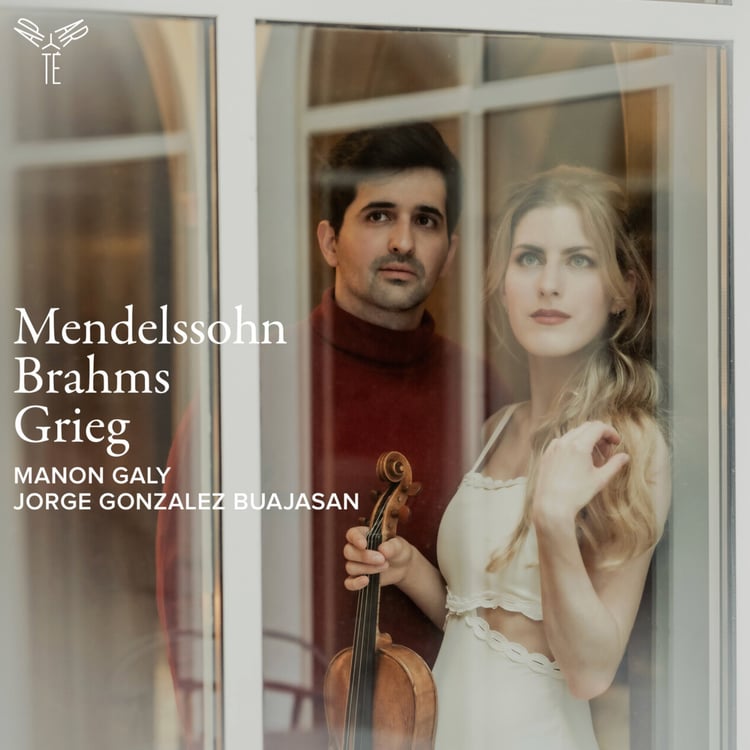
Mendelssohn, Brahms, Grieg
Manon Galy, Jorge Gonzalez Buajasan
If violinist Manon Galy and pianist Jorge Gonzalez Buajasan’s names are unfamiliar to you, you might nevertheless know their playing as two thirds of the Zeliha Trio. Either way, this particular album represents the second time that this pair of busy chamber musicians have come together for a duo recording (the first was Nuits Parisiennes in 2023), and it’s very good indeed.
A celebration of the ‘inner worlds of Romanticism’, their programme brings together Mendelssohn’s Violin Sonata in F major – his only mature violin sonata – with Brahms’s Second in A major and Grieg’s Third in C minor, punctuated by a few further intimate little shorts. The partnering throughout is as close as you’d expect for such a well-oiled relationship, with some particularly nicely balanced and conversational exchange in the Grieg. Other highlights include the lovely gentleness and leisurely tempo they’ve brought to the very opening of the Brahms, and in the Mendelssohn an almost late-Romantic-esque tonal richness and expressive headiness from Galy, who album-wide is making beautiful hay with her lower-register dusky width (although in fact some of her most knock-out playing is when she brings that tonal shadowiness to the sweeping high-register ducks and dives of Sibelius’s Berceuse, along with a glorious semi-wild freedom). Her portamento colouring across the album is another pleasure, lending an attractively nostalgic quality. Tonal and expressive pleasures from Gonzalez Buajasan meanwhile include his pensively handled solo opening the Grieg’s central Allegro espressivo, which he’s coloured with a sweet shine that’s had me thinking of Debussy’s famous description of Grieg’s music as sounding like ‘a pink bonbon filled with snow’ – meant as a jibe, but here I’m meaning it very much as a compliment.
Really, a genuine gem of a recital disc.
Aparté
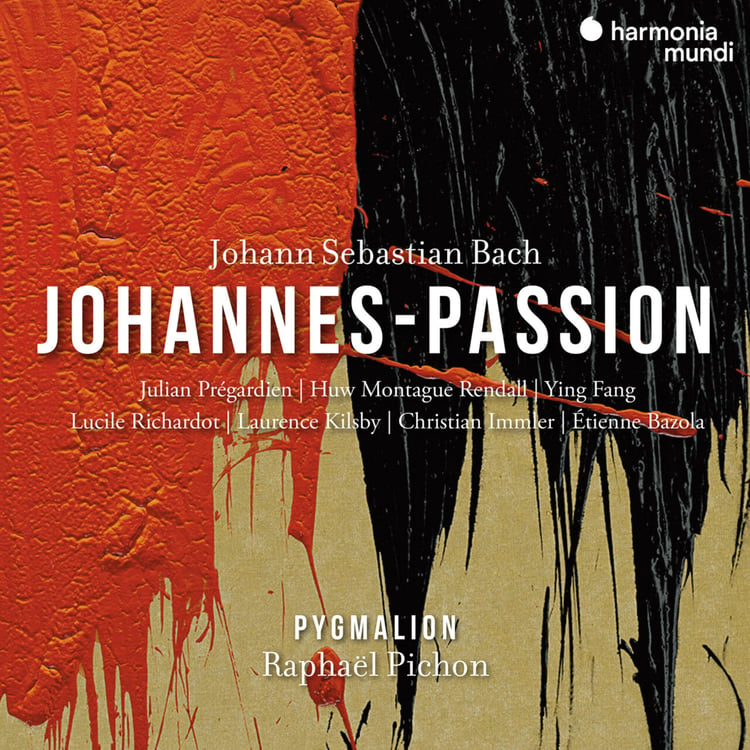
Johannes-Passion
Pygmalion/Pichon
Harmonia Mundi
Last year Raphaël Pichon and his magnificent period-instrument Pygmalion brought us a JS Bach Mass in B minor of a revolutionary, revelatory gleaming radiance and drama. It ended up scooping Gramophone’s 2025 award for Recording of the Year. Now they have turned their attentions to Bach’s St John Passion, and it’s every bit as stunning.
Composed in 1724, the St John Passion is the first of the two Passion settings that Bach wrote as music for Good Friday Vespers, its hymn-like chorales to be sung by the congregation, and the arias and recitatives by the choir. Its operatic degree of drama must have felt nothing short of explosive to that first church-full of Easter worshippers. Pichon and his band have brought this theatrical quality electrifyingly to the fore, right from the bristling, fast-pulsing whoomph as the opening Chorus gets off its starting blocks.
Similarly profound is the depth of these readings’ devotional spirit. Add the swiftness with which they can switch the dramatic dial, the colourful continuo work feeding it all, and the wonderfully crisp diction of the whole, and the result is stupendous. To hear all of the aforementioned elements coming together, listen to the visceral howl of disgust with which an agile-voiced Julian Prégardien as the Evangelist, narrating how the baying crowd demands Pilate release Barrabas and crucify Jesus, reminds us, ‘Barrabas was a murderer’; and then to the quietly introspective devotion with which Huw Montague Rendall as Jesus sings ‘Betrachte, meine Seel’ (My soul, think how a heavenward-guiding flower springs from the thorns) to support from a pair of earthily radiant-toned viola d’amores and theorbo, with Pichon’s gently elastic metre the final magical element.
For more sublime instrumental work, head to the poetic gamba solo opening mezzo Lucile Richardot’s, ‘Es ist vollbracht!’ (It is accomplished). Chorales hit all the right spots – it’s a brightly transcendent ‘In meines Herzens Grunde’ (‘In the depths of my heart’) –, and I’ve found myself rewinding bass Christian Immler’s Golgotha aria ‘Eilt, ihr angefochtnen Seelen’ (‘Hurry you tormented souls’) multiple times on account of the purity and agility of the choral interjections. The capturing in Namur Concert Hall is fabulous too: a huge dynamic range, skilful balancing, and if you’re listening on great audio kit then you’re going to be relishing the depth of its bass floor.
Will this recording do similarly well on the awards front? It seems highly likely.
We use cookies to enhance your browsing experience, serve
personalised ads or content, and analyze our traffic. By
clicking "Accept All", you consent to our use of cookies.
Cookie Policy
Customise Consent Preferences
We use cookies to help you navigate efficiently and perform
certain functions. You will find detailed information about all
cookies under each consent category below.
Always Active
Necessary cookies are required to enable the basic features
of this site, such as providing secure log-in or adjusting
your consent preferences.
Cookiedcs_consent
Duration1 year
DescriptionStores your cookie consent choices for this site.
Analytical cookies are used to understand how visitors
interact with the website. These cookies help provide
information on metrics such as the number of visitors,
bounce rate, and traffic source.
Cookies_ga, _ga_*
Duration2 years
DescriptionSet by Google Analytics to distinguish visitors and record how the site is used.