Sharon O’Connell selects four standout albums to listen to this month - including music from British singer songwriter Joe Jackson, Californian composer Adrian Younge and Polish-Hungarian flutist & saxophonist Juli Deák
Joe Jackson
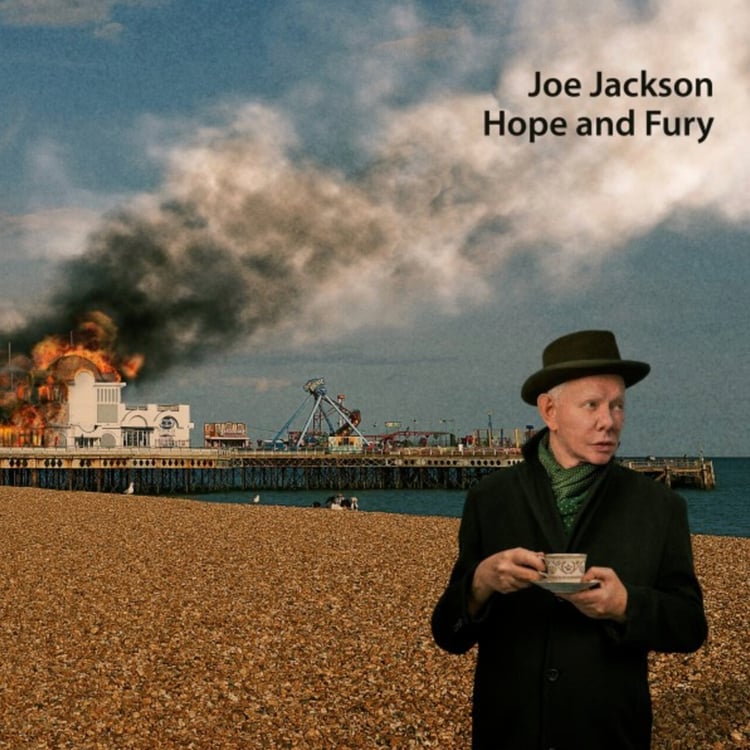
Hope And Fury
Jackson debuted in 1978 with “Is She Really Going Out With Him?”, a slightly droll single which became a UK Top 20 hit on its reissue the following year. However, he was to stray far and wide from that perky new-wave path, recording albums of big-band swing and jump blues, Tin Pan Alley pop, jazz fusion and classical music.
Hope And Fury is a slight echo of Night And Day, Jackson’s terrific set of sophisticated, big-city, jazz-pop songs indebted to Cole Porter with ’80s pizzazz added. The title of this new set (also recorded in NYC) riffs on the phrase “hope and glory”, allowing its author to reflect on his love/hate relationship with England in songs like the sardonic “Welcome To Burning-by-Sea” (“a terminal town made of marble and rust/And seaweed, seagull sh** and cement”), and “End Of The Pier”, which views the seaside fixture as a centuries-old symbol of the weekend’s promised relief from the workaday grind. It’s by no means an angry or bitter record, though: Jackson’s Latin-funk influence returns and there’s a hint of Steely Dan (in “After All This Time”) alongside a throwback to his own “Steppin’ Out” hit (“Fabulous People”).
Label: (earMUSIC)
Adrian Younge
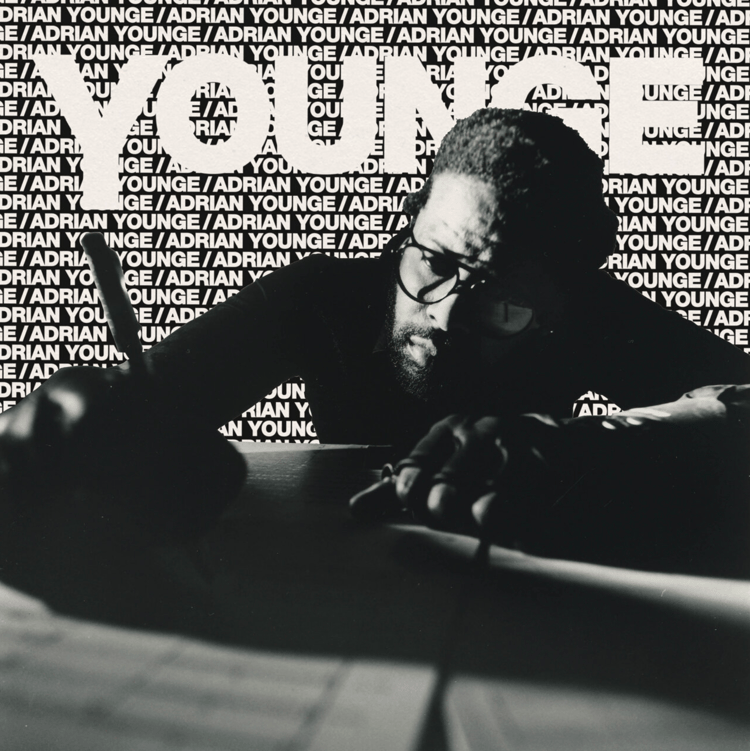
Younge
If the “soundtrack to an imaginary movie” genre has lost its lustre since its ’90s peak, it’s only because its main components – hip hop, instrumental soul, jazz and vintage spy-flick themes – were often seen as low-hanging fruit to many producers who had the right sample-rich records in their crates, but lacked interpretive vision.
California’s Adrian Younge is not one of them. A composer, arranger and producer as well as a multi-instrumentalist, he boasts a lengthy CV whose credits include Talib Kweli, Wu-Tang Clan, Common and Kendrick Lamar, plus several commissioned film and tv scores. Younge may rest on the foundation of greats like Quincy Jones, David Axelrod and Lalo Schifrin, but despite its ’70s feel, it’s not pastiche and neither is it nostalgic. Younge has a modernist’s ear and these cuts, from moodily sumptuous opener “Portschute” to “Moon Traveling”, SIC with its staccato horns and oceanic strings, the jazz-funk of “Respond To Sound” and the 360° panoramic closer, “Il Mattino”’, stay discerningly faithful to the idea of a soundtrack as an inviting, self-contained world.
Label: Linear Labs
Juli Deák
Brisk
Educated in classical music, this Polish-Hungarian flutist and saxophonist has developed a singular fusion of that genre, pastoral folk, modern minimalism and the kind of freeform experimentation more common to jazz. Central to Deák’s expression are the intensely physical aspects of playing her chosen instrument (in this case the flute), which include nasal and circular breathing, overblowing and singing while she plays. Brisk, which forms part of a solo enterprise called The Breathing Project, is her extraordinary debut.
Its seven tracks began as rough sketches that developed in front of live audiences over two performances in a Budapest church and were recorded in single takes, with no overdubs. Aside from their mesmerising beauty, what’s most striking is that they’re nothing like virtuosic displays of technical prowess; rather, they’re eloquently soulful and transportive, with audible breath intakes, clicking flute keys and pitch wobbles integral parts of the organic whole, rather than elements to be edited out. Brisk is best listened to in a single sitting, all the better to maximise its spell, but “Contact”, with its echo-y percussive taps and fluttering harmonic melodies which build in intensity, is a highlight.
Label: Thanatosis Produktion
Mildred
Fenceline
It’s a fine line between laidback and understatedly personal, and slack and inconsequential but the debut by this Californian quartet lands on absolutely the right side. Unusual in that they have no chief songwriter and no designated lead singer, they make music that straddles country, Americana, college rock and alt-folk, nodding to the likes of Neil Young, The Band and James Taylor yet showing a kinship with skewed modernists Silver Jews, Yo La Tengo and Bill Callahan.
The 10 songs of Fenceline have an intimacy and warmth that feeds into lyrics whose say-what-you-see nature belies their innate soulfulness and poeticism. Singers turn their attention to the colour of leaves (“UPS brown”), the detritus of daily life (“cobwebs, coffee cups, ceaseless piles of dust”) and, in one strikingly candid instance, a panic attack (“I thought the light was leaving from me, but I’m not ready”). Twangling and churning closer “Hardcore Of Beauty”, however, takes a more philosophical dive: “The most lovely thing is not a carved Madonna with the child at her breast/but the mountain carved down at the cliff’s edge/marble and granite/plums in the icebox/flowers picked for the sake of propriety”. However they play it, Mildred’s aim is distinctively eloquent and true.
We use cookies to enhance your browsing experience, serve
personalised ads or content, and analyze our traffic. By
clicking "Accept All", you consent to our use of cookies.
Cookie Policy
Customise Consent Preferences
We use cookies to help you navigate efficiently and perform
certain functions. You will find detailed information about all
cookies under each consent category below.
Always Active
Necessary cookies are required to enable the basic features
of this site, such as providing secure log-in or adjusting
your consent preferences.
Cookiedcs_consent
Duration1 year
DescriptionStores your cookie consent choices for this site.
Analytical cookies are used to understand how visitors
interact with the website. These cookies help provide
information on metrics such as the number of visitors,
bounce rate, and traffic source.
Cookies_ga, _ga_*
Duration2 years
DescriptionSet by Google Analytics to distinguish visitors and record how the site is used.