The translation below was provided by our friends & partners at Taiyo International Inc, Japan.
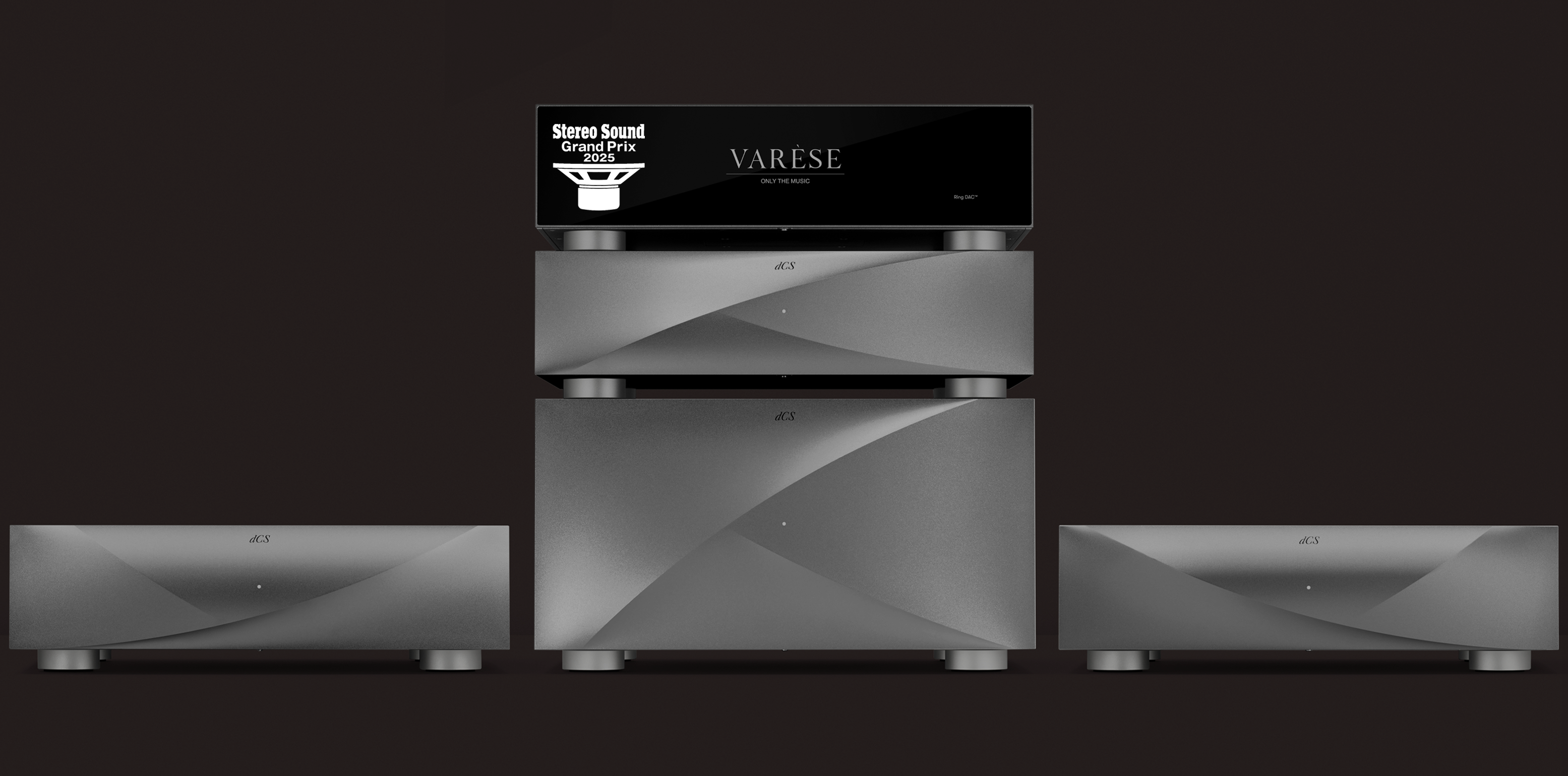
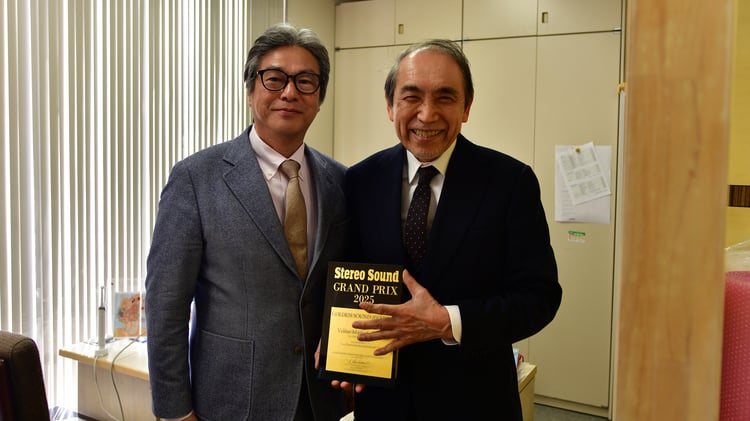
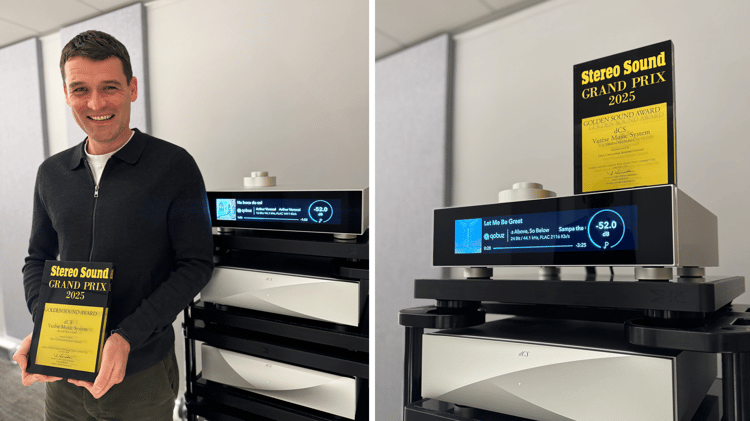
Editor: We have made a selection for the Grand Prix award. Thirty-four audio components received the Grand Prix award. Among these, the British-made dCS Varese music system and the Japanese Grandioso N1 by Esoteric received the Golden Sound Award. Both are digital file players. Esoteric also won the Golden Sound Award in 2024 for its phono amplifier.
The selection was conducted by Koji Onodera, Nobuyuki Fu, Takahito Miura, Tadashi Yamanouchi, and Hiromi Wada, each holding one vote. Additionally, Stereo Sound was represented by Isao Harada (Editor in Chief) and Hajime Someya (Editor), who together held a single vote, making a total of six votes.
All audio components announced by 31 October 2025 are eligible for this award. Each reviewer submitted their top 30 components for nomination by 31 October. The editorial staff compiled a list of nominations from these. Then, on 1 November, all of the committee members voted until they reached a consensus on the award nominations. The components awarded the Grand Prix were finalised by consensus of the "Stereo Sound" committee.
The important thing about the Grand Prix is that it excludes genre and price. As a result of not considering genre or price, the number of components in a certain genre could change from year to year. Stereo Sound does not limit the number of components to be awarded.
Without limiting prices or genres, our goal is to select truly outstanding components launched in Japan within a year and contribute to the growth and development of the audio industry. Our trial and award, which started in 1978 with the nomination of 'SOTA' (State of the Art) components, is one such example. Components that win the Grand Prix award are selected and nominated based on the same concept. The term 'Grand Prix' was introduced from 2001.
The basic principle of Grand Prix award is not only great sound quality, but also the total package design, beauty of finish, ease of use and originality of a product. In short, we reviewed the total performance of a product and nominated.
Before we talk about the award-winning components, I would like to talk about the two components that were awarded the Golden Sound prize this year. One component should win the Golden Sound award, but we tried and voted many times to select one component. But we couldn’t select just one. In the past, when everyone agreed that multiple components were worthy of an award, two components were awarded. However, this is the first time that two components in the same genre have been selected. This award represents what is attracting the attention of present-day audiophiles.
Fu: This October marks one year since Qobuz officially launched in Japan. I used to buy 300 CDs a year, but this year I've only bought around 30. Streaming and stored digital files on a NAS are now my main sources of music. For presentations and reviews, I carry digital files stored on an SSD. There are fewer opportunities to carry CDs for such occasions. I don't think this trend will stop.
Miura: Such a trend is accelerating dramatically, prompting audiophiles to pursue their ideal sound. Like silver discs, which were launched in 1982, digital music streaming services have become one of the standard sources of digital music. Soon, ripped and stored music files will be a respectable source of digital music. The two Golden Sound award-winning components stand out for their performance with both silver discs and digital streaming sources. They are the most advanced and sophisticated components available today for playing music of the highest quality.
---
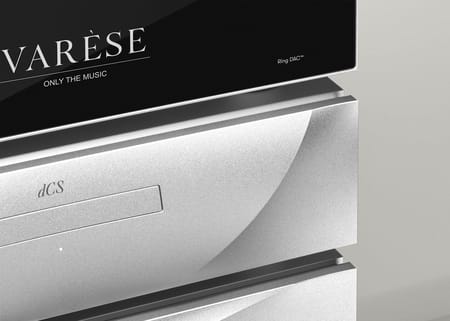
Editor: Let's start with the components that won the Golden Sound Award. First up is the dCS Varese Music System from the United Kingdom.
Miura: dCS is already famous for making the best digital file systems. I think they are aiming even higher. They are constantly thinking, developing and trying to reach a new peak in digital music reproduction. They have concluded that the iconic approach is the proprietary DAC, called the Ring DAC, and its development and application. They have finally achieved differential digital conversion and separation of the left and right channels by constructing monaural DACs.
Onodera: One might easily say, 'Monaural construction of DAC'. However, digital signal processing requires precise timing coherence, which is not an issue in analogue signal processing. I assume that achieving such perfect synchronisation of digital signals directly influences the quality of music reproduction and that it would be an extremely difficult task.
Miura: I visited and reported dCS this year(2025). They said it took good two years to synchronise the timing of transporting R and L sample data.,
Fu: the award-winning system comprises five boxes. Two of these are the DACs that we just talked about. The largest unit is the 'Core', which processes signals, and the 'User Interface' has a display called the 'UI'. A master clock has also been added.
Miura: Wiring such units is done using the newly developed proprietary cables. These cables deliver concise and reliable operation and are also noteworthy.
Yamanouchi: In the world of analogue audio, it has been said that simple is better, but I don't think this applies to digital audio. This large system, which seems complicated at first glance, is a prime example of a superb-sounding audio component.
Miura: I think the signal path itself is quite simple. Digital signal processing requires many sections dedicated to their own tasks; making each section individually would make the system larger.
Yamanouchi: Yes, I think so too.
Onodera: By not confining everything to a single chassis, ample resources can be invested.
Wada: The sound created through such an innovative circuit and ample resources is awesome and stands out! The sound I have been seeking for digital music reproduction is finally here.
Fu: The atmosphere around the speakers changed dramatically as soon as music started playing! The sound quality is indeed overwhelmingly superb.
Miura: The Vivaldi also delivers a compelling sound, but Varèse represents a significant leap forward. The emotion one feels from Varèse's music is far more profound.
Yamanouchi: It allows us to experience the music itself. We can hear subtle sounds and expressions that we missed before with Varèse.
Onodera: Yes, I completely agree. In that sense, this is the pinnacle of natural-sounding digital music.
You can read the full article in the latest issue of Stereo Sound, Japan. Further information on Stereo Sound is available here.
Explore all reviews & awards for dCS Varèse here.