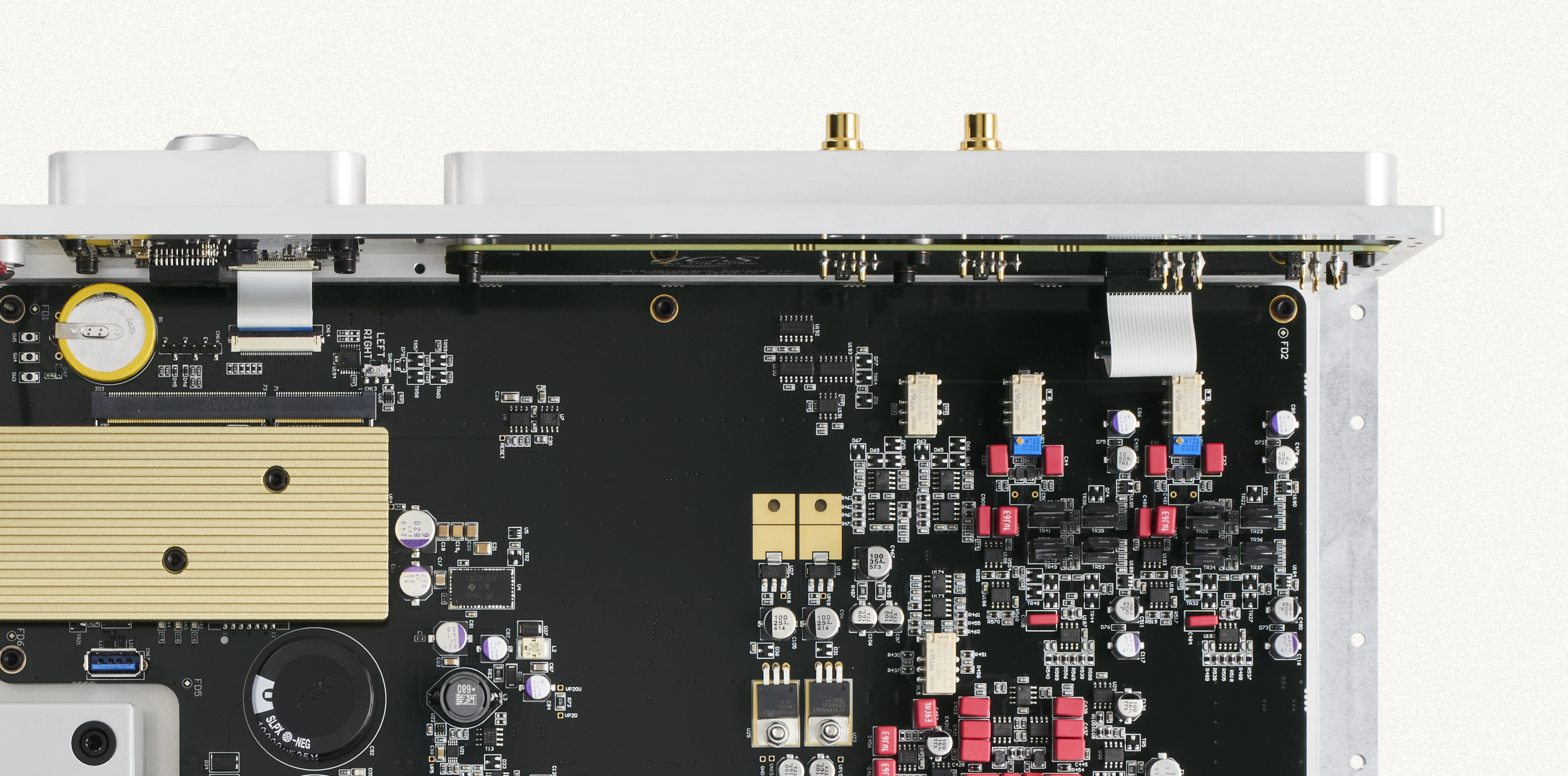
Our Inside Varèse series continues with a look at the features that drive the Varèse Mono DACs, from a new version of the dCS Ring DAC to mechanical innovations designed to further reduce noise and distortion…
The Varèse Music System stemmed from a desire to set new standards in audio performance and user experience. We set out to bring listeners an even more immersive, natural sound, reproducing music with even greater fidelity whilst also simplifying system setup and control.
To achieve this, we had to undertake extensive research and development to explore where and how we could improve on our existing products and platforms. This investigation led us to embark on a series of multi-year projects that culminated in the launch of Varèse: our most ambitious system to date.
The Varèse system benefits from several new technologies, plus a new DAC architecture that represents the biggest change to dCS DAC design in a generation.
Here, we look at this architecture and other innovations seen in the Varèse Mono DACs...
Our first Mono DACs
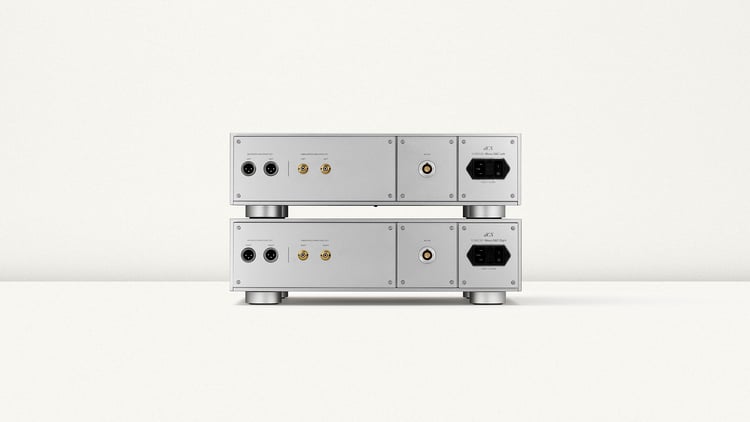
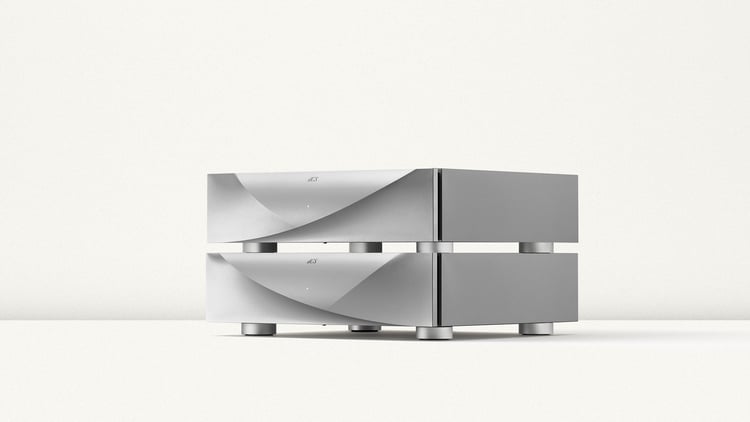
Varèse is the first dCS system to feature dual Mono DACs. This means we have two DACs working in sync to convert digital audio signals into analogue. One Mono DAC converts audio from the left channel and the other from the right, giving us a dedicated DAC for each channel.
There are several advantages to this approach. One major benefit is that it eliminates crosstalk, an unwanted effect that occurs when signals from one channel bleed into another.
There is no risk of crosstalk in a Mono DAC arrangement, as the parts of the system converting the left and right audio channels are kept separate. Both the left and right Mono DACs have their own dedicated chassis, circuits and power supplies, with no direct electrical paths running between them, removing the possibility of audio signals being compromised as a result of signal leakage or transfer.
Mono DACs also present a more stable draw on a system’s power supplies, which can lead to better audio performance.
In a traditional stereo DAC, we have a single power supply feeding the left and right audio channels. As each channel is responsible for reproducing different parts of the audio (provided we are listening to a stereo and not a mono recording), the draw on power is not consistent. In a Mono DAC arrangement, each channel has its own dedicated power supply and the draw on power within each DAC is therefore more stable.
Whilst there are notable benefits to Mono DACs, their use presents some complex challenges for audio engineers. Perhaps the biggest of these relates to how DACs are synchronised – in other words, how we ensure the left and right Mono DACs convert the same audio sample at the same time, which is essential to ensuring music sounds as it should.
We solved this challenge in Varèse by developing a bespoke clocking protocol (dCS Tomix) and interconnect (dCS ACTUS). Together, these technologies enabled us to achieve Mono DAC synchronisation and ensure both Mono DACS operate to our exacting performance standards – something that would not have been possible with existing formats such as AES67. (We’ll be discussing both Tomix & ACTUS in more detail in subsequent posts…)
In addition to solving the issue of Mono DAC synchronisation, we undertook extensive work to explore how we could further improve DAC performance, looking at all areas of digital-to-analogue conversion.
This led us to embark on some radical changes, developing a new version of the dCS Ring DAC (the bespoke D-A conversion system at the heart of our DACs) and creating some of our most complex chassis designs yet.
The Differential Ring DAC
As we discussed in Part 1 of our Inside Varèse series, all dCS DACs utilise a proprietary system known as the Ring DAC, which allows us to convert audio signals with exceptional fidelity and ultra-low distortion. This system has been carefully honed and refined over many years, and Varèse presents the biggest change to its design in a generation.
The Ring DAC system found inside other current dCS products, such as our Vivaldi, Rossini and Bartók APEX DACs and Players, features 96 current sources: 48 for the left channel and 48 for the right. Each generates an equal amount of voltage and is operated to distribute any component errors (tolerances in resistor values) in the current sources as random noise.
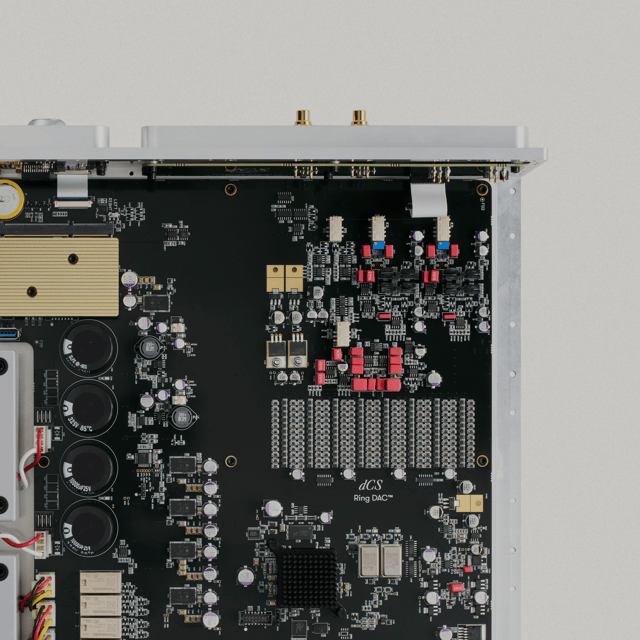
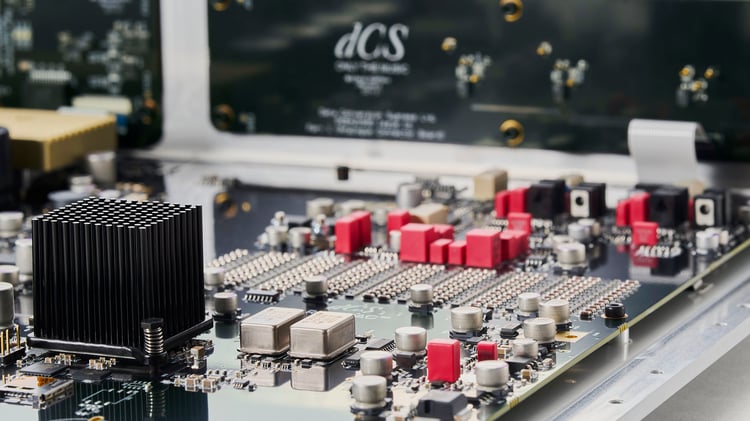
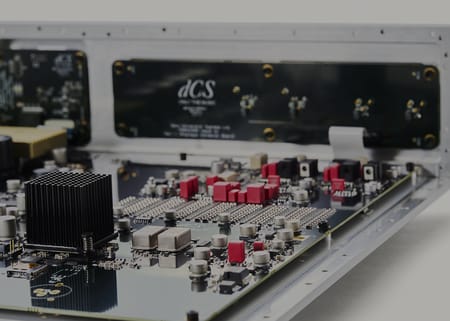
The 96 total current sources are located on the single Ring DAC board within the DAC, with the left and right channels separated on the board.
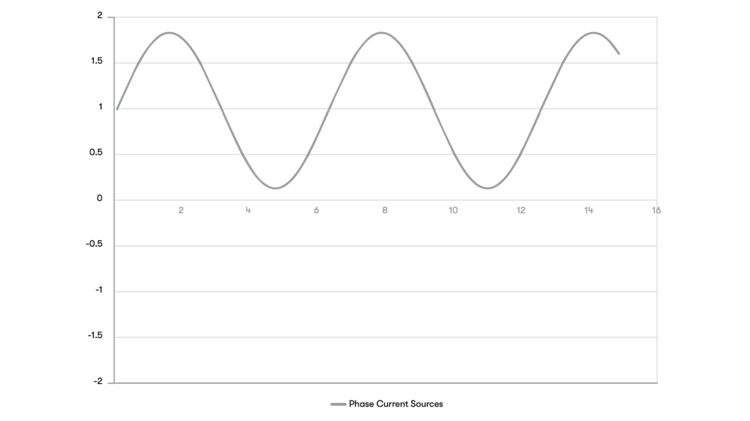
This graph represents the output of an APEX Ring DAC, with one channel reproducing a sine wave.
In Varèse, the left and right channels have been separated into Mono DACs, with an entire DAC unit for each audio channel.
Each Varèse Mono DAC features 96 current sources, meaning there are twice as many current sources for each audio channel. These current sources maintain the same dynamic resolution, with the Ring DAC being fed a 5-bit signal synchronously modulated to either 5.644MHz or 6.144MHz, depending on the source content sample rate.
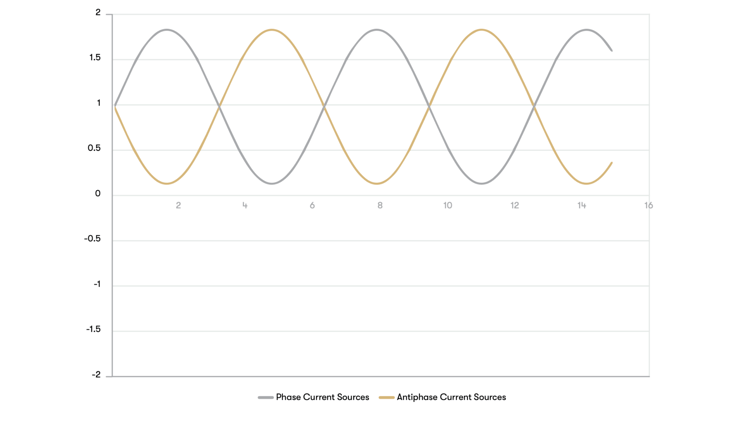
The Ring DACs in Varèse are run in a differential architecture. The 96 current sources on the Differential Ring DAC board are split into two groups of 48, with one group reproducing the musical signal in the correct phase, and the second group of 48 current sources reproducing the signal in antiphase.
This graph shows the outputs of the two sets of current sources in the Differential Ring DAC found in a Varèse Mono DAC, reproducing the same sine wave as the previous graph.
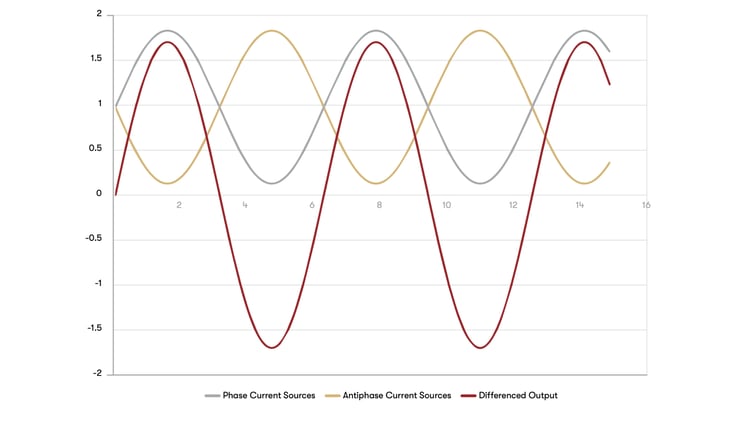
The outputs of these two sets of current sources are then differenced, which results in an output equivalent to the correct phase current sources with twice the amplitude and no DC bias:
Running the Ring DAC in a differential manner balances the current draw on the ‘reference supply’ –the voltage which is fed to the Ring DAC’s current sources. This reference supply gets multiplied up by however many current sources are switched on to generate the musical signal. Anything other than clean DC being fed to the current sources is also multiplied up. Where the correct phase side of the Ring is at a higher voltage, the antiphase side is at a lower voltage. This means that the draw on the reference supply is not signal dependent, as both sets of current sources are working sympathetically.
Taking the above example, the average value of the output voltage of the phase current sources and antiphase current sources is always 1V. This means that the draw on the power supply, irrespective of what signal is being reproduced by the Ring DAC, is always the same. This means the reference voltage fed to all of the current sources is cleaner, so no errors are being multiplied up and converted to analogue – resulting in a cleaner analogue signal output from the Ring DAC.
Running two Mono DACs, each with a dedicated Differential Ring DAC system, has enabled us to set new standards in a range of key performance areas. We’ve reduced distortion whilst simultaneously lowering noise floor by 5dB, building on breakthroughs made with the development of the Ring DAC APEX (an innovation that stemmed from R&D work on Varèse) to once again advance the musical capabilities of our products.
Whilst it can be difficult to tie a particular measured performance increase to a specific sonic characteristic, feedback from our extensive listening sessions has highlighted improvements in all conceivable aspects of sonic performance. Listeners have reported a sense of music being set against quieter, ‘blacker’ backgrounds, with greater tonal accuracy and naturalness than anything that has come before, and a more expansive soundstage with performers and instruments even better defined for a heightened sense of realism.
Power Supply Improvements
Power Supplies is another area that we have further refined with Varèse. All dCS products feature advanced power supply designs, utilising hybrid power supplies with a linear toroidal transformer performing some voltage step-down, followed by switching power supply elements to feed the circuitry with DC voltages. We use multi-stage power supply voltage regulation to ensure that sensitive analogue circuitry is not affected by interference from digital operations inside the product.
The transformer helps to isolate the product from any unwanted effects on the incoming AC mains power, and the switching power supply elements work well to deliver perfectly stable DC to the product’s circuitry. Rossini and Vivaldi units feature twin power supplies, with separate transformers and circuitry for analogue and digital duties. This provides even better separation of the sensitive analogue componentry from digital noise. The power supply switcher has its frequency locked to the audio clock. This reduces the risk of switcher noise impacting audio performance, which can occur if the switcher is running at an unrelated frequency (a common issue with switch mode power supplies in audio products).
The Varèse Mono DACs build on this foundation. Like Rossini and Vivaldi, the Varèse Mono DACs feature hybrid power supplies with dedicated supplies for analogue and digital operations. Whilst Rossini and Vivaldi use physically identical transformers for both supplies, however, Varèse Mono DACs feature new transformers that have been specially designed for analogue or digital duties. This ensures even better performance within both the analogue and digital parts of the Mono DACs.
Performance is further enhanced with redesigned secondary circuits within the power supplies, which help to reduce any mechanical hum generated by transformers. The voltage regulators also feature a new design, with an additional regulator stage specifically for the balanced output, which helps to improve performance when using a balanced connection.
Together, these improvements help to ensure optimal performance at each stage of the DACs' operations. The Ring DAC requires an extremely clean reference and our improvements to power supplies help ensure it is able to operate to the best of its abilities for ultimate sound quality.
Mechanical Design Innovations
The design of a dCS DAC is always driven by our desire to preserve the integrity of musical signals. From a mechanical design standpoint, we take great care to reduce unwanted vibration and magnetic effects wherever possible (factors that can affect sound quality), using the highest-grade materials to achieve very high levels of mechanical isolation.
Our Rossini and Vivaldi DACs employ sound dampened aluminium, a material chosen for its excellent acoustic properties. They also employ a sub-chassis for the transformers, mounted on standoffs to separate the circuit boards (PCBs) within the product to protect against signal interference. These factors combined help to ensure performance is not compromised by physical vibrations inside the DAC.
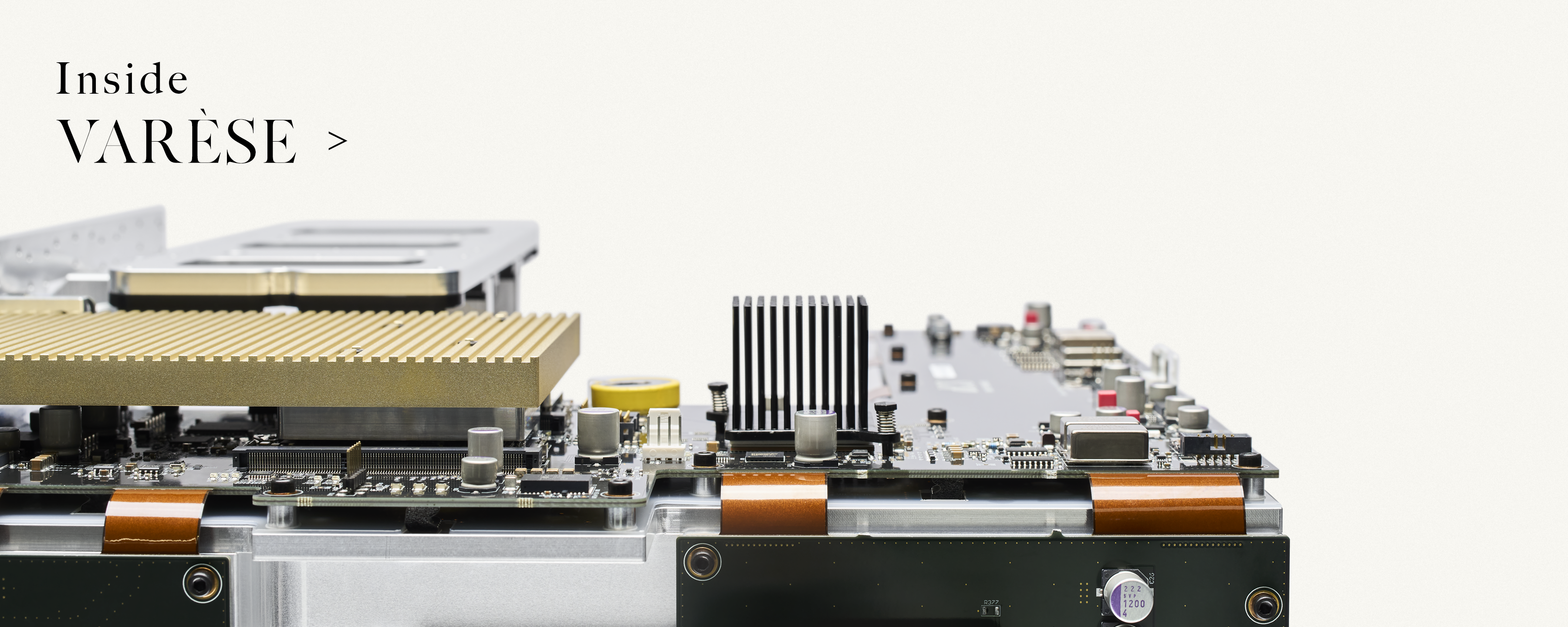
Varèse builds on this tradition: the chassis base of each Varèse component features two separate layers of high-spec, single-piece aluminium billet, with a layer in between made from a material with specific dampening properties. This construction creates an effective constrained layer dampened chassis on the Varèse Mono DACs. The constrained layer damping increases mechanical isolation, resulting in our most mechanically inert DACs to date.
The feet of the Varèse Mono DACs, as well as the PCB mounts and transformer mounts, all connect to the constrained layer dampened chassis. This construction reduces any transfer of vibrations to the PCB from external sources through the feet and enclosure, or from the mains transformers. The physical stability of the PCB helps to maintain good jitter performance, as physical vibrations can be a source of intrinsic jitter in the clock circuitry.
We’ve also taken great care to ensure the Varèse Mono DACs deliver excellent electromagnetic performance, through the single-piece chassis design and the method used to mount the DAC's PCB. A key aspect to achieving good electromagnetic performance from a DAC is to ensure the chassis and enclosure have consistent grounding all around. Central to this is having the PCB is mounted at the correct height consistently, so it is always the correct distance from the chassis, and never higher or lower than it should be at any given point. Even a variance of a few millimetres can have unwanted effects, so precision here is crucial.
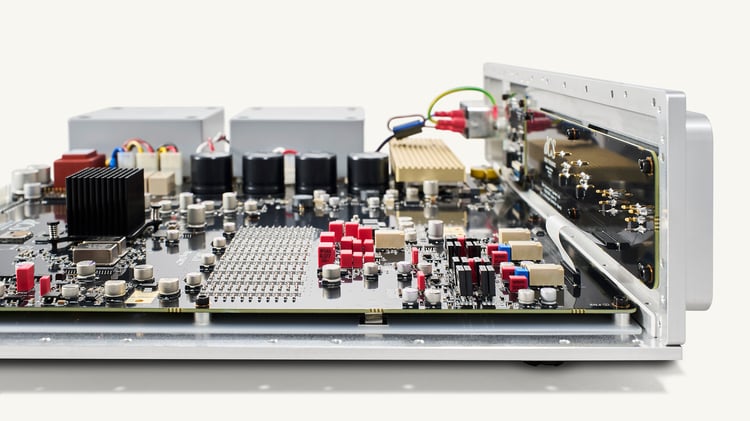
The Varèse Mono DACs employ standoffs used to separate the PCB from the main chassis which are completely integrated into the chassis baseplate. This is made possible using a chassis constructed from single pieces of billet aluminium milled on three and five-axis CNC machines, an approach that we first utilised in the Lina Network DAC.
Using integrated standoffs, rather than ones which are made separately and then pressed into the aluminium chassis base plate, allows us to ensure standoffs are a consistent height, with no variance (the standoffs are machined from the same aluminium piece as the rest of the base plate and threaded by the machining process). This, in turn, ensures the PCBs are mounted with a very high degree of accuracy, which helps to ensure consistent grounding across the chassis.
These are just some of the advancements we have made with the Varèse Mono DACs. We have carefully analysed and studied every element of dCS DAC design, utilising our knowledge and expertise to develop several refinements and new features. All this has enabled us to once again elevate performance and deliver tangible benefits for listeners, resulting in the lowest jitter, most accurate and most natural-sounding DACs we’ve ever created.
“
"It is an invisible DAC, seemingly doing perfect conversion, and just giving a perfectly clear window into the performance."
We use cookies to enhance your browsing experience, serve
personalised ads or content, and analyze our traffic. By
clicking "Accept All", you consent to our use of cookies.
Cookie Policy
Customise Consent Preferences
We use cookies to help you navigate efficiently and perform
certain functions. You will find detailed information about all
cookies under each consent category below.
Always Active
Necessary cookies are required to enable the basic features
of this site, such as providing secure log-in or adjusting
your consent preferences.
Cookiedcs_consent
Duration1 year
DescriptionStores your cookie consent choices for this site.
Analytical cookies are used to understand how visitors
interact with the website. These cookies help provide
information on metrics such as the number of visitors,
bounce rate, and traffic source.
Cookies_ga, _ga_*
Duration2 years
DescriptionSet by Google Analytics to distinguish visitors and record how the site is used.