Our latest classical playlist, curated by critic and broadcaster Charlotte Gardner, features a choral album from Ikon and David Hill, a stunning debut from Denmark’s NOVO Quartet and a new Vaughan Williams cycle from the London Symphony Orchestra
Welcome to October’s Classical Choices, which opens with Gramophone magazine’s 2025 Recording of the Year, Raphaël Pichon and Pygmalion’s Bach Mass in B minor – a reading that resets the dial on period-instrument interpretations of this famous work.
The recording represents more than a decade’s work (Pichon and his ensemble have revisited it every three years since 2013, always with different forces). Writing in the Gramophone Awards issue, published this month, Mark Seow described it as a release “that gleams at the cellular level, radiating outwards with devotional warmth; in short, it is alive”. Indeed it is. I’ve selected the opening Kyrie eleison for the playlist.
From there, it’s on to October’s new releases. In keeping with the choral theme, we have a fascinating and wonderfully sung programme which brings together rarely-heard secular choral works by one of the Anglican choral tradition’s greatest 20th century voices, Herbert Howells, from superchoir Ikon and conductor David Hill. We also have a stunning debut album from Denmark’s multi-award-winning NOVO Quartet, and to conclude, the second installment of Sir Antonio Pappano and the London Symphony Orchestra’s Vaughan Williams symphony cycle…
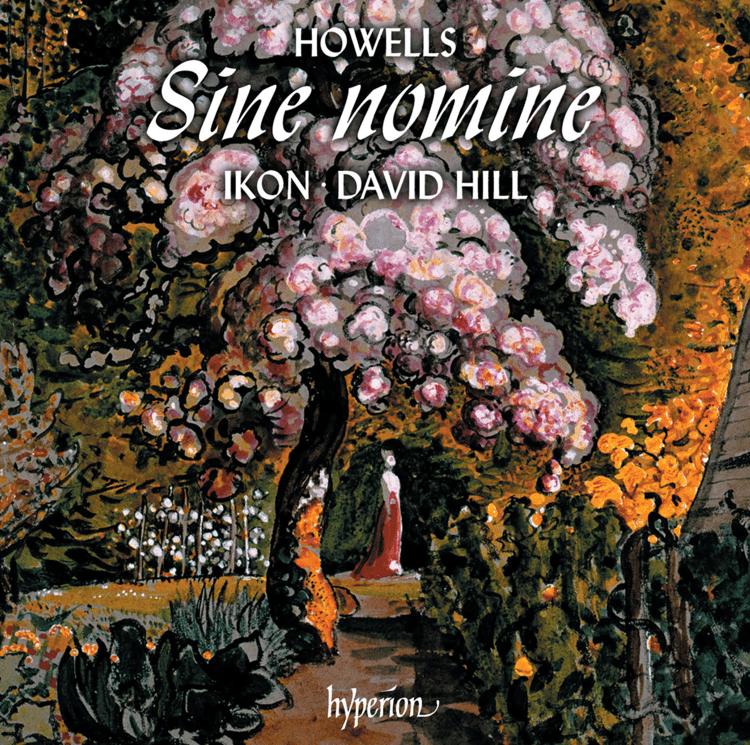
Howells: King David and Sine nomine
Ikon, David Hill
Hyperion
The choral output of Herbert Howells (1892-1983) is distinctive, beloved, and generally associated with the Anglican tradition. However, he also wrote several non-sacred settings. Leading choral director David Hill recently brought together Ikon – a ‘superchoir’ comprised of the UK’s foremost singers – plus tenor Ruairi Bowen, soprano Hilary Cronin, violinist Charlie Lovell-Jones and pianist/organist-composer and arranger Iain Farrington, to record a wide-ranging programme of Howells’ secular repertoire.
Stylistically, what immediately strikes about Hill’s chosen works is how fascinatingly similar they are to Howells’ sacred writing. Harmonically, it’s the same mix of modal and rich, scrunchier chords, and frequent major/minor contrasts. Horizontally, it’s his usual brand of long-spun melodicism and lyricism; and texturally, you’ll find strong examples of his trademark soloistic, contrapuntal textures – the long-lasting fruit of his having played a key role in the 1920s revival of Tudor church music, assisting in the editing of new published editions of works by the likes of Byrd, Tallis, Taverner and Sheppard. Take ‘Inheritance’ (1953), commissioned for a multi-composer collection of English part-songs, A Garland for the Queen, to commemorate the coronation of Queen Elizabeth II, as a modern counterpart to Thomas Morley’s 1601 Triumphs of Oriana. Or, similarly, ‘The Scribe’ (1957), a Walter de la Mare setting that Howells dedicated to his older colleague, Ralph Vaughan Williams.
The Ikon singers represent English choral tradition perfection. There’s the crisply clean articulation, tonal warmth and impeccable blending. Then, equally crucially, word-painting that rings with authenticity, from the joyous rhythmic spring of ‘A New Year Carol’, to the reflective ambiguity of ‘Walking in the Snow’ (1950, to two John Buxton poems), and the mix of nimble joy and gentler tenderness of madrigal-influenced ‘Before Me, Careless Lying’. Perhaps the most magical is the combination of ecstatic emotion and tonal radiance with which they communicate key climaxes in Farrington’s two brand new arrangements of ‘King David’ and ‘Sine nomine’ (‘Without a name’). The latter work, written at Elgar’s suggestion for the 1922 Three Choirs Festival, was originally for soprano and tenor soloists, SATB choir and orchestra. The triumph of Farrington’s new piano and solo violin-accompanied arrangement, now with double-scored choir (SSAATTBB), is how the work retains grandeur, exuding the mystical, rapturous worlds of Debussy and Holst, but glows simultaneously with intimacy – aided in no small measure by Lovell-Jones’s silkily rapturous violin lines.
I’ve given you ‘Sine nomine’, preceded by ‘King David’ and ‘Walking in the Snow’, for the playlist.
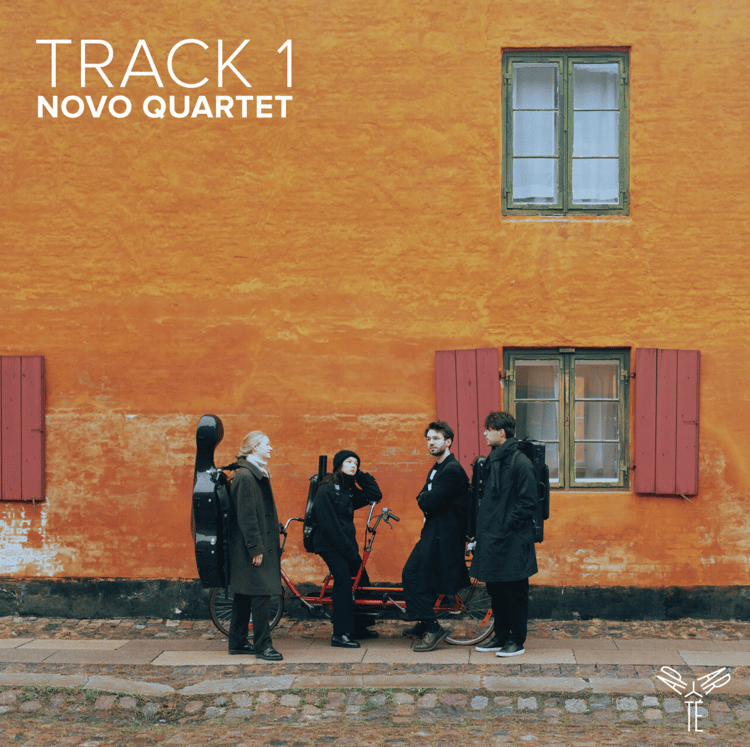
TRACK 1
NOVO Quartet
Arte
Amid an increasing number of compelling young string quartets, NOVO – made up of violinists Kaya Kato Møller and Nikolai Vasili Nedergaard, violist Daniel Śledziński and cellist Signe Ebstrup Bitsch – continues to impress with its cleanly birch-toned, virtuosically superglued nimbleness and arresting expressive powers. The quartet was formed in 2018 at the Royal Danish Academy of Music, and has since won top prizes at Geneva, Heidelberg, Carl Nielsen and Trondheim, as well as joining the BBC’s 2025-2027 New Generation Artists programme.
The group’s debut album, TRACK 1, allows us to hear the aforementioned qualities through the filter of three contrasting works which are all, in their own ways, closely tied to the NOVO’s roots. Shostakovich’s Eighth String Quartet, written in 1960 as a lament at his and the Soviet people’s suffering under Stalin, was on the music stands at NOVO’s very first rehearsal in 2018.
Young Danish composer Matias Vestergård’s 2024 work, HJERTEBLAD (‘Heart-Leaf’, as in the smallest and youngest innermost leaves of plants) was commissioned by the group, and appears here in its world premiere recording. The final piece, the 1888 First Quartet of Carl Nielsen, speaks to NOVO’s musical lineage, both their shared nationality, and their experience of being mentored by Professor Tim Frederiksen, who was taught by one of Nielsen’s colleagues.
All of this hits the mark in the performances. The Shostakovich Eighth is searing – devastating in its bleak numbness, and flinch-worthy in its grittily sharp-edged danger. At the other end of the programme, the Nielsen has them sparkily fleet-footed through its quirky melodicism and rhythmic games, and articulating their judiciously-placed folk inflections with ease. HJERTEBLAD, meanwhile, emerges from under their fingers as delicate, diaphanous musical chlorophyll, their four voices always tightly intertwined, whether moving as one or independently through its texturally intricate array of swift-sliding, fluttering, and percussively plucking special effects.
The capturing is natural, polished and speaks to NOVO’s early days, having been recorded in the Royal Danish Academy of Music’s Concert Hall (formerly Danish Radio Concert Hall). The real treat, however, the sense of heart and authenticity that emerges as a unifying thread uniting these contrasting works. This is so clearly a quartet of friends who are closely bound both to each other, and to the music they’ve submerged themselves in, with the musical and emotional tools, and the desire, to communicate it.
Vaughan Williams Symphonies 5 and 9
LSO/Pappano
LSO Live
The second instalment of Chief Conductor Sir Antonio Pappano and the London Symphony Orchestra’s Vaughan Williams symphony cycle presents a particularly emotionally resonant pairing.
The Fifth Symphony is a softly mysterious, bittersweet and ultimately transcendent work. Composed between 1938 and 1943, and drawing on his unfinished opera on John Bunyan’s The Pilgrim’s Progress for some of its themes, it appears to speak into the wartime mood of darkness, plus backwards and forwards longing for better times, and was warmly received at its 1943 premiere. By contrast, the Ninth Symphony is a darker, more muscularly powerful and less immediately winsome character. Composed in 1957, the year before Williams’ death aged 85, it feels like an appropriate final symphony testament for a man who had seen two devastating world wars, seismic social change, and an equally seismic shift in musical sensibilities which, in latter years, had seen his own voice increasingly regarded as belonging to the past.
Recorded live in Direct Stream Digital at London’s Barbican Hall in April and September 2024, these LSO performances are polished and stirring. The Fifth – whose score calls for the smallest orchestra of all Vaughan Williams’s symphonies – sounds out in a bright, light-on-its-feet, momentum-filled reading (listen to the rhythmic snap of its Scherzo, and the forwards thrust of its final Passacaglia) whose softer moments have a beautiful, cool purity, and some especially lovely moments from the violins. (Listen in the first movement to their diaphanous luminosity at 1’30” or, towards the movement’s climax, to their ecstatic portamento.)
The Ninth’s complex darkness and constantly shifting emotional sands are then portrayed to tremendous effect. There are tensely emotive instrumental solos to appreciate throughout, and architecturally, its grippingly taut, Pappano’s apparently-never-ending lines building the tension to almost unbearable levels at points. While the Fifth may be the more instantly winsome, it’s the compelling Ninth you’ll find on our playlist.