Welcome to our latest Classical Choices playlist and review. With Advent now upon us, and the Christmas countdown in full swing here in the UK, we’re opening our playlist with a selection of festive recordings, instead of our usual archive track. One of my current personal favourites is the Texas-based Miró Quartet’s album Hearth, which brings together brand new arrangements of carols and songs commissioned from 15 leading living composers including Anna Clyne and Michi Wiancko.
From there, we move on to a trio of new releases, including music from the Hermes Experiment and Gautier Capuçon, plus an exciting debut from the much talked-about UK-based collective, Bellot Ensemble.
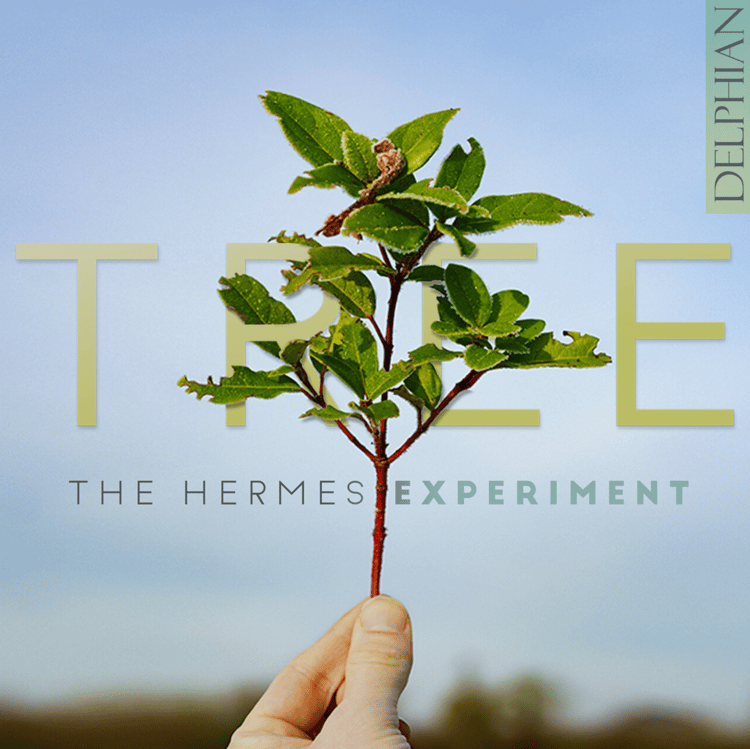
TREE
The Hermes Experiment
Delphian
The Hermes Experiment – made up of harpist Anne Denholm-Blair, clarinettist Oliver Pashley, double bassist Marianne Schofield and soprano Héloïse Werner – is known for taking listeners on vibrantly, whimsically dreamlike, dazzlingly polished and original new-music adventures. With its third album, TREE, the magic is as potent as ever.
Conceptually, TREE explores nature and its relationship to memory and change. Within this framework, it offers what we’ve come to expect from this special quartet, (a programme comprised entirely of premiere recordings, from newly reimagined old works to brand new commissions), plus some new elements: it is the first album to feature compositions by all four group members, with Schofield’s Islands making a wonderful opener.
Marked ‘Clock-like, desolate’, Schofield’s score has a gently fractured coolness. It explores how the internet and social media has brought more knowledge and capacity for connection than ever before but, at the same time, a greater sense of weariness, emptiness and isolation. This might sound depressing, but somehow it’s not. There is a tremendous amount of human energy channelled into this floating, weaving, searching, tonally ambiguous and faintly jazz-coloured music, even beyond the warmer central section, with its depiction of ‘remembering feeling alive’. Throughout, the playing has an atmospheric and philosophical luminosity to match the sonic luminosity of its instrumental combination.
A similarly beautiful dichotomy is at play in Buhle Bendalo – ‘natural beauty’ in Xhosa – a piece written for the group by cellist-vocalist and composer Abel Selaocoe. While its text reminds us of the finite nature of natural beauty, the rhythmic and uplifting music urges us to live and love. A further surprise pleasure comes in hearing Selaocoe’s inimitable, highly personal musical voice sitting so effortlessly and perfectly re-cast into this similarly inimitable quartet’s sound.
On the playlist, you’ll find Islands, Buhle Bendalo, plus two new arrangements: Schofield’s delicately gossamer-weight, ancient-meets-modern reimagining of Élisabeth Jacquet de La Guerre’s (1665-1729) Les rossignols, and Pashley’s jauntily ethereal treatment of Hannah Peel’s The Almond Tree, from her 2011 album The Broken Wave.
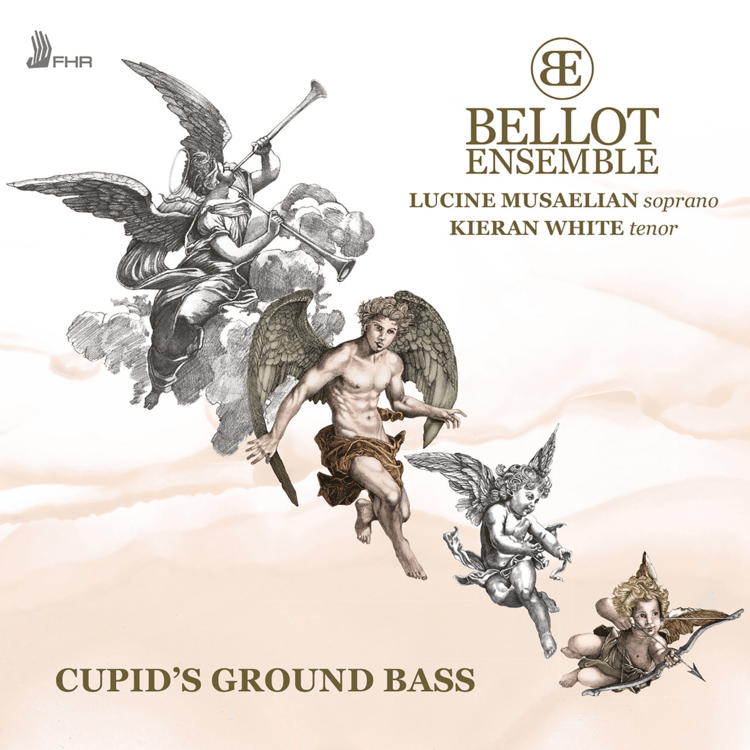
Cupid’s Ground Bass
Bellot Ensemble
First Hand Records
The baroque recordings world has become increasingly exciting in recent years, thanks to a new wave of young period instrumentalists who are translating their historical performance knowledge into playing that extends beyond the authentic, and sounds expressively, emotionally, authentically all their own.
This new wave has been led mostly by French musicians, including lutenist Thomas Dunford with his Jupiter Ensemble, and Justin Taylor with Le Consort. Now, we have a debut album from UK-based group Bellot Ensemble that delivers those same qualities. Cupid’s Ground Bass leaps out with the same fizzing energy and truth as the works of Jupiter and Le Consort, combined with an easy-going, lyrical, and occasionally genre-blurring vernacular that is distinctly Bellot’s.
The 16th and 17th century specialists, made up of recent graduates from London conservatoires, and current BBC Radio 3 New Generation Baroque Ensemble, have created a programme exploring the absolute extremities of love within the vocal repertoire of Francesco Cavalli, Andrea Falconieri, Barbara Strozzi and Claudio Monteverdi (whose 17th century Italy was the centre of both the developing field of opera and the ever-popular madrigal genre).
The album explores how the relationships between voices and instruments reflect the emotions in these texts. As the title suggests, many of the chosen arias sung by soprano Lucine Musaelian and tenor Kieran White feature the period’s popular ground basses (constantly repeating bass lines). Instrumental pieces from the same era are also in the mix, dotted in between the arias.
There’s so much to enjoy here: the easy conviviality and responsiveness between the musicians (listen to how the violins reflect the vocal phrasing over Cavalli’s ‘Se dardo pungente’; the ghost of Arabic folk song style with which Musaelian colours Strozzi’s darkly yearning ‘Che si può fare, which then also gets picked up by the violin; Biber’s Rosary Sonata No 1 –“The Annunciation”– being performed by violinist Edmund Taylor with fabulously live-feeling, completely in the moment rawness at points); the freedom and flexibility of phrasing and tempo, and almost pop-like inflections with which theorboist Daniel Murphy claims a Kapsberger toccata for his own, plus the warm, vibrant immediacy and polish of the overall capturing.
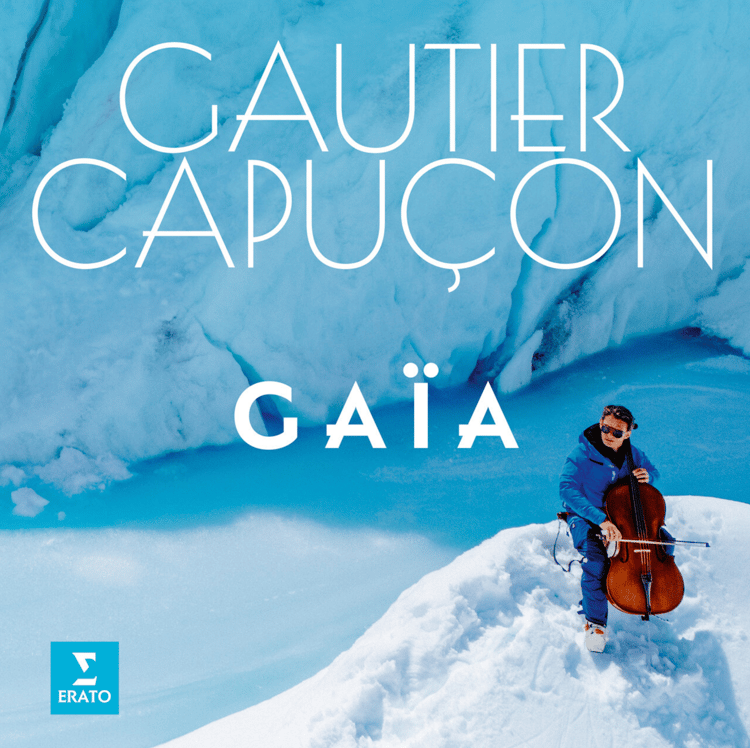
Gaïa
Gautier Capuçon
Erato
In a beautiful piece of serendipity, cellist Gautier Capuçon has also released a programme of new music exploring humanity’s relationship to nature. Released just a few weeks after The Hermes Experiment’s TREE, Gaïa consists of 17 world premiere recordings, commissioned from 16 composers.
The album covers a wide array of styles and genres. Capuçon adopted a simple selection criteria when deciding who to commission, seeking out composers whose music moved him, and whose work he could imagine playing. The result is constellation of voices ranging from Max Richter and Joe Hisaishi, to cellist-vocalist-composers Ayanna Witter-Johnson and Abel Selaocoe (both of whom perform alongside Capuçon), to Nico Muhly and Gabriela Montero. Their brief was to compose something which expressed what the earth means to them, a request that brings a wonderfully varied sweep of emotions.
The album’s arc is skilfully constructed. Gaïa feels like a whole, rather than 17 disparate tracks, and you wonder how long it took Capuçon to find such an organically evolving musical trajectory within such a stylistic cornucopia, both in its gentle undulations and its high contrasts. It’s also an album that sings from end to end with a sense of joyful, generous collaboration. Capuçon performs with his two closest and longest standing pianist partners, Frank Braley and Jérome Ducrôs, along with his Capucelli ensemble made up of former cello pupils, and all that closeness and personal ease comes across very palpably. The acoustic of Schloss Elmau’s concert hall plays a significant part – Ayanna Witter-Johnson’s radiant ‘Forever Home’ duet glows tonally and emotionally, as well as acoustically, giving a strong impression of the room’s wood-panelled lightness and space.
Further highlights include the closely blended tones, lines and minds, and the emotional intensity found across JB Dunckel’s ‘Wake’ with Capucelli; the hazy dreamwork evoked by Olivia Belli at the piano over Tàmâr Mĕtūshelāh; Gabriela Montero’s 21st century nod to the French Impressionist style, ‘Sur le lac du Bourget’, with the ghost of jazz playing around its ages; and the heart-on-sleeve beauty of ‘Never Say Never’ The final linking thread of this bold album is, in fact, precisely its heart.