Our latest pick of classical music – curated by journalist Charlotte Gardner – includes music from British a cappella octet Voces8, a rendition of Mendelssohn's Symphonies and Oratorios from Gewandhausorchester and a celebration of Joseph Gibbs's Sonatas by The Brook Street Band
Welcome to March’s Only the Music. My archive choice this month reflects the approaching Easter holiday, albeit its frivolous rather than sacred side – because if the Gardner household is behaving true to form, then pre-dinner drinks on those gradually-lightening spring evenings will be, at least once, to the tune of Rubinstein’s Chopin. The playlist therefore opens on him playing Chopin’s Nocturne in D flat major, Op. 27.
You’ll find plenty of sacred music in the remainder of the playlist, though. Most particularly, there’s the first-ever complete recording of Mendelssohn’s oratorio, Paulus, to enter the Deutsche Grammophon catalogue – courtesy of Andris Nelsons conducting the Leipzig Gewandhausorchester, MDR Radio Choir and a top-drawer bunch of soloists. The English choral sound is also represented, through i carry your heart from VOCES8 with its VOCES8 Foundation Choir and Orchestra. Between those two, smaller-forces instrumental music provides a palette cleanser in the shape of The Brook Street Band’s championing of violin sonatas by neglected 18th century English composer, Joseph Gibbs.
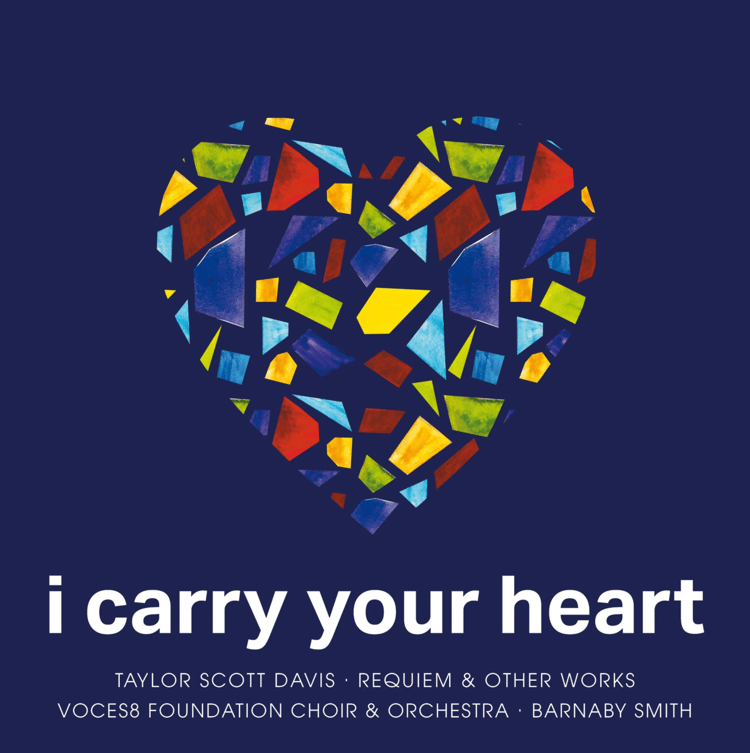
i carry your heart
Voces8 Foundation Choir and Orchestra
With its instantly recognisable combination of mellifluous blend, ethereal purity and technical poise, British a cappella octet Voces8 is always supremely good in the recording studio – as demonstrated by it being the world’s most streamed classical vocal ensemble. Even more impressive is the extent to which it has transmitted that vocal polish to its Voces8Foundation Choir, the auditioned, residential summer school choir it coaches and performs with each year at its Milton Abbey Festival, directed by Voces8founding countertenor, Barnaby Smith. It’s this choir, supported by the festival orchestra comprised of London’s finest orchestral, chamber and soloist players, that stars beautifully on I Carry Your Heart, supported by Voces8 themselves.
Repertoire-wise, all the music here is the work of Voces8’s Composer-in-Residence, Taylor Scott Davis, an American whose music feels a perfect match for the Voces8 sound with its English-sacred-tradition-esque floating lines and slow-moving suspended harmonies. The programme’s centrepiece is his new Requiem, commissioned for Voces8’s 20thanniversary last year. Billed as being a requiem “for our times”, directed at listeners of all faiths or none, it’s rooted in the usual Latin liturgy, but with the addition of a Siegfried Sassoon poem setting – hope-themed ‘Idyll’, about finding light ‘where gloom and brightness meet’. Musically, it’s of a soothing beauty that stops shy of becoming syrupy, and while thoroughly its own thing, is flecked with various subtly-worked nods to other composers. The woodwind opening of ‘Idyll’, for instance, contains a passing shade of Ravel’s Mother Goose. The ‘Sanctus’, featuring thoroughly original-sounding chirruping woodwind textures, evokes something of the corresponding movement in Rutter’s Requiem. The ‘Agnus Dei’ has a gorgeous filmic quality to it, accentuated by the strings’ glassy, Hollywood-esque portamento. The singing meanwhile soars and floats, and the soft Voces8 blend is everywhere.
Pleasures among the album’s shorter pieces include ‘Effortlessly’ being sung by Voces8 alone; the loving chamber strings dialogue supporting ‘i carry your heart with me’; some welcome up-tempo cheer provided by ‘Jubilate Deo’; and the freshness of the performances of Davis’s new Fauré ‘Cantique de Jean Racine’ and ‘Lux aeterna’ (Nimrod) arrangements. All in all, it’s a beautifully conceived and performed album that underlines Voces8 and its partner ensembles’ status as representing the crème de la crème of the English choral tradition.
Voces8 Records/Decca
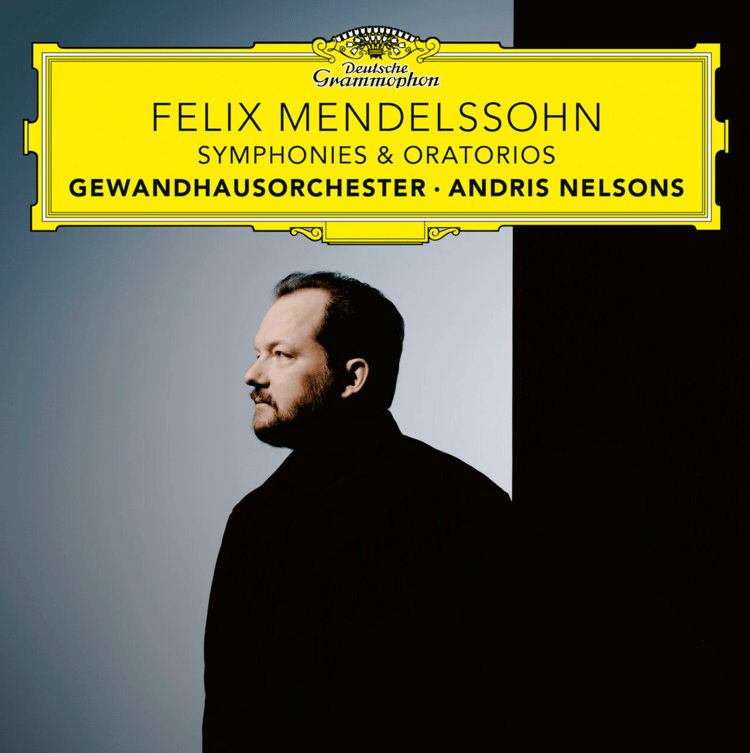
Mendelssohn: Symphonies and Oratorios
Gewandhausorchester/Nelsons
The 21st century reassessment of Mendelssohn as a major Romantic composer – rather than a child prodigy turned salon composer who owed his professional success to his family’s wealth and connections – is now so complete that it’s almost a waste of words to mention his posthumous reputation’s years in the wilderness. Only, it’s those wilderness years that are to blame for the comparatively small number of really stand-out recorded cycles of his large-scale works, and to thank for the sheer love now being poured into making amends on this.
One orchestra whose Mendelssohn we should be especially interested in is the Leipzig Gewandhausorchester – whose venerable reputation first grew during Mendelssohn’s own successful tenure as its conductor and music director, between 1835 (when he was just 26) and the year of his premature death, 1847. In modern times, the orchestra recorded Mendelssohn a couple of times with Riccardo Chailly (2005-2016). Now with Andris Nelsons at its helm it has recorded all five symphonies, plus the oratorios Elijah and Paulus – and this is in fact the first complete recording of Paulus to enter the DG catalogue.
It’s worth saying that some very fine symphonic Mendelssohn has been released of late, topped perhaps by Paavo Järvi’s zesty symphony cycle with the Tonhalle-Orchester Zürich (Alpha Classics, 2024). However what the Gewandhausorchester now brings to the table is a trademark sound that’s arguably already intrinsically linked to Mendelssohn’s own musical language – graceful, elegant, bright – plus bag-loads of skilfully meted playfulness, weighty nobility, brio and bang. ‘Reformation’ Symphony No. 5’s Allegro vivace is an absolute peach: the sheer birdiness of its woodwind trills; its joyous overall rhythmic swing; and in its central trio, the strings’ airy rise and fall, and lower-register warmth. Sublime fun.
Or for more stand-out moments you could head to ‘Scottish’ Symphony No. 3: opening in delectably passionate songfulness; sporting an Adagio with a brilliantly bristling, tautly grown central climax, followed by an equally satisfyingly handled subsidence into tender, ballet grace for the ensuing cello and brass song.
The recording’s significant vocal element is also superb. The MDR-Rundfunkchor straddles a fantastic, often high-drama balance between Romantic expression and a more chapel-y vocal purity. For ‘Lobgesang’ Symphony No. 2 – featuring soloists Christiane Karg (soprano), Werner Güra (tenor) and Elsa Benoit (soprano) – this translates to a thrilling ‘Die nacht is vergangen’, followed by Bach’s ‘Nun danket alle Gott’ handled with a suitably early Romantic, spacious expressivity. The vocal style is similarly finely tuned for the oratorios, which star Georg Zeppenfeld as St Paul, and Andrè Schuen as Elijah (with Elijah also featuring soprano Golda Schultz). It’s also a really nice touch to open the entire cycle with Bach-inspired Paulus, laying down Mendelssohn’s Bach-revering cards from the off.
To compare this to the aforementioned Tonhalle/Järvi cycle would be to recommend apples over oranges, they’re two such entirely different sounds. Yet if you happen to be in the market for actually purchasing a physical copy, there’s a lot to be said for a set which also includes such strong oratorio performances.
DG
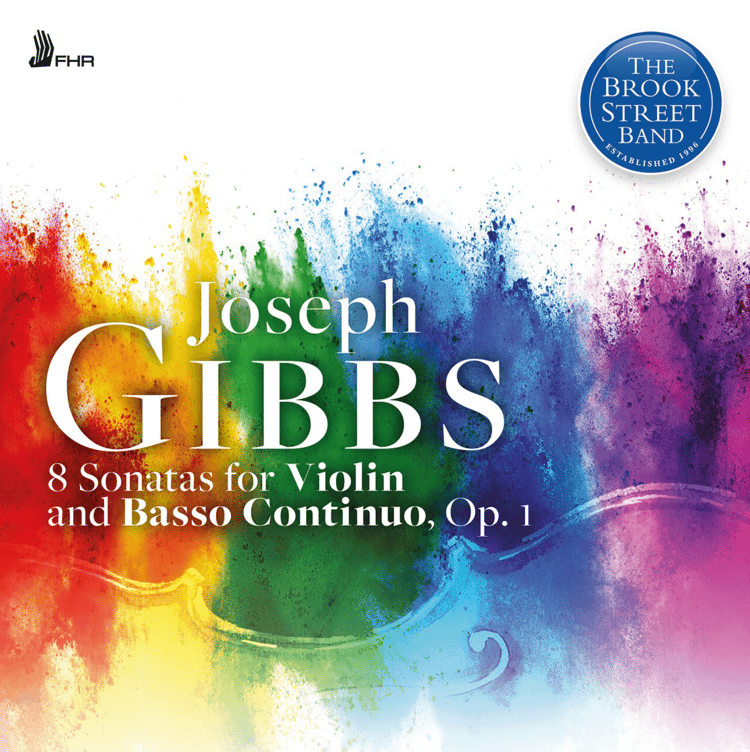
Joseph Gibbs 8 Sonatas for Violin and basso continuo, Op. 1
The Brook Street Band
Tap the name Joseph Gibbs (1698-1788) into your chosen online search engine, and a quiet, intellectually active-looking face will pop up courtesy of a c.1755 portrait painted by none other than Thomas Gainsborough. Had it not been for this painting, Gibbs and his music would perhaps no longer be remembered. As it is, knowledge of him still counts as distinctly niche, and the reason is because he was more a performer of music than a writer of it.
Born in Colchester, he appears to have studied in London, then returned home to East Anglia where for the remainder of his life he had a varied performing career as a prominent, tireless and much-loved church organist, concert harpsichordist and member of Ipswich Musical Society. Beyond a few organ pieces, he appears to have published just two sets of music: his Eight Solos for a Violin with a Thorough Bass Op. 1, published around 1746; then in 1777, Six Quartettos for Two Violins, Tenor and Violoncello or Harpsichord, Op. 2.
Still, the Eight Solos newly recorded by The Brook Street Band (violinist Rachel Harris, cellist Tatty Theo and harpsichordist Carolyn Gibley) reveal a distinctive and compelling musical voice: a melodically chromatic melding of the long-established Italian sonata style with the newer and freer galant style; a fondness for variation form; the sort of advanced chordal writing that’s also to be found in the violin parts of fellow British violinist-composer Michael Christian Festing (whose Violin Sonata Op. 7 No. 1 features prominently in Gibbs’s portrait); the use of ‘Scotch snap’ rhythms – popular at the time, and perhaps also a nod to the Scots Greys, who were garrisoned locally at Ipswich; then beyond those solid stylistic ingredients, an overall peppery, earthy, twinkling directness and individuality that’s been beautifully brought out in Harris, Theo and Gibley’s elegantly spirited performances.
Highlights include the gorgeous treble-register variation in the final aria of Sonata No. 1 in D minor – all shining, chiming and delicate (2’46”). Alos, how gracefully and expressively the cello is released from the bass line in Sonata No. 3’s opening Largo; and in the same movement, how suave but left-field the shift to the minor is at 1’54”. Add The Brook Street Band’s customary easygoing conviviality and vivacity, plus close but natural capturing (in The Great Barn of Oxnead Hall, Norfolk) which emphasises the sense of intimacy, and Gibbs couldn’t have hoped for better modern-times championing.
FHR