Welcome to February’s Classical Choices. This month marks the 400th anniversary of the death of one of England’s greatest ever songwriters, John Dowland. The playlist therefore opens with Emma Kirkby singing ‘I Saw My Lady Weep’ to lute accompaniment from Anthony Rooley.
Onwards, and we stick with song for a gorgeous debut solo recital album from young French soprano Julie Roset – and then remain in France for Trio Wanderer’s wide-ranging Art Nouveau-era programme. The final recording then returns us to English repertoire via Ralph Vaughan Williams’s The Lark Ascending – heard in a revisionary new interpretation by Finnish violinist Pekka Kuusisto.
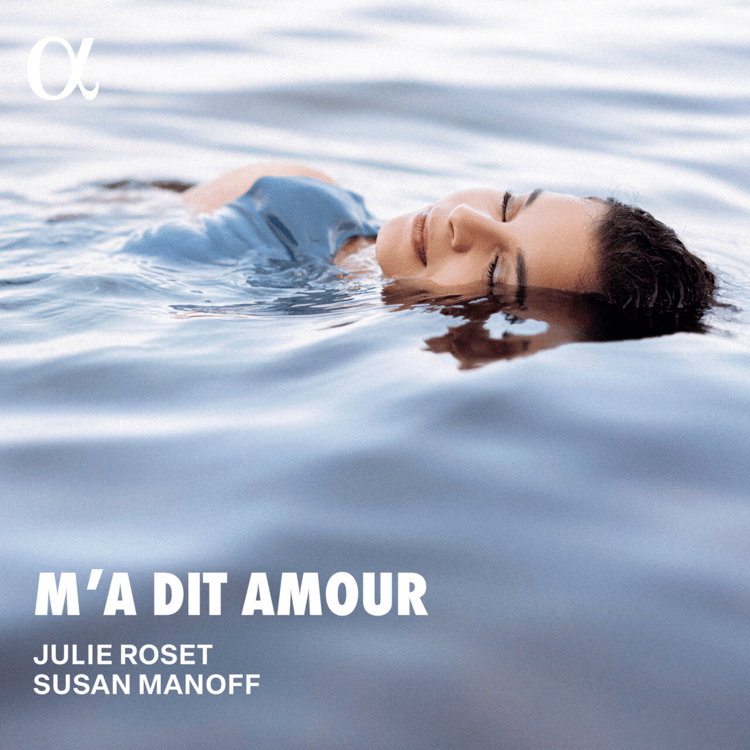
M’a dit Amour
Julie Roset, Susan Manoff
Alpha Classics
If you’re one of the many who fell head over heels last year with Raphaël Pichon and Pygmalion’s Bach’s Mass in B minor – Gramophone’s 2025 Recording of the Year – then you will already be admiringly familiar with the voice of young French soprano Julie Roset, who sang as its soprano soloist. Roset has in fact appeared as a soloist on a number of fine recordings since winning both Plácido Domingo’s prestigious Operalia competition (2023) and the Metropolitan Opera Laffont Competition (2022). M’a dit Amour (‘Love told me’) is now her first solo recital – part of a new multi-project collaboration with Alpha Classics – and it’s very lovely indeed.
Roset’s recordings up to this point have been Baroque, period-instrument projects – to which her bright vocal purity is a natural fit. M’a dit Amour now sees her turn to the French art song, focussing on the first half of the 20th century. The programming itself is fantastic. On a musicological level there’s the pleasure of getting to know the work of such rarely-spotlighted names as Manuel Rosenthal (1904-2003), Isabelle Aboulker (b. 1938) and Louis Beydts (1895-1953) alongside songs by well-knowns such as Debussy and Poulenc. One especially nice pairing is of Debussy’s solo piano ‘La fille aux cheveux de lin,’ evoking the Leconte de Lisle poem, with his earlier soprano setting of the text.
It’s a selection which also plays brilliantly to Roset’s coloratura strengths. Listen to the silvery agility and precision she’s bringing to the leaps and swoops of ‘Le petit serin en cage’ (beautifully mimicking a finch’s delicate, rapid movements) concluding Beydts’ 1948 song cycle, Chansons pour les Oiseux (1948). Aboulker’s ‘Je t’aime’ is a theatrical, virtuoso cracker. It’s all so fresh and playful too.
The partnership with Susan Manoff is also palpably close. Head to Debussy’s Fête galante, ‘Voila Sylvandre et Lycas et Myrtil’ for some particularly beautiful dialogue between them, along with a feast of tone-painting piano colour; or admire the clarity of Manoff’s baroque-flavoured articulation over her Enescu ‘Languir me fait’ countermelody.
Mel Bonis’s ‘Songe’ is their poetically radiant album-closer. All in all, Roset has begun her solo recording career in magical fashion.
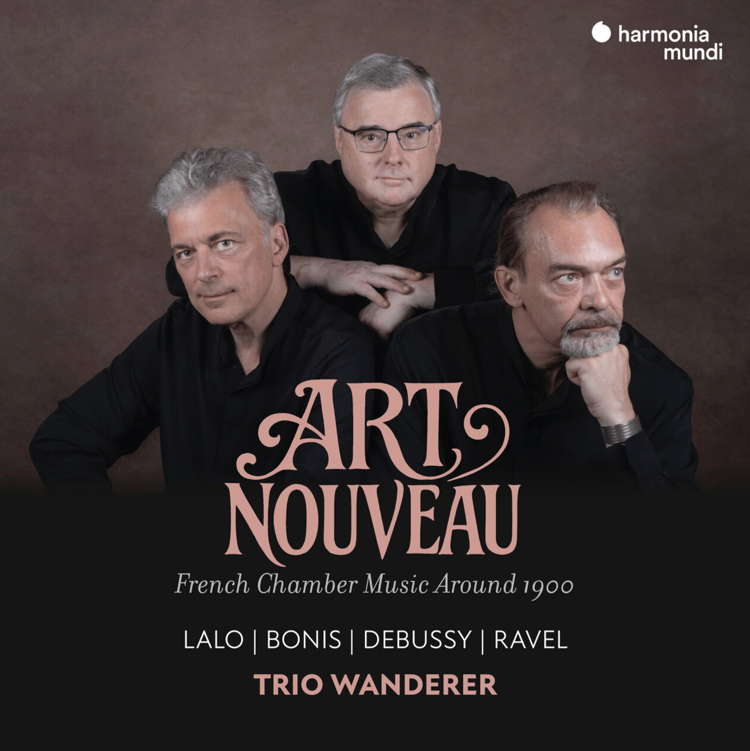
Art Nouveau – French chamber music around 1900
Trio Wanderer
Harmonia Mundi
French Art Nouveau-era chamber recordings have not been in short supply over recent years, what with Ravel’s 150th birthday celebrations last year, and Debussy’s death centenary in 2018. However Trio Wanderer – violinist Jean-Marc Phillips-Varjabédian, cellist Raphaël Pidoux and pianist Vincent Coq – has brought something genuinely different to the table with this generous programme. On the repertoire front, while Ravel and Debussy do make up the lion share of the works, the programme-opener is not one that’s been over-recorded: Lalo’s Piano Trio No. 3 in A minor, whose late-Romantic language the Wanderer musicians serve up proud, vital and orchestral-feeling. There are also three Mel Bonis gems: a Debussy-esque piano Barcarolle, and a pair of delicately evocative miniatures for piano trio forces, Soir – Matin. What is more, they haven’t just given us Debussy’s and Ravel’s piano trios, but also a selection of their duo repertoire – in other words, sonata readings built on musical relationships that aren’t simply between occasional or even regular collaborators, but between permanent partners who by now have lived their main musical lives together for almost 40 years.
Perhaps the most exciting fruit of these longstanding relationships is the Ravel Sonata for Violin and Cello. Of the core repertoire on this programme, this is the one that gets fewer outings, probably because its combination of technical trickiness and exposed, lean textures demand truly symbiotic partnering. Phillips-Varjabédian and Pidoux are firmly in each other’s elegant, kaleidoscopic pockets, tipping organically between steadily ticking metrical precision and more improvisatory-feeling sections, and all with a fascinatingly dry, wiry, cleanly unromantic sound that’s especially attractive when they lock into a shared chord. For instance the first movement’s chordal closing, in harmonics, is a stunner with their tonally blended, ringing metallic sweetness.
That dry, unfussy, focussed tone, and light-weighted, crisply defined articulation (including a willingness to not always sound ‘pretty’) is a compelling feature across the album beyond the Lalo, and a refreshing contrast to the softer-edged, sultrier romance that this Art Nouveau repertoire often inspires. There’s a fantastic inner energy to it, bringing to mind Ravel’s love of miniature clockwork mechanisms, and the rate of mechanical and electrical innovation being witnessed daily on the Paris streets at that point in time. Close but natural capturing completes the picture.
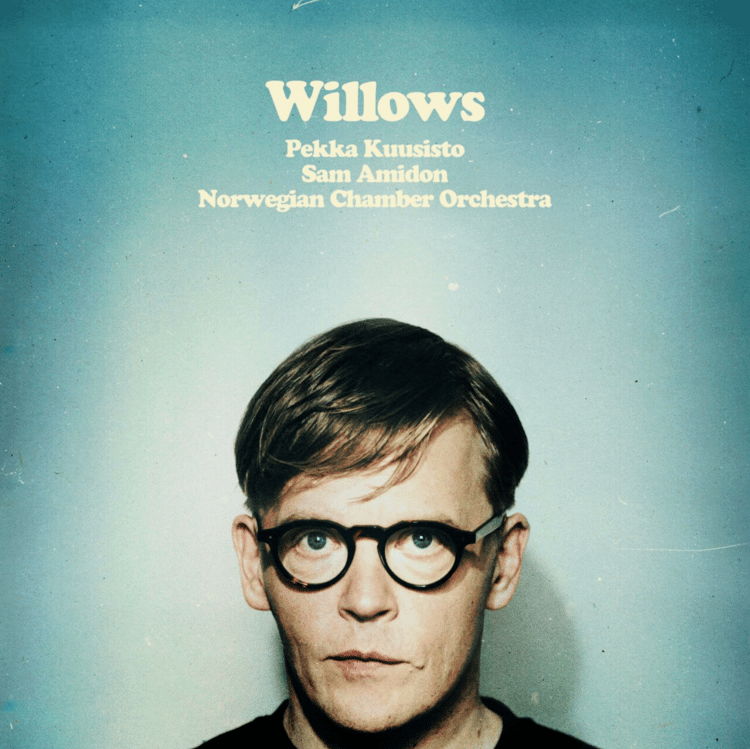
Willows
Pekka Kuusisto, Norwegian Chamber Orchestra, Sam Amidon
It may only be February, but I’d be very surprised if another album pops up this year packing anything like the emotional punch of Finnish violinist Pekka Kuusisto’s Willows. Named for ‘a tree whose light is never still’, this is a sorrow and remembrance-themed programme recorded while Kuusisto went through a period of intense grief in his family life, while simultaneously in mourning for our fracturing wider world.
Ralph Vaughan Williams’s The Lark Ascending is its opener – composed in 1914 as Vaughan Williams contemplated the coming First World War, and recorded by Kuusisto in 2022 as his mother lay dying in a hospice, two months after the death of his brother, conductor and violinist Jaakko Kuusisto. Kuusisto’s starting point was to clean his ears of all the past century’s worth of clear-soaring recorded interpretations – the accidental result, he believes, of it not having been possible to record quiet playing during the 1920s, when the work was first recorded – to produce a quietly revisionary, softly, airily muted reading getting back to what The Times in 1921 described as its ‘serene disregard of the fashions of today or yesterday’. Constantly shifting in tone colour, texture and metre, its gentle wax and wane here is spellbinding.
Following ‘Lark’ is a string orchestra arrangement of Caroline Shaw’s Plan and Elevation – five architecture-inspired movements, originally for string quartet, that Kuusisto has taken as empty rooms in which thoughts can roam. Next comes Ellen Reid’s solo violin Desiderium (2022), evoking the highs and lows of family life, dedicated to Jaako, and sounding excitingly virtuosic and raw.
Folky modality, British and American-flavoured, has been this human-focussed programme’s harmonic red thread thus far. So it’s then a genius piece of programming to then climax in communion with Vermont folk singer Sam Amidon, Kuusisto and his colleagues accompanying him on his guitar and banjo over six songs covering faith and the passage of life, via new string ensemble arrangements by Nico Muhly. The combination of Amidon’s calm, warm vocals, and the musicians’ intently listening accompaniments, deliver a beautiful balance of balm and adrenalin.
All in all, it’s deep stuff; reflection-provoking in all the right ways. Best of all, it’s very, very beautiful.